
US Military Assets Near Iran: USS Abraham Lincoln, Gerald R. Ford and Growing Middle East Tensions
Washington Expands Naval Presence as Iran Signals Warning During Nuclear Negotiations in Switzerland

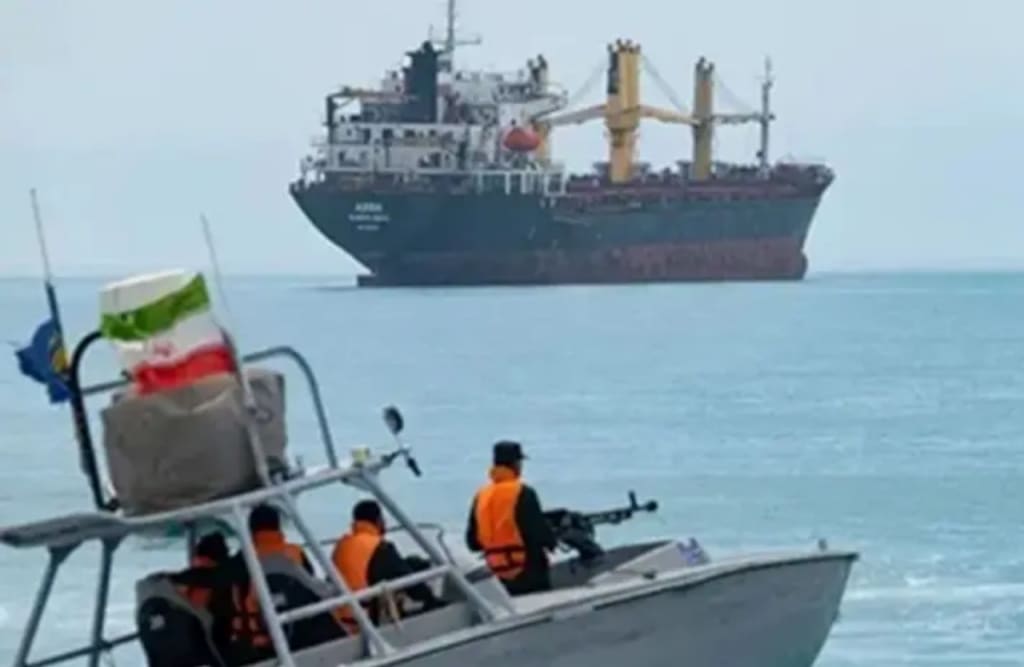
The U.S. aircraft carrier USS Abraham Lincoln is currently positioned near Iran. It is worth noting that Washington has been increasing pressure on Iran over its nuclear program and its bloody crackdown on recent protests, even as negotiations continue.
Meanwhile, U.S. and Iranian officials are set to begin a second round of talks in Switzerland on Tuesday. Iran has stated that the meeting in Switzerland will focus on its nuclear program and the possible lifting of U.S. economic sanctions, while Washington has indicated it wants to raise additional issues during the negotiations.
The Abraham Lincoln is accompanied by three guided missile destroyers, 90 aircraft including F-35 fighter jets, and 5,680 personnel. Although the carrier was deployed to the Gulf region at the end of January, it had not appeared in satellite imagery until now.
According to the latest information, the vessel is currently near the coast of Oman, approximately 700 kilometers from Iran.
Reports also indicate that the United States has dispatched the world’s largest warship, the USS Gerald R. Ford, toward the Middle East, where it could arrive within the next three weeks.
The presence of the Abraham Lincoln further underscores that the U.S. has increased its military footprint in the Middle East in recent weeks. There has been a notable rise in the number of American destroyers, warships, and fighter jets in the region.
What military assets has the U.S. moved to the Middle East?
Publicly available images from the European Sentinel-2 satellite show the aircraft carrier Abraham Lincoln in the Arabian Sea, currently about 150 miles (240 kilometers) off the coast of Oman.
The carrier had not been visible in satellite images after entering the region in January because it was operating in open waters where satellite coverage is limited. Unlike land-based military assets, which are often clearly visible in satellite imagery, naval vessels are harder to track in open seas.
This latest development means that satellite imagery has now identified up to 12 U.S. warships in the Middle East, including the Abraham Lincoln, a nuclear-powered Nimitz-class carrier that forms a carrier strike group with three destroyers.
Additionally, two long-range missile-capable destroyers and three specialized combat ships designed for littoral operations are currently stationed at the naval base in Bahrain.
Two more destroyers have been spotted in the eastern Mediterranean near the U.S. base at Souda Bay, while another vessel is present in the Red Sea.
At Muwaffaq Salti Air Base in Jordan, the number of F-15 and EA-18 fighter jets has increased.
There has also been a rise in cargo aircraft, refueling planes, and communications aircraft arriving in the Middle East from the U.S. and Europe.
How is Iran responding?
On February 6, U.S. Central Command released images of the Abraham Lincoln operating in the Arabian Sea alongside destroyers, fighter jets, surveillance aircraft, and Coast Guard vessels.
The move appeared to be a display of American military strength, and Iran responded accordingly.
On Monday (February 16), Iran’s Islamic Revolutionary Guard Corps (IRGC) launched naval exercises in the Strait of Hormuz. During the drills, IRGC Commander-in-Chief Major General Mohammad Pakpour was seen inspecting naval vessels at a port, after which missiles were fired from one of the ships. These scenes were reported by the IRGC-affiliated Iranian news agency Tasnim.
The Strait of Hormuz is considered one of the world’s most vital commercial waterways and a key route for global oil shipments. One-fifth of the world’s oil and gas passes through this strait. Tasnim’s report showed the Iranian commander flying by helicopter and observing the exercises.
Expert opinion on U.S. military preparations
Military intelligence expert Justin Crump said the current U.S. military preparations in the Middle East show “greater depth” and differ from preparations made before the arrest of former Venezuelan President Nicolás Maduro in January 2026 or before last June’s airstrikes on Iranian nuclear facilities.
In all those U.S. military actions, a carrier strike group and several destroyers were involved, but assets were deployed under very different circumstances in Venezuela and Iran.
Before operations against Venezuela, the U.S. had deployed the Gerald R. Ford to the Caribbean, where eight other warships were already present. However, fewer aircraft were used at that time because fighter jets could easily be dispatched from U.S. mainland bases or from Puerto Rico if necessary.
The U.S. had also deployed amphibious assault ships in the Caribbean, which served as helicopter launch platforms, as seen during Maduro’s arrest.
However, Venezuela’s military is generally considered weak and lacks the capacity to mount effective defense or retaliation against the United States.
Last year, when the U.S. carried out Operation Midnight Hammer targeting Iranian nuclear facilities, it was striking a country with a far more capable military than Venezuela’s.
It should be noted that Iran has the capability to target U.S. bases across the Middle East.
During Midnight Hammer, the U.S. deployed two carrier strike groups in the region, five destroyers in the Mediterranean and Red Sea, and three warships in the Gulf.
It also moved squadrons of fighter jets and refueling aircraft from the U.S. to Europe. However, the B-2 stealth bombers that struck Iran’s nuclear facilities at Fordow, Isfahan, and Natanz were launched from bases in Missouri.
Justin Crump, CEO of the risk and intelligence firm Sibylline, said the presence of U.S. warships and aircraft, along with eight air bases in the region, gives the U.S. the capacity to conduct around 800 missions per day to render any Iranian retaliation “ineffective.”
He added that what is currently being observed is not merely preparation for an attack but a broader defensive deployment that can be scaled up or down depending on circumstances. Compared with Venezuela or last year’s Operation Midnight Hammer, this posture has greater depth and sustainability. It is designed to neutralize any potential Iranian response and to defend U.S. assets in the region as well as Israel.
About the Creator
Keep reading
More stories from Real content and writers in Chapters and other communities.
Post-Hasina Bangladesh: BNP Victory, Youth Revolution, and the Future of Democracy
About two years ago, when Sheikh Hasina won an election that was widely described as being marred by large-scale rigging, it was difficult to even imagine that her 15-year strong grip on power would suddenly come to an end, or that another party, which had nearly disappeared from the political landscape, would return with such intense public support. However, this is yet another shift in the ups and downs of Bangladeshi politics, where the Awami League and the Bangladesh Nationalist Party (BNP) have alternated in power for decades. The only difference this time is that the BNP is now formally led by Tarique Rahman, and this is the first time he has personally contested in a general election. His mother, Khaleda Zia, who passed away last year after a prolonged illness, had led the party for four decades. She took over the responsibility after the death of her husband, Ziaur Rahman, the founder of the BNP and an important leader in Bangladesh’s War of Independence. In the past, when his mother was in power, Tarique Rahman faced allegations of benefiting from nepotism and was also confronted with corruption cases. Just five days before his mother’s death, he ended his 17 years of self-imposed exile and returned to Bangladesh from London. Although the 60-year-old Tarique Rahman had effectively acted as the party’s leader during and after his mother’s imprisonment and later during her illness, he is generally regarded as an untested leader. According to political scientist Nouvine Murshid, his lack of previous governing experience may actually work in his favor, because people want to give change a chance. They want to believe that new and positive change is possible, which is why there is an atmosphere of hope among the public. Following the election results, the BNP announced that its top priority would be the restoration of democracy in the country. This time, however, the situation appears somewhat different. The country’s youth, who played a prominent role in the “July Uprising” of 2024 that ultimately forced Sheikh Hasina to step down, have clear expectations. Nineteen-year-old student Tazin Ahmed, who participated in the protest movement, says: “We do not want to fight again. The former prime minister’s resignation was not our ultimate achievement. Our real success will be when the country becomes free of corruption and begins moving in the right direction, and when the economy becomes stronger.” Her cousin, 21-year-old Tahmina Tasnim, says: “Above all, we want unity among the people. We have a right to a stable state and a stable economy. We have been part of a popular movement and know how to resist. If the same conditions arise again, we also have the right to raise our voices again.” Since Sheikh Hasina’s removal, Bangladesh has faced incidents of unrest and violence during the tenure of interim leader Muhammad Yunus. Restoring law and order will be a top priority for the new government. At the same time, reviving the economy, reducing food prices, and creating job opportunities for the country’s large youth population are among the major challenges. Social affairs expert Samina Luthfa says that nearly all political parties face a lack of governing experience. Jamaat-e-Islami, considered the second-largest political party in Bangladesh and twice banned in the country’s history, has also won a significant number of seats for the first time. Its allied party, the National Citizen Party (NCP), formed by the student leaders who led the protest movement, has managed to win six seats in its very first election. According to Samina Luthfa, Bangladesh is likely to see a parliament this time where many leaders will be entering the house for the first time. She adds that the young leaders of the NCP have much to learn. Leaders of other parties may be experienced politicians, but they lack practical experience in running the country. Therefore, the journey will not be easy, and the government will face tough challenges. Jamaat-e-Islami’s election manifesto emphasized secular and developmental points and made no clear mention of implementing Islamic law. However, the party’s website states that “Jamaat is active in the political arena because without political power, Islamic law cannot be implemented.” This stance has always raised the question of what its practical strategy would be if the party ever came to power. According to political scientist Nouvine Murshid, Jamaat’s performance in this election was not unexpected. She says that Jamaat is a well-organized political party and has worked consistently and systematically at the grassroots level for decades. However, Murshid adds that while this fact must be acknowledged, the problem is that Jamaat’s core ideology is non-democratic, gender discriminatory, and patriarchal in nature. On the other hand, Samina Luthfa says that all political parties have disappointed the women of Bangladesh. In the recent elections, just over four percent of the candidates were women. She says: “We women who were part of the July popular movement have seen all political parties fail to translate our collective struggle into formal political and electoral representation.” Luthfa emphasized that members of parliament should take immediate steps to nominate capable, honest, and deserving candidates to the reserved seats for women. Out of Bangladesh’s total 350 parliamentary seats, 300 members are directly elected by public vote, while 50 seats are reserved for women. These reserved seats are allocated to political parties in proportion to their electoral performance, and the parties themselves nominate candidates for them. The recent elections are being described as markedly different from those held during Sheikh Hasina’s tenure. This time, the contest was genuinely competitive, and the outcome was not clear before polling. In the context of claims about restoring democracy, when the BNP was asked whether it would support bringing the Awami League back into the political mainstream, senior party leader Amir Khasru Mahmud Chowdhury said: “It is not our job to decide that.” He added: “It will take time for the Awami League to return to Bangladesh’s electoral process, because its credibility is under question. When you face allegations of killing your own citizens, oppression, and political vendettas, then it is the public who will decide what place that party will have in future politics.” Meanwhile, from exile in India, Sheikh Hasina has described Thursday’s elections as a “fraud and farcical election” and has demanded fresh polls in which the Awami League would also be allowed to participate. At present, there is intense public anger against her party. However, considering Bangladesh’s political history, it would be premature to say that the Awami League’s political role has ended permanently.
By Real content3 days ago in Chapters
The Cave Part 6
If you have ever heard a tale about yourself that you cannot remember and doubtless think is made up, you will know how I felt when Tharkin related all that the eagle had seen of me before my memories were scattered. Of far distances and traveling companions that I did not recall, camping out under the stars and making our way to the mountains with deliberate purpose. The great bird had lost contact with my party once we entered the forests, and the seven other members were not seen again by him or his brethren since.
By Jamye Sharp2 days ago in Chapters
Sparrow on a Plank Chapter 16: On Not Becoming a Shrimp's Dinner
Sal and Hajime were walking down the pier as a group of merchants were running the other way. Some of them were covered in stew. They looked at each other and shrugged. As they came closer to the Hell’s Wrath they saw Rick putting away the catapult and a couple of boys from the mess rubbing the big pot down. Rick saw them, and bellowed, “Heave to!” They rushed up the gangplank, past splotches on the pier, and it was taken in just as they hit the deck. Hajime kept moving to his quarters, where he quickly secured the book and shucked off the more confining of his clothes. He was down to tunic and breeches and then up to the crow’s nest to help guide the ship out.
By Jamais Jochim2 days ago in Chapters
Nancy Guthrie: Is a miracle still possible after close to two weeks?
Close to two weeks since Nancy Guthrie's abduction As of February 12, 2026, Nancy Guthrie remains classified as missing for 12 days, but there is no official confirmation that she is deceased. Blood matching Guthrie’s DNA was found on her front porch, indicating she likely suffered an injury during the abduction.
By Cheryl E Preston6 days ago in Geeks




Comments
There are no comments for this story
Be the first to respond and start the conversation.