
What’s Really Happening in Sudan — The Truth About the War and Its Humanitarian Impact
Background of the Conflict: How the War Started Power Struggle Between the Sudanese Armed Forces and RSF The Role of Political Instability After the 2021 Coup Why the Fighting Began in April 2023 The Humanitarian Crisis: Millions in Need of Aid The Impact on Children: Hunger, Displacement, and Lost Education Women in War: Violence, Displacement, and Survival The Situation for Men: Forced Recruitment and Civilian Casualties Allegations of War Crimes and Ethnic Violence Famine, Disease, and the Collapse of Healthcare Displacement Crisis and Refugees in Neighboring Countries Why Peace Efforts Have Struggled to Succeed The Role of the International Community The Future of Sudan: Is There Hope for Stability? Conclusion: A War That Became a Human Tragedy

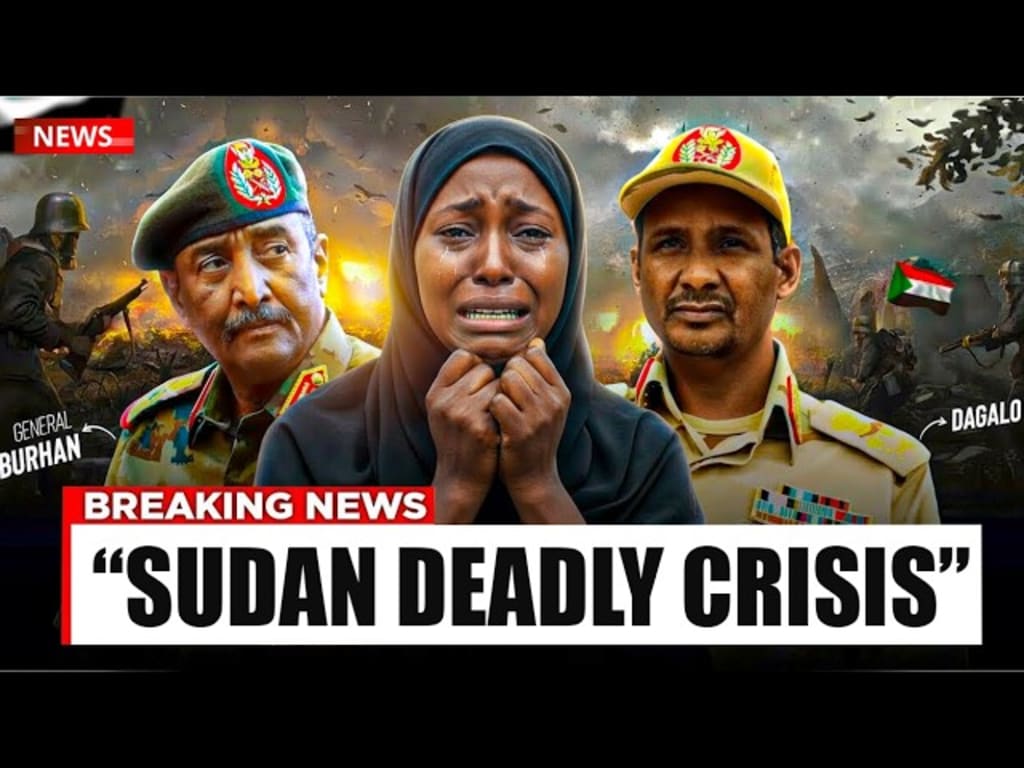
What’s Really Happening in Sudan — The Truth About the War and Its Humanitarian Impact
---
1. A Brief Overview: What Is the War About?
The conflict in Sudan began in April 2023 as a power struggle between two senior military leaders: the Abdel Fattah al‑Burhan-led Sudanese Armed Forces (SAF) and the Mohamed Hamdan Dagalo-led Rapid Support Forces (RSF). Both were part of the transitional government after a 2021 military coup, but they split over how to share power and integrate the powerful RSF into a unified national army.
What started as a political dispute became a full-scale civil war, with both sides fighting for control of major cities and strategic regions.
---
2. The Human Toll — Millions Displaced, Millions in Need
This war has quickly become one of the world’s worst humanitarian catastrophes. Key figures from the UN and aid agencies paint a terrifying picture:
About 21.2 million people — roughly 40% of the population — are facing acute hunger, famine conditions, or catastrophic food insecurity.
Nearly 12–14 million people have been forcibly displaced — inside Sudan and across borders into neighboring countries.
Around 30 million people overall need humanitarian assistance.
Essential services like healthcare, clean water systems, and education have collapsed or are barely functioning.
Children are among the hardest hit: rising malnutrition, disease outbreaks, and disrupted schooling put millions at risk.
---
3. What Life Looks Like for Children
Children are both symbols and victims of the crisis:
Malnutrition rates have soared — especially in Darfur, where acute malnutrition surpasses emergency levels.
Many children are starving, with thousands requiring immediate treatment to survive.
Fighting has forced millions out of school, exposing children to recruitment, exploitation, and extreme hardship.
Disease outbreaks like cholera have spread because of damaged water systems and crowded displacement camps.
In the worst-affected zones, aid access is blocked by fighting, meaning many children go days without food, safe water, or medical care — increasing mortality and long-term harm.
---
4. The Effect on Women and Men
Women:
Women make up more than half of the displaced population.
Sexual and gender-based violence has increased dramatically. Studies and UN reports document rape, harassment, and violence used as weapons of war in several regions of Sudan.
Women often face the harshest food insecurity because cultural norms can leave them last to eat even in peacetime — and in wartime, their access to aid and safe resources further diminishes.
Men:
Many men of working age are either forced to fight, are victims of direct violence, or are killed in airstrikes and clashes across residential areas.
Men attempting to protect their families or access food and work often find themselves targeted amid indiscriminate violence, including drone strikes and artillery.
---
5. Atrocities and Allegations of War Crimes
Reports from independent UN investigators found that the RSF siege of El Fasher in Darfur shows “hallmarks of genocide”, with targeted killings, mass rape, and destruction of entire ethnic communities.
Both warring factions have been accused of indiscriminate attacks on civilians — including drone strikes on markets, displacement shelters, schools, and hospitals — which have killed dozens of non-combatants.
---
6. Why the Conflict Continues
Unlike wars that end with a clear front line or negotiated settlement, Sudan’s conflict has multiple dimensions:
It began as a power struggle, but has evolved into a broader fragmentation of authority.
Ethnic and regional tensions are now part of the violence, especially in Darfur and Kordofan.
Control of resources — such as trade routes, gold fields, and strategic cities — fuels further competition.
Humanitarian aid is often blocked, stolen, or becomes a battlefield, worsening the crisis.
The result is not just sporadic fighting, but prolonged suffering — with no clear end in sight unless international diplomacy, internal pressure, and humanitarian access improve.
---
**7. Conclusion: A Crisis of Humanity
What’s happening in Sudan is not merely a political conflict — it is a human catastrophe. Women, children, and men are dying from hunger, disease, violence, and displacement. The war’s causes are rooted in a failed political transition, power struggles within the state, and deeper ethnic divisions — but its impact is painfully simple: millions of lives are being shattered.
The world sees numbers — but behind them are families without food, children without futures, and communities eroded by fear and starvation.
About the Creator
Hot News
Hot News – Bringing you the latest breaking stories, trending updates, and real-time news from around the world. Stay informed. Stay ahead.
Hot News – Delivering accurate, up-to-date headlines on politics, business, entertainment, sports.
ThunderCats Fanfiction Project (Ch 5 Episode 5A)
With the flagship wounded but alive, the ThunderCats turn inward — repairing, regrouping, and confronting the fears that rise in the silence between battles. Before they can search the stars, they must first steady themselves.
By Marcellus Grey5 days ago in Chapters
A Gathering of Evil Bosses
“I’m the queen of chin jutting while I smooth my hair, attacking, insulting, and deflecting to protect my appointer.” “Oh, please, Blondi, my hair is curled, highlighted, and longer than yours. I feature television commercials telling immigrants that we will give them a free plane ride home, and if they voluntarily turn themselves in, they will be allowed to legally apply for re-entry. It runs everywhere, and I look good in it! You can’t compete because of your blond hair. Mine is nicer, and my lips are prettier than yours.”
By Andrea Corwin 4 days ago in The Swamp

Comments
There are no comments for this story
Be the first to respond and start the conversation.