
I Forgave Him, But I Didn't Stay
Lessons in Love, Boundaries and Letting Go

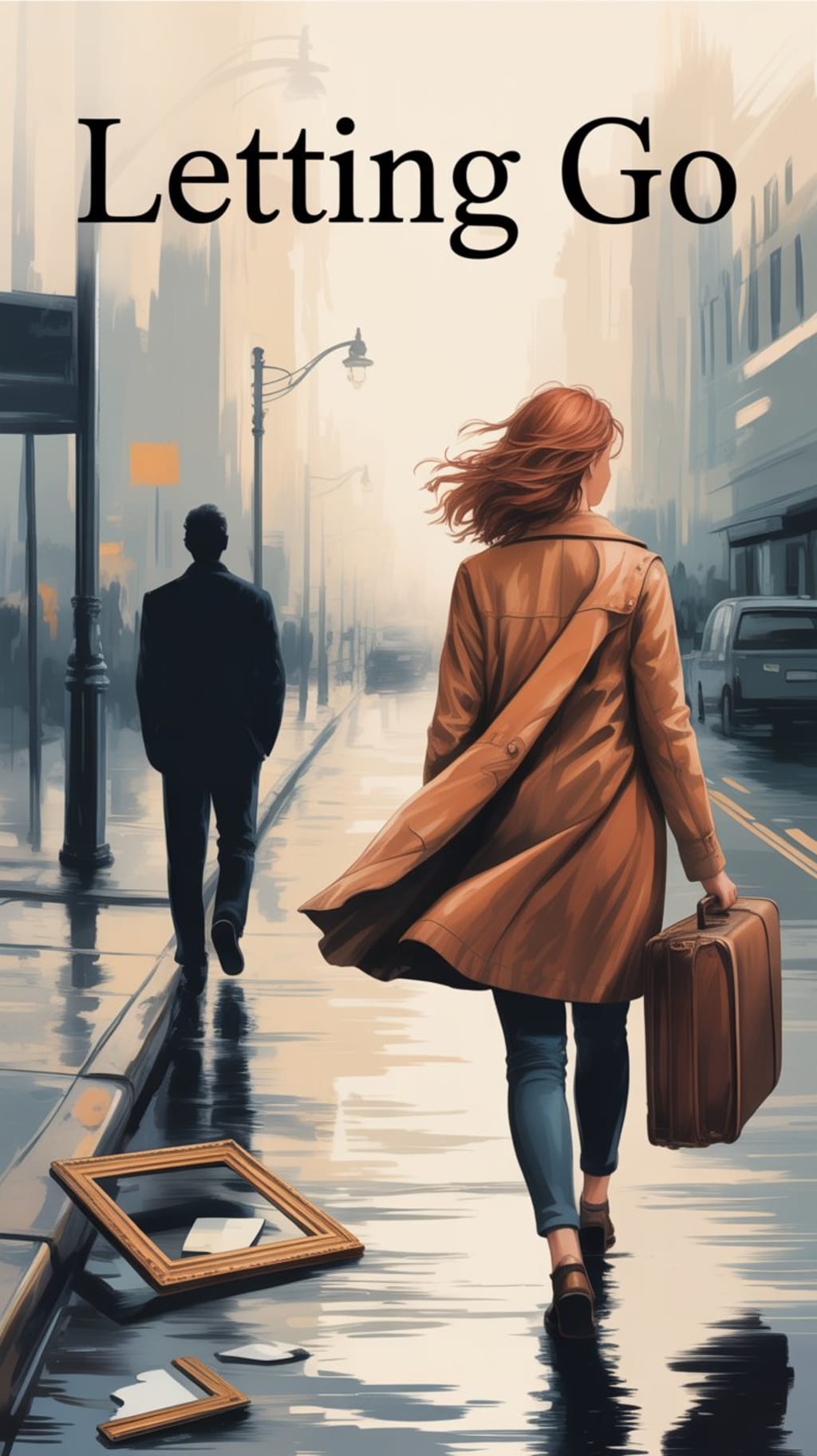
Forgiveness is for freedom—not for returning to the same pain.
There’s a version of love that no one warns you about.
It’s not the love that screams or shatters plates.
It’s the kind that quietly wears you down, one little dismissal at a time.
I met him when I was in a place of becoming. I was learning who I was, shaping my voice, finding my rhythm. And he was charming in that magnetic, almost cinematic way. The kind of person who knows exactly what to say to make you feel chosen.
In the beginning, he made me feel like I mattered. Like I was lucky he picked me. And maybe that’s where it all started—because love isn’t about being chosen like a prize. It’s about being respected like a partner.
At first, the red flags came in pastel. Barely noticeable. He’d interrupt me mid-sentence and brush it off as a joke. He’d say I was "too sensitive" when I got quiet after a hurtful comment. I told myself I was overreacting. I wanted to be the cool, understanding girlfriend—the one who didn’t nag, didn’t complain.
But slowly, I began to disappear.
My voice softened. My needs dimmed.
I started apologizing just for existing too loudly.
He never hit me.
But he dismissed my dreams. He forgot birthdays. He offered half-hearted apologies and full-throated justifications. Every disagreement became my fault. If I cried, I was “crazy.” If I pulled away, I was “cold.”
I kept thinking, If I just love him harder, he’ll change.
But love isn’t CPR—you can’t bring someone to life who refuses to breathe for you.
The worst part? I still loved him.
And when it finally ended—after yet another night of emotional absence wrapped in silence—I didn’t scream. I didn’t beg. I just packed my things and left.
But the pain didn’t leave with me.
For weeks, I was hollow. I blamed myself. I replayed every conversation, every argument, wondering if I was the villain in his story—or mine.
That’s when I realized something important:
Forgiveness isn’t about erasing what happened.
It’s about deciding you won’t let it define you anymore.
I forgave him—not because he deserved it, but because I did.
Because I needed to let go of the anger eating me from the inside. Because I wanted to be free of the heavy “what ifs” and “maybe if I had just…” Because carrying resentment only kept me tethered to the pain I was trying to outrun.
But forgiveness doesn’t mean staying.
Forgiveness isn’t a hall pass for someone to re-enter your life with the same hands that once broke you.
So no, I didn’t stay.
I didn’t stay in a house where my laughter echoed off cold walls.
I didn’t stay in a relationship where I had to shrink to fit.
I didn’t stay just because I once loved the version of him he only showed in the beginning.
Leaving wasn’t weakness—it was survival.
And forgiving wasn’t surrender—it was freedom.
People think that if you leave someone, you must still be angry.
But I’m not.
I’m not bitter. I’m not broken. I’m just done.
I hope he finds healing. I really do. I hope he learns to show up for the next person in a way he couldn’t for me. But I won’t be there to see it.
Because my healing doesn’t require his presence.
My peace doesn’t depend on his change.
My growth doesn’t need his applause.
Sometimes, love ends quietly. Not with a dramatic goodbye, but with a whispered truth:
I deserve better than this.
So yes—I forgave him.
But I didn’t stay.
And that’s the most powerful thing I’ve ever done.
About the Creator
Keep reading
More stories from Azmat Roman ✨ and writers in Confessions and other communities.
The Story I Was Never Supposed to Tell
I was raised to believe that silence was safer than honesty. In my family, words were currency, and the wrong ones could bankrupt you. The rule was simple: never say too much, never reveal what happens behind closed doors, and never—under any circumstances—tell anyone the truth if it might embarrass the family. For years, I carried those rules like invisible weights, moving through life careful not to drop them.
By Azmat Roman ✨5 months ago in Confessions
Blessed 33
So I woke up on the morning of February 5, 2026 and guess what and you know what I realized? It’s my 33rd birthday. Do you know what that means? Yes, technically I’m getting old, but what I couldn’t have guessed was this would be one of the best days of my life.
By Joe Pattersonabout 17 hours ago in Confessions
The Man She Called Casper
It took her longer than she wanted to admit to see it, even after he came back again. He had always been in control of the relationship--not loudly, not cruelly, but quietly. Through timing. Through silence. Through deciding when he was present and when he disappeared.
By K.D Leeabout 3 hours ago in Confessions



Comments (1)
This story hits close to home. I've seen friends in similar situations. Love should respect, not dismiss. It's tough to break free, but leaving was the right call. Forgiveness is about moving on.