
Letter II — On Nearness and the End of Readiness
What Love Did to the Body?


Letter II – From Layth to Aida
The Void, beyond the 22nd century
I wrote to you before in a language that leaned toward poetry and mystery,
a language that saw love as fire and light,
something that happens in meaning more than in the body.
Today, I write in another language.
A language less luminous, perhaps less romantic,
but more honest with what actually happened.
The language of the body
that learned something
when you came close.
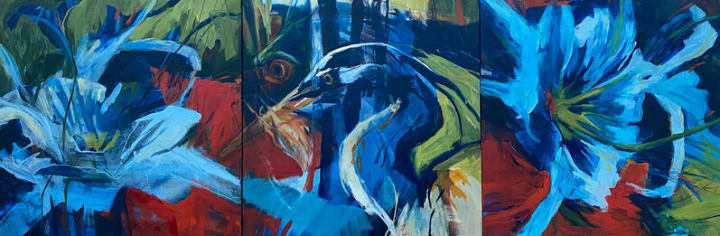
Poetic Opening
My heart was not the first to respond.
It was the body.
The body whose noise quieted,
as if someone closed a door that had been slamming for no reason.
With you,
I didn't need to explain myself to my muscles,
or justify my existence to my breath.
Something stopped preparing.
Something believed it was safe.
I don't think love begins the way we've been taught.
It doesn't begin with attraction,
or impulse,
or even clear joy.
I think now that it begins when the body stops threatening itself.
When the nervous system no longer stays on watch.
When a person no longer feels they must be faster, smarter, harder…
just to be allowed to remain.
We're drawn not only to those who excite us,
but to those who allow our nervous system
to stop operating
as if it were at war.
And this is not a metaphor.
The body knows war.
It knows it from the racing pulse,
from the small contractions,
from that nameless tension
we carry with us into every room.
With you,
I wasn't braver,
or better,
or less afraid in any moral sense.
I was simply…
calmer.
Perhaps this is why love seems confusing when we try to explain it.
Because language goes to the heart,
while the experience begins somewhere deeper,
older,
less falsifiable.
The nervous system does not lie.
It doesn't know courtesy.
Either it feels safe,
or it doesn't.
And I,
when you were close,
didn't need to be an improved version of myself.
Didn't need to explain,
or perform,
or outrun the moment.
It was enough to simply be present.
I sometimes think that much of what we call love
is actually shared tension.
An addiction to excitement.
A confusion between anxiety and passion.
Between attachment and attunement.
Perhaps this is why we fear calm.
We think it's boredom,
or coldness,
or a lack of chemistry.
But what if calm
is the first sign that the body no longer has to fight?
What if love
is not what makes us rise,
but what finally allows us
to place our feet on the ground
without fear?
I'm not writing this to explain you.
Or to understand you.
Or to name what is between us.
I write because I noticed the change.
And because the change was not only emotional.
It was physical,
neural,
silent.
It was in the way I sat.
In the space between thought and breath.
In the fact that night was no longer an arena of loud internal dialogue.
Something,
when you arrived,
told the body:
we don't have to, now.
I don't know if you understand what I'm trying to say.
And perhaps this is all excessive analysis
of something simpler than I think.
Perhaps all it comes down to is
that I,
when you were near,
no longer felt
I had to be something else.
And this,
strangely,
was enough
to call what happened
love.
This letter was first written in Arabic.
What you are reading is not a translation, but a parallel original by the same author.
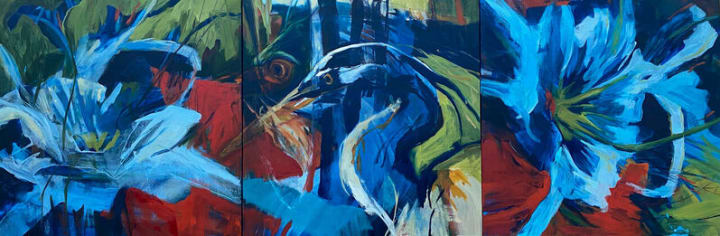
Letters to Aida: A Polyphonic Meditation on Love
What has been written here is not a complete confession,
nor a final attempt at understanding,
but one voice moving through a larger field.
In Letters to Aida,
love does not speak in a single tone,
nor is it grasped from one angle alone.
It appears at times as a bodily state,
at times as memory,
and at times as the quiet that forms
when the body no longer feels the need to defend itself.
Aida is not the subject of these letters so much as their center
the point where voices intersect,
where consciousness watches itself change.
Each letter stands on its own,
yet leaves a residue that settles beside others,
as if meaning cannot be spoken all at once,
but must be assembled through multiplicity,
through the different ways we approach the same thing:
love, when it is thought slowly,
and when it is felt before it is named.
About the Creator
LUCCIAN LAYTH
L.LUCCIAN is a writer, poet and philosopher who delves into the unseen. He produces metaphysical contemplation that delineates the line between thinking and living. Inever write to tellsomethingaboutlife,but silences aremyway ofhearing it.
Reader insights
Outstanding
Excellent work. Looking forward to reading more!
Top insights
Compelling and original writing
Creative use of language & vocab
Excellent storytelling
Original narrative & well developed characters
Eye opening
Niche topic & fresh perspectives
Masterful proofreading
Zero grammar & spelling mistakes
Keep reading
More stories from LUCCIAN LAYTH and writers in Confessions and other communities.
5.11
I am craving you – not in a lustful way – I just want to get to know you more and more … at the same time I am scared to get hurt and that only me is feeling this way … you calm me down and in the first time in forever I can really be myself again …. Not a random version .
By _ lilinana6 days ago in Confessions


Comments (2)
For me, this is about how love can be an easy space that gives instead of demands, offers room to grow rather than distance in the relationship. There’s a strong, quiet beauty in this type of love that tends to outlast fireworks and flights of fancy.
So quietly beautiful. I hope you’re well. We’re getting snow this weekend, which is good winter weather, not scary like ice.