
The Hidden Cost of Perfectionism: Why Striving for Flawless Often Holds Us Back
How the Pursuit of Perfection Fuels Stress, Stifles Growth, and Sabotages Success
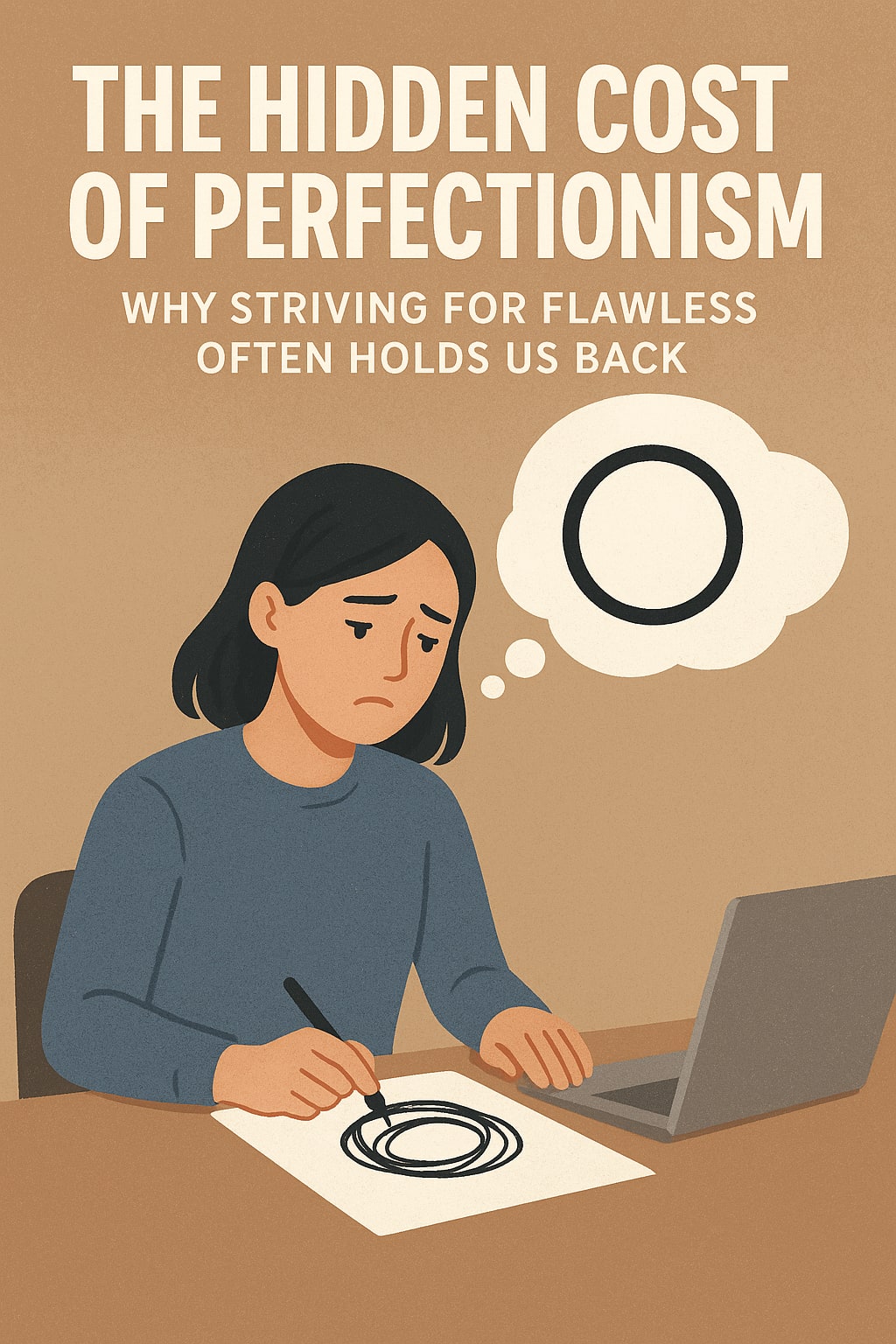
Introduction: The Double-Edged Sword of Perfectionism
In our achievement-driven world, perfectionism is often praised as a virtue. We celebrate students who aim for straight A’s, employees who double-check every detail, and creators who tirelessly refine their craft. On the surface, perfectionism looks like dedication, high standards, and a recipe for success. After all, what harm could come from wanting to do things right?
But beneath the shiny veneer, perfectionism carries a hidden cost. Far from being the secret to success, it often becomes a silent barrier—draining mental energy, paralyzing progress, and leaving individuals feeling perpetually dissatisfied. The paradox of perfectionism is that while it pushes people to achieve more, it can also trap them in a cycle of self-doubt, procrastination, and burnout.
This article explores the hidden costs of perfectionism, why striving for flawless often holds us back, and how we can learn to embrace imperfection as a path toward growth, creativity, and fulfillment.
What Perfectionism Really Means
Perfectionism is more than simply “wanting to do your best.” At its core, it is the relentless drive to meet impossibly high standards coupled with a harsh inner critic that punishes even minor mistakes.
Psychologists often describe perfectionism as having three dimensions:
Self-oriented perfectionism – holding yourself to unrealistic standards.
Other-oriented perfectionism – expecting others to be flawless.
Socially prescribed perfectionism – believing that others demand perfection from you.
While striving for excellence can be healthy, perfectionism crosses the line when it creates fear of failure, avoidance of risks, and chronic dissatisfaction—even in the face of success.
The Hidden Costs of Perfectionism
1. Perfectionism Fuels Procrastination
It may seem counterintuitive, but perfectionists often procrastinate. When the standard is “flawless,” even starting a task can feel overwhelming. Writers might leave drafts unfinished, entrepreneurs may delay launching products, and students might put off assignments until the last minute—all out of fear that the result won’t measure up.
This procrastination cycle leads to unnecessary stress and missed opportunities, ultimately undermining productivity and progress.
2. It Leads to Burnout
Perfectionists tend to overwork themselves, constantly revising, checking, and rechecking to eliminate mistakes. While this might deliver polished results, the cost is exhaustion. Over time, the endless pursuit of “perfect” leads to mental fatigue, stress-related illnesses, and burnout.
Instead of building sustainable success, perfectionists often run themselves into the ground, sacrificing their health and well-being in the process.
3. It Stifles Creativity
Creativity thrives on experimentation, risk-taking, and the willingness to make mistakes. Perfectionism, however, suffocates creativity by making failure unacceptable. When people fear judgment or imperfection, they play it safe, recycle old ideas, and avoid innovative risks.
History shows that great breakthroughs often come from trial and error, not flawless execution. The lightbulb, penicillin, and even some of the most iconic works of art came from mistakes. Perfectionism denies us that freedom.
4. It Damages Self-Esteem
Perfectionists tie their self-worth to their achievements. If the outcome isn’t flawless, they see themselves as failures. This constant self-criticism chips away at confidence and fosters feelings of inadequacy.
Ironically, even when perfectionists succeed, they struggle to celebrate victories. Instead of appreciating their efforts, they fixate on what could have been better—creating a never-ending cycle of dissatisfaction.
5. It Strains Relationships
Perfectionism doesn’t just affect individuals; it also impacts relationships. People with high standards may place unrealistic expectations on friends, family, or coworkers. They may become critical, controlling, or difficult to please, creating tension and conflict.
Similarly, those who believe others expect perfection from them may withdraw, fearing rejection if they don’t measure up. In both cases, perfectionism builds walls rather than bridges.
Why Striving for Flawless Holds Us Back
The core reason perfectionism is counterproductive lies in the myth of flawlessness itself: perfection simply doesn’t exist. The world is messy, unpredictable, and full of variables beyond our control. Striving for an unattainable ideal not only wastes energy but also prevents us from embracing opportunities that come through trial, error, and adaptation.
In professional settings, perfectionism can prevent leaders from delegating, stall innovation, and slow down teams. In personal life, it can rob us of joy, spontaneity, and meaningful connections. At its worst, perfectionism fosters anxiety, depression, and feelings of paralysis—leaving individuals stuck in pursuit of an illusion.
Shifting the Mindset: From Perfection to Progress
Escaping the perfectionism trap doesn’t mean lowering standards or settling for mediocrity. Instead, it’s about shifting focus from unattainable perfection to achievable progress. Here are a few strategies:
1. Adopt a Growth Mindset
View mistakes not as failures but as opportunities to learn. A growth mindset encourages resilience, adaptability, and continuous improvement rather than rigid perfection.
2. Set “Good Enough” Goals
Perfectionists often set unreasonably high goals. Reframing tasks with “good enough” standards helps reduce stress and promotes completion rather than endless revisions.
3. Celebrate Small Wins
Acknowledging progress builds momentum and reinforces confidence. Even small achievements deserve recognition.
4. Practice Self-Compassion
Be as kind to yourself as you would to a friend. Replace harsh inner criticism with encouragement and understanding.
5. Embrace Imperfection as Authenticity
In an age of polished social media feeds and curated identities, authenticity is refreshing. Allowing imperfections to show makes you relatable, human, and real.
Real-Life Examples: Success Without Perfection
Steve Jobs was known for obsessing over design, but even he released products with flaws. The first iPhone had no third-party apps, limited functionality, and glitches—but it revolutionized the industry because it was launched.
J.K. Rowling was rejected by multiple publishers before Harry Potter became a global phenomenon. Her willingness to persist despite imperfection shaped her success.
Edison’s lightbulb experiments failed thousands of times, yet each “failure” brought him closer to invention.
These examples remind us that progress, persistence, and courage matter more than flawlessness.
Conclusion: The Freedom in Imperfection
Perfectionism disguises itself as ambition, but in reality, it often shackles us to fear and dissatisfaction. The hidden costs—procrastination, burnout, stifled creativity, damaged self-esteem, and strained relationships—show that striving for flawless can hold us back more than it propels us forward.
By shifting our perspective from perfection to progress, we open the door to growth, resilience, and genuine success. Embracing imperfection doesn’t mean settling for less; it means freeing ourselves from unrealistic expectations and making space for authenticity, creativity, and joy.
After all, it’s the flaws, mistakes, and missteps that make us human—and often lead to our greatest achievements.
About the Creator
Keep reading
More stories from Aiman Shahid and writers in Confessions and other communities.
The Paradox of Choice: Why Having Too Many Options Makes Us Less Happy
Introduction We live in an age of abundance. Walk into a supermarket, and you’ll be confronted with dozens of cereal brands, hundreds of snack variations, and countless flavors of bottled water you didn’t even know existed. Open Netflix, and you’ll spend half an hour scrolling through endless recommendations before finally choosing something—or perhaps giving up altogether. On the surface, this looks like progress. More choices should logically mean more freedom, more customization, and ultimately, more happiness. After all, if we can choose exactly what we want, shouldn’t we be more satisfied?
By Aiman Shahid6 months ago in Confessions
Thoughts on Vocal and the way the world is
"Death cannot stop true love, only delay it." – Wesley in The Princess Bride. I decided to come back to Vocal on a very cold and dark night at the end of December. I had been, and still am, convalescing from a horrible staph infection that had gone misdiagnosed for months. This, paired with the increasing challenges of being healthy, making the best choices for my co-parented child, being a wife, and being a director at a new job, was a lot to manage.
By Jazzy 29 days ago in Confessions
What Happens To Your Brain When You Stop Multitasking
Digital technology is the culprit that is causing us to doom scroll when tired, disengaged and unmotivated with the content that motivated you to log onto your device to consume in the first place. That is only the beginning. In the modern workplace (and even when filing cabinets were around, I confirmed this with my adopted parents to get my facts right); reading files while you are supposed to be present to the caller on the other end of the phone line is another classic example of multitasking that causes your brain (although adaptable and intelligent) to lose focus and concentration.
By Justine Crowley2 days ago in Psyche


Comments
There are no comments for this story
Be the first to respond and start the conversation.