
The Library of Unsent Letters
Every Confession Deserves a Voice

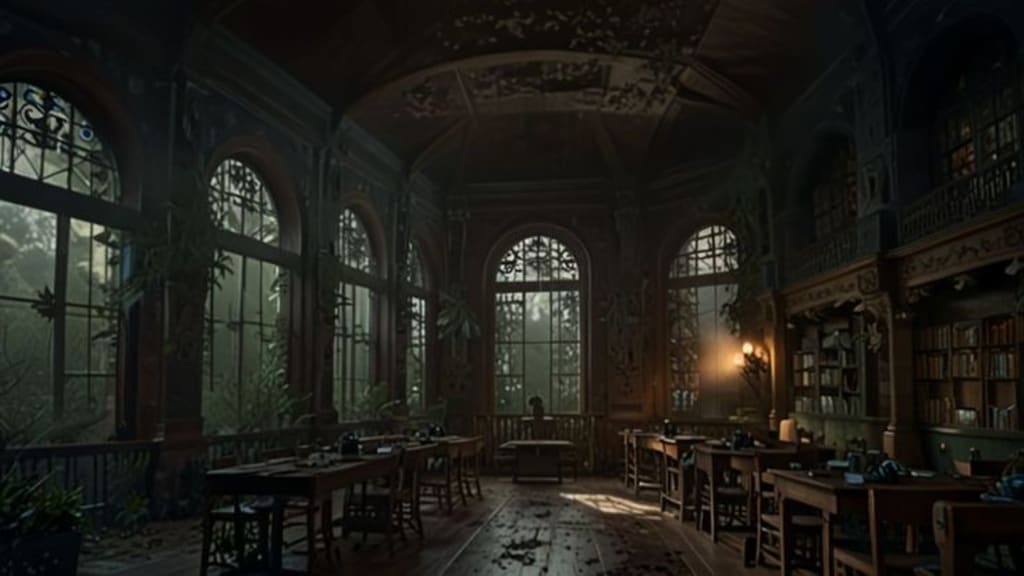
The library stood at the corner of Maple Street, quiet and almost forgotten between a closed bakery and a hardware store that rarely saw customers. Most people visited for textbooks or internet access, never noticing the narrow wooden cabinet near the back wall labeled simply: “Unsent Letters.” The sign had faded over the years, but the drawer beneath it remained carefully maintained by Mrs. D’Souza, the elderly librarian who believed that words, even unspoken ones, deserved a place to rest.
No one knew who started the tradition. Inside the cabinet were hundreds of envelopes—some sealed, some open, some written in hurried ink, others in neat, trembling handwriting. They were letters never delivered. Apologies never spoken. Love never confessed. Truths too heavy to send. Mrs. D’Souza allowed anyone to leave a letter anonymously, as long as it harmed no one. “Sometimes writing is enough,” she would say.
One rainy afternoon, eighteen-year-old Farhan entered the library with a folded paper in his jacket pocket. He had walked past the building many times but never gone inside. Today felt different. His chest carried a weight that had grown unbearable over the past year. It was easier to breathe outdoors than at home.
Farhan had lost his best friend, Hamza, in a sudden accident the previous winter. The argument they had shared the day before still replayed in his mind. Harsh words. Stubborn silence. Pride. He had planned to apologize the next morning. There had been time, he thought. There was always time—until there wasn’t.
Since then, guilt followed him everywhere. He had written countless messages on his phone, addressed to a contact that would never reply. He deleted them each time. Nothing felt sufficient.
Inside the quiet library, he noticed the cabinet. Curious, he pulled the drawer slightly open. He saw envelopes marked “To My Mother,” “To the Man I Forgave,” “To the Girl on the Train.” He felt less alone instantly. Others, too, carried unsaid things.
Mrs. D’Souza approached gently. “You may read a few,” she said softly, “but they stay here.” Farhan nodded. He read one written by a father who regretted missing his daughter’s graduation. Another by a woman who never confessed her love before moving away. Each letter carried vulnerability without expectation of response.
Farhan sat at a wooden desk and unfolded his own paper. His handwriting was uneven. “Hamza,” it began. He described the argument honestly, admitting his pride and impatience. He apologized for choosing to win a debate instead of protecting a friendship. He wrote about memories—late-night laughter, shared dreams, football matches in the alley behind their houses. He wrote until his vision blurred.
When he finished, he hesitated. Leaving the letter felt like admitting finality. But keeping it felt like clinging to pain. Slowly, he placed the folded paper into an envelope and wrote only one word on the front: “Friend.” Then he slid it into the cabinet.
Nothing dramatic happened. No sudden relief, no miracle. But as he stepped outside, the air felt lighter. The apology existed somewhere now. It had form. It had honesty.
Weeks passed, and Farhan found himself returning to the library—not to retrieve his letter, but to read others. Each visit reminded him that regret is part of being human. What mattered was not perfection, but acknowledgment.
One day, Mrs. D’Souza shared something quietly. “People think these letters are about the past,” she said. “But they are really about the future. Once written, the heart learns how to speak sooner next time.”
Farhan understood. He began reaching out more openly—to family, to friends, to people he cared about. He no longer delayed apologies or gratitude. He had learned that silence can protect pride, but it can also steal opportunity.
The cabinet of unsent letters remained in the corner, growing heavier with envelopes each year. It was not a place of sorrow, but of courage—the courage to face what was left unsaid.
Farhan never removed his letter. He didn’t need to. The act of writing had already changed him. Some confessions are not meant to reach their destination. They are meant to release the one who writes them.
About the Creator
Sudais Zakwan
Sudais Zakwan – Storyteller of Emotions
Sudais Zakwan is a passionate story writer known for crafting emotionally rich and thought-provoking stories that resonate with readers of all ages. With a unique voice and creative flair.
Keep reading
More stories from Sudais Zakwan and writers in Confessions and other communities.
The Truth I Never Sent
The message sat in Rahim’s drafts folder for three years. It had no subject line, no emojis, no casual greeting to soften the weight of what followed. Just a block of text written late one night when honesty felt urgent and fear felt distant. By morning, fear always returned, and the message stayed where it was—unsent, unread, and quietly powerful.
By Sudais Zakwan6 days ago in Confessions
Blessed 33
So I woke up on the morning of February 5, 2026 and guess what and you know what I realized? It’s my 33rd birthday. Do you know what that means? Yes, technically I’m getting old, but what I couldn’t have guessed was this would be one of the best days of my life.
By Joe Patterson7 days ago in Confessions
When True Love Never Questions Your Soul
“And she’s going to learn that this life will hit you, hard, in the face, wait for you to get back up, just so it can kick you in the stomach but getting the wind knocked out of you is the only way to remind your lungs how much they like the taste of air.” — Sarah Kay’s Poem — If I Should Have a Daughter
By Chantal Christie Weiss7 days ago in Humans



Comments
There are no comments for this story
Be the first to respond and start the conversation.