
Why Trump is scrambling for allies in his trade war with China
How Global Realities Forced a Shift in Trump's Trade Strategy with China
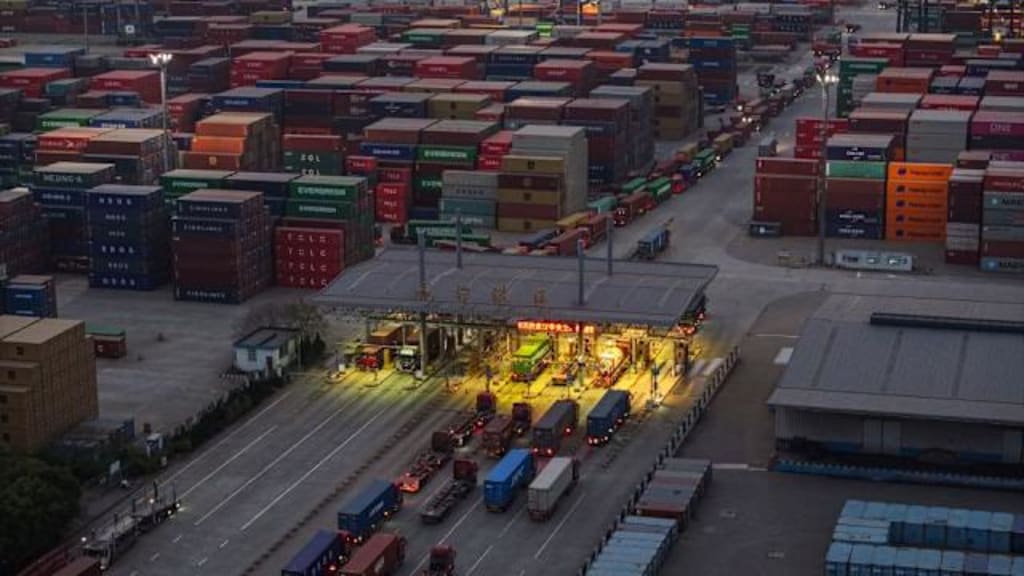
The U.S.-China trade war initiated by Donald Trump is one of the most striking and contentious pages in the new history of the global economy. What began as a brash bid to "put America first" and protect American manufacturers soon escalated into a complex and costly battle. Trump had explained the trade war as trade rebalancing, resisting Chinese unfairness, and restoring American jobs. But as economic fallout ensued and opposition from China remained firm, it was clear that the United States could not succeed without allies. That's when Trump ended up looking for help in a rush — and here's a closer look at the reasons behind that desperation to be helped.
1. Global Economies Are Interconnected
Today, no country is alone. The global economy operates like a spider's web — the actions of every country affect others. When Trump imposed tariffs on Chinese goods worth hundreds of billions of dollars, China hit back with retaliatory tariffs that targeted American agriculture, manufacturing, and tech sectors hard. This game of retaliation led to U.S. price increases and disrupted supply chains for businesses across the globe.
Without a like-minded nation bloc putting joint pressure on China, such solitary moves proved ineffective to compel China into submission. The absence of consensus actually rendered America looking even more isolated than intimidating.
2. China's Global Influence is Growing
China is not just another trading partner — it's one of the world's biggest economies and a big investor in developing nations. As Trump escalated the trade war, China focused on developing its global links. With massive projects like the Belt and Road Initiative and trade deals with sections of Europe, Africa, and Asia, China ensured that even if the U.S. market became less accessible, it had alternatives.
For Trump, this was unsettling. The ability of China to adapt and construct coalitions made it harder for American tariffs to make a difference. It was clear that unless the U.S. worked with allies to encircle China's options, the pressure would never be enough.
3. Technology Rivalry Needed Joint Action
Apart from trade balances, America was also concerned very seriously with the technological ambitions of China. Huawei and ZTE were emerging rapidly in 5G, artificial intelligence, and surveillance technology – areas where the U.S. wished to maintain a leading edge. Trump prevented American companies from working with a few of the Chinese technology giants and invited others to do so as well.
But most nations were hesitant. Some feared Chinese reprisals, while others depended on Chinese technology for infrastructure. With no coordinated enforcement, these bans were less effective. Trump realized that to stop China's technological influence effectively, he required broad international cooperation.
4. Domestic Economic Pressure Was Rising
At home, Trump's trade war was not as smooth sailing as he had imagined. Farmers in America — who tended to be politically supportive of Trump — lost big as China cut off purchases of American farm products. To counteract this, the Trump administration authorized billions of dollars in subsidies, but that was not a long-term solution.
Producers also experienced higher input costs due to tariffs on Chinese inputs. As economic suffering mounted, criticism mushroomed. Trump needed to alleviate the pain, and one way to do so was to get other nations involved in the fray — sharing the risk and making the trade war a global effort, not a solo crusade.
5. Regaining Global Leadership
Trump's "America First" policies often put space between the U.S. and its traditional allies. However, confronting a superpower like China required something more than national pride — it required unity and strategy. By soliciting assistance from the members of NATO, Asian allies like Japan and South Korea, and economic behemoths like the EU, Trump hoped to rebuild confidence and demonstrate a united front against China's belligerent trade practices.
This change of strategy proved that even the strongest of nations need friends when confronting an issue as big and complex as China.
---
Conclusion: Strength Lies in Unity
Trump's frantic quest for friends in his trade war with China was not a sign of weakness, but a recognition of the nature of the world. No one country, even a powerful one like America, can effectively resist China's power alone. To resist unfair trade, protect technological dominance, and protect domestic industries, cooperation is required among nations. In the end, unity is not merely a diplomatic tool — it's a necessity in the modern world.
About the Creator
Keep reading
More stories from Sourove Kumar and writers in Confessions and other communities.
Ecuador’s President Daniel Noboa declared election winner as rival demands recount
Quito, Ecuador — In a breakthrough for Ecuador's young democracy, President Daniel Noboa was officially declared the winner of the nation's presidential election, securing a new four-year mandate. The National Electoral Council (CNE) certified Noboa's victory after he won approximately 56% of the vote in a bitterly fought runoff with leftist challenger Luisa González, who obtained approximately 44%. The announcement has not been free of controversy, however, as González has decried the results and demanded a full recount due to suspicions of electoral fraud.
By Sourove Kumar10 months ago in Education
Blessed 33
So I woke up on the morning of February 5, 2026 and guess what and you know what I realized? It’s my 33rd birthday. Do you know what that means? Yes, technically I’m getting old, but what I couldn’t have guessed was this would be one of the best days of my life.
By Joe Patterson7 days ago in Confessions
The Truth I Never Said Out Loud
For years, I carried a truth that I never said out loud. It wasn’t a dark secret or something dramatic. It was simple, quiet, and heavy. I pretended everything was fine, even when it wasn’t. I smiled when I felt tired. I agreed when I wanted to say no. And slowly, I forgot what honesty with myself felt like.
By Sudais Zakwan8 days ago in Confessions
The Tango Connection
I suppose I've become a writer so I wouldn't bore everyone to death telling them my stories. Reading them is reading. Not the same. There's rhythm. And timing and, most importantly, drama and suspense. Unless you have tremendous magnetism and an undeniable stage presence, there's no way you can engage an audience the way you can by writing your story. That's my opinion.
By Rene Volpi a day ago in Beat


Comments (1)
Nice