
From DNA to Cell Phone Pings to Witnesses - ALL the Unknowns in the Nancy Guthrie Kidnapping Case
Digital footprints and surveillance patterns may hold the key to identifying Nancy Guthrie’s abductor.

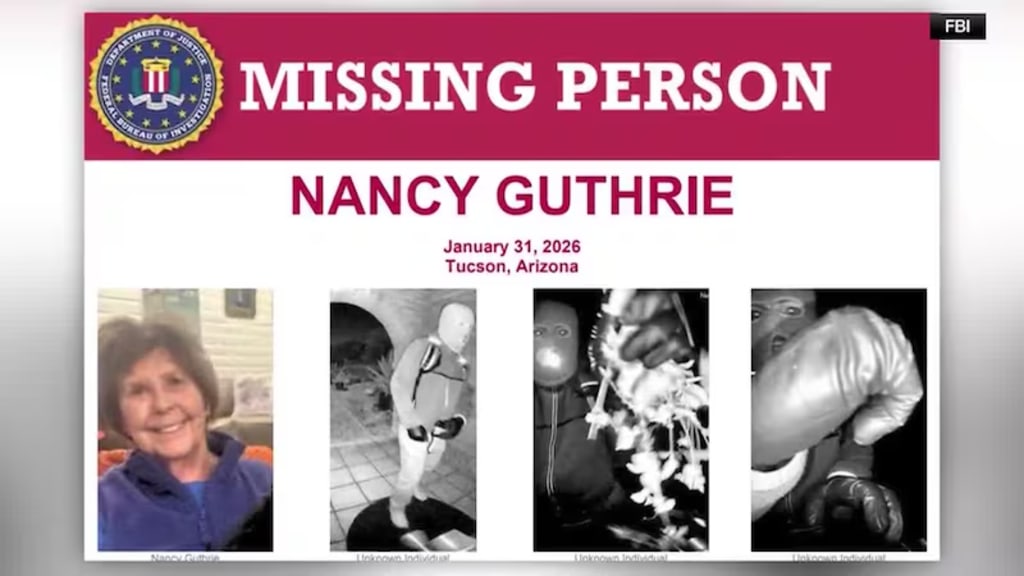
When investigators confront a disappearance like Nancy Guthrie’s, the truth rarely reveals itself through dramatic breakthroughs. Instead, it emerges slowly, pieced together through patterns—tiny, often invisible clues that form a digital and physical trail. Two of the most powerful tools in that process are neighborhood surveillance footage and cellular data. Together, they can reconstruct movements, identify anomalies, and ultimately expose the presence of someone who didn’t belong.
The first critical element is what investigators call “pattern of life.” This refers to the normal, everyday rhythm of a neighborhood: familiar cars, routine deliveries, regular visitors. When something disrupts that rhythm—an unfamiliar vehicle repeatedly circling, a person lingering without explanation—it stands out. Surveillance cameras from neighboring homes, doorbell systems, and nearby businesses can capture these anomalies. Even if a suspicious vehicle wasn’t noticed in the moment, reviewing weeks or months of footage can reveal patterns that only become meaningful in hindsight.
Anyone planning a targeted crime rarely acts impulsively. Instead, they often conduct remote surveillance beforehand. Open-source tools like Google Maps and Google Earth allow individuals to study homes, identify entry points, and analyze surroundings without ever setting foot in the neighborhood. But eventually, digital reconnaissance must transition into physical presence. That’s when cameras become essential. A vehicle that appears briefly may not mean much. But one that appears repeatedly, at odd hours, and without clear connection to the area, becomes significant.
Equally important—arguably more so—is cellular data. Every mobile phone carries a unique identifier known as an IMEI number. This number acts as a digital fingerprint for the device. When a phone connects to nearby cellular towers, it leaves behind a traceable signal. Investigators can analyze these signals to determine which devices belong to residents and which do not.
The process begins by establishing a baseline. Phones belonging to neighbors, family members, and regular visitors can be identified and effectively “whitelisted.” Delivery drivers, service workers, and utility personnel can also be accounted for. What remains are the unknown devices—the outliers. These unknown IMEI numbers become crucial leads. If a device appears near the home repeatedly in the weeks leading up to the disappearance, it suggests surveillance. Even if the suspect turned their phone off during the crime itself, earlier activity may still reveal their presence.
This kind of analysis has proven decisive in past investigations. By examining historical cell tower data, investigators can determine whether a phone repeatedly returned to the same location. A single appearance may mean nothing. Multiple appearances establish intent.
However, the timeline matters. Investigators don’t just look at the day of the crime. They go back weeks, sometimes months, reconstructing the buildup. This broader window increases the chances of identifying preparatory behavior. Someone may have been scouting the area long before acting.
At the same time, the recovery of physical surveillance equipment remains ongoing. The removal and review of cameras from nearby homes indicates that investigators are still gathering visual data. This suggests that the digital puzzle is not yet complete. Law enforcement may already possess critical cellular information but could be withholding it while they verify connections and build a stronger case.
Another important factor is the possibility of forensic evidence. DNA recovered from inside the home that does not belong to Nancy or known associates could represent the suspect. But DNA alone often isn’t enough. Investigators must connect it to a person. That’s where cellular data, surveillance footage, and timelines intersect. When all three align, they transform suspicion into identification.
Statistically, many kidnappings involve someone with some level of familiarity with the victim or environment. This doesn’t always mean a close personal relationship, but it often indicates prior exposure. Someone who had worked nearby, visited the area, or conducted legitimate business there could have gained knowledge of routines and vulnerabilities.
The investigation’s progress may appear slow from the outside, but this is not unusual. Major cases often require weeks of analysis before arrests occur. Data must be collected, verified, and cross-referenced. Investigators must ensure that when they move, they do so with certainty.
Ultimately, the truth may already exist within the data. It may be hidden in a forgotten camera frame or buried in the silent record of a phone signal. These digital traces do not forget. They remain, waiting to be found, waiting to reveal who was there—and why.
About the Creator
Lawrence Lease
Alaska born and bred, Washington DC is my home. I'm also a freelance writer. Love politics and history.
Keep reading
More stories from Lawrence Lease and writers in Criminal and other communities.
Inside the Sordid World of Jeffrey Epstein and What His Troubling Emails to Women Really Reveal
There’s something almost hypnotic about the Epstein document archive. Sitting down to explore it isn’t just research—it’s immersion. Hours disappear as you scroll through emails, attachments, and fragments of conversations that hint at a larger system operating behind the scenes. The sheer volume alone is overwhelming. And yet, paradoxically, what’s most striking isn’t what’s there. It’s the constant awareness that much more may still be missing.
By Lawrence Leaseabout 9 hours ago in Criminal
When a Video Game Argument Becomes a Life-Ending Tragedy
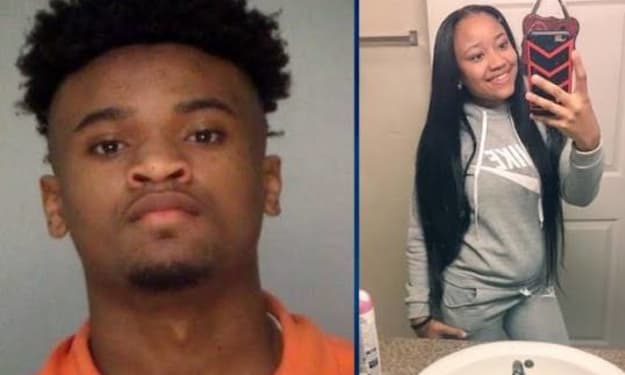
On the evening of February 2 2018, a family dispute inside a home in Bibb County Georgia ended in a tragic and irreversible loss. What began as a disagreement over internet access and a video game escalated into violence that ultimately took the life of a young woman and led to a life sentence for her teenage brother.Sixteen-year-old Kevon Watkins wanted to spend the evening playing an online video game. However, the internet connection in the house was running too slowly for him to play properly. Frustrated, he decided to take matters into his own hands. Rather than waiting for the connection to improve or asking for help, he changed the password on the home router so that no one else in the household would be able to access the internet.
By Kure Garba7 days ago in Criminal
The Man Who Stole Time
In the city of Brookhollow, crime was usually predictable. Pickpocketing in crowded markets, the occasional burglary in quiet neighborhoods, and once in a while, a carefully planned bank fraud. Detective Haris Malik had spent fifteen years studying patterns, believing that every criminal left behind a trail—no matter how small. But the case that unsettled him most involved a suspect who seemed to steal something no camera could record and no law clearly defined: time.
By Sudais Zakwan2 days ago in Criminal



Comments
There are no comments for this story
Be the first to respond and start the conversation.