
New Evidence Reveals the Yogurt Shop Killer After 30 Years
Austin's Most Famous Cold Case Has Finally Been Solved

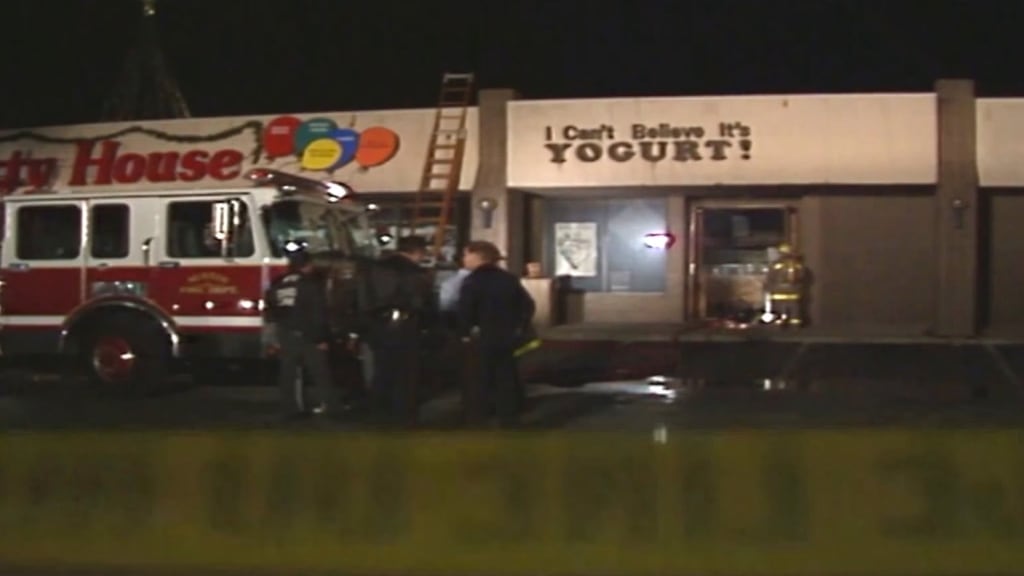
I still remember the first time I heard about the yogurt shop murders. Even decades later, the details cling to you in a way that feels almost invasive. Four teenage girls. No witnesses. No clear motive. A quiet Austin neighborhood suddenly transformed into the site of one of the most disturbing crimes in the city’s history.
It happened just before midnight on Friday, December 6th, 1991. Rookie officer Troy Gay was on patrol in North Austin when he noticed smoke rising into the night sky. As he got closer, sharp popping sounds cut through the air. The back of the I Can’t Believe It’s Yogurt shop was on fire. Firefighters rushed in, hoses blasting, flames rolling out into the parking lot. At first, everyone assumed it was just another commercial fire.
Then the search began for the employees who were supposed to have closed the shop for the night.
That’s when the horror revealed itself.
Inside the Yogurt Shop
Sergeant John Jones, an Austin PD homicide investigator, arrived early on the scene. By coincidence that would later haunt the case, he was already working with a local news crew on a documentary about murders in Texas. When their van pulled into the parking lot, the cameras were rolling.
Inside the shop, officials were met with a scene so disturbing that their reactions alone told the story. Four bodies. All girls. All stripped naked. All shot in the head, execution-style. One was found in a crawling position, as if she’d tried to escape. Two were stacked on top of each other. The fourth lay nearby.
The fire, meant to destroy evidence, nearly succeeded. Firefighters had unknowingly washed away fingerprints, footprints, and possibly early DNA evidence. The crime scene was scorched, soaked, and smeared with soot. Whatever clues the killer left behind were now buried under water and ash.
Who the Girls Were
The victims were identified as 17-year-olds Eliza Thomas and Jennifer Harbison, both employees at the yogurt shop that night. Eliza was the supervisor. Also inside were Jennifer’s 15-year-old sister Sarah and Sarah’s 13-year-old friend, Amy Ayers.
Amy had planned to spend the night with Sarah. The two girls had been at Northcross Mall earlier that evening and stopped by the shop because Jennifer was giving them a ride home. Under normal circumstances, all four girls wouldn’t have been there together. That detail would matter later.
These were kids from loving families. No known enemies. No risky lifestyles. No obvious reason anyone would want them dead.
A Crime Scene Full of Questions
The girls were attacked mid-routine. The front door was locked from the inside, the key still in the lock. Chairs were stacked. Cleaning had started but not finished. Water sat in the sink. A half-filled bucket lay on the floor.
Investigators believed the killer either entered through the unlocked back door while the girls were cleaning—or had already been inside, someone they didn’t perceive as a threat.
Amy’s autopsy raised even darker questions. She’d been shot twice in the head with two different guns: a .22 and a .380. Two weapons used on a single child. One killer switching guns? Or more than one person involved?
The other three girls were bound, gagged, strangled, and shot. Eliza and Sarah were tied with their own clothing. Jennifer had been strangled before being shot. The brutality suggested sexual motivation and a deliberate effort to eliminate witnesses.
A City Demands Answers
Austin was gripped by fear. Candlelight vigils filled the streets. Billboards with the girls’ faces appeared across the city. A reward climbed to $100,000. Tip lines rang nonstop.
And then police focused on four teenage boys who frequented Northcross Mall: Maurice Pierce, Forest Wellborn, Michael Scott, and Robert Springsteen.
Maurice was caught carrying a loaded .22 revolver near the mall. What followed were confessions that sounded convincing—until they didn’t. Stories changed. Details conflicted. Interrogations stretched for hours, sometimes days. Detectives lied about evidence. They used hypnosis. They suggested memories could be “unlocked.”
Still, two of the boys confessed. The city breathed a sigh of relief. Arrests were made. Justice, it seemed, had finally arrived.
Confessions That Didn’t Sit Right
As time passed, doubts grew. There was no physical evidence tying the boys to the crime scene. No DNA. No fingerprints. No confirmed weapon match. The confessions themselves were riddled with contradictions.
Defense attorneys exposed coercive interrogation tactics. One detective involved was already infamous for extracting false confessions in other murder cases. Psychologists testified that the methods used could easily create false memories.
Eventually, the convictions collapsed. The men were released. Their lives, however, were already shattered.
And the real killer was still out there.
The Truth Buried for Decades
Years later, new DNA technology reopened the case. Advanced testing excluded the four boys completely. Ballistics analysis linked the .380 casing from the yogurt shop to other murders across the South.
The name that surfaced was Robert Eugene Brashers—a violent serial killer with a history of execution-style murders and sexual assaults. He’d been stopped near Austin less than 48 hours after the yogurt shop killings, driving a stolen car. Inside was a .380 pistol. The same type used on Amy.
Brashers had killed himself during a police standoff in 1999. But DNA from his family confirmed it. His genetic profile matched evidence from the yogurt shop with odds of coincidence in the millions. His methods fit the crime perfectly.
The mystery that haunted Austin for over 30 years finally had a name.
What the Case Really Reveals
The yogurt shop murders weren’t just a story about violence. They were a warning about desperation in the justice system. About tunnel vision. About how easily fear and pressure can override evidence.
Some detectives worked this case for decades and never felt comfortable with the confessions. Some families were relieved. Others were devastated all over again.
The case was finally solved—but at an enormous cost.
And the most unsettling question remains:
How many other people are sitting in prison right now because they said what investigators wanted to hear, not what actually happened?
The yogurt shop murders may be closed—but the lessons they left behind shouldn’t be.
Sources:
https://people.com/why-are-the-yogurt-shop-murders-unsolved-11785825
https://time.com/7306956/yogurt-shop-murders-true-story-hbo/
https://www.austinchronicle.com/news/scene-of-the-crime-11753280/
https://www.nytimes.com/2009/07/01/us/01austin.html
https://www.forensicmag.com/3594-All-News/621662-DNA-Ballistics-Tie-Serial-Killer-to-1991-Yogurt-Shop-Murders-in-Austin/
https://deadline.com/2025/08/yogurt-shop-murders-documentary-finale-interviews-cold-case-1236496256/
https://www.austintexas.gov/news/significant-breakthrough-made-1991-i-cant-believe-its-yogurt-murders
https://archive.ph/20251005115246/https://www.statesman.com/news/local/article/false-confessions-austin-yogurt-shop-murders-21074122.php
About the Creator
Lawrence Lease
Alaska born and bred, Washington DC is my home. I'm also a freelance writer. Love politics and history.
Keep reading
More stories from Lawrence Lease and writers in Criminal and other communities.
Revisiting Jeffrey Epstein's "Demise": Here's What We Know Now
Every once in a while, a story comes along that refuses to stay buried. Most scandals eventually fade; the news cycle moves on; people lose interest. But the Jeffrey Epstein saga is not one of those stories. It lingers. It mutates. It resurfaces when you least expect it. And the more I try to step away from it, the more I find myself pulled back in.
By Lawrence Lease2 months ago in Criminal
Awaiting Review Epstein | Leaked Emails EXPOSED Part 5
But this might be a metaphor. A dancing and singing program might have been organised in Israel. And presented something for the US President there. The spokesperson of the Indian Ministry of External Affairs, on January 31st, gave a statement regarding these files, "Beyond the fact of the Prime Minister's official visit to Israel in July 2017, the rest of the illusions in email, are little more than trashy ruminations, by a convicted criminal which deserve to be dismissed with the utmost contempt."
By Imran Ali Shah5 days ago in Criminal
Part 2 Interview With Joe Patterson, Author Of Melanin Memoirs
This is my second interview with Joe Patterson. His 4th anniversary writing on Vocal will be in March 2026. He has one achievement on Vocal, The Other Foot. He has over 17,000 reads on Vocal since he started on Vocal in 2022. Joe Patterson is very creative poet and rapper. Joe is deep thinker and I feel it is reflected in his latest published book, Melanin Memoirs.
By Mariann Carroll4 days ago in Interview



Comments
There are no comments for this story
Be the first to respond and start the conversation.