
The Confession That Never Slept
A late-night confession ignites a chain of truths America wasn’t ready to hear

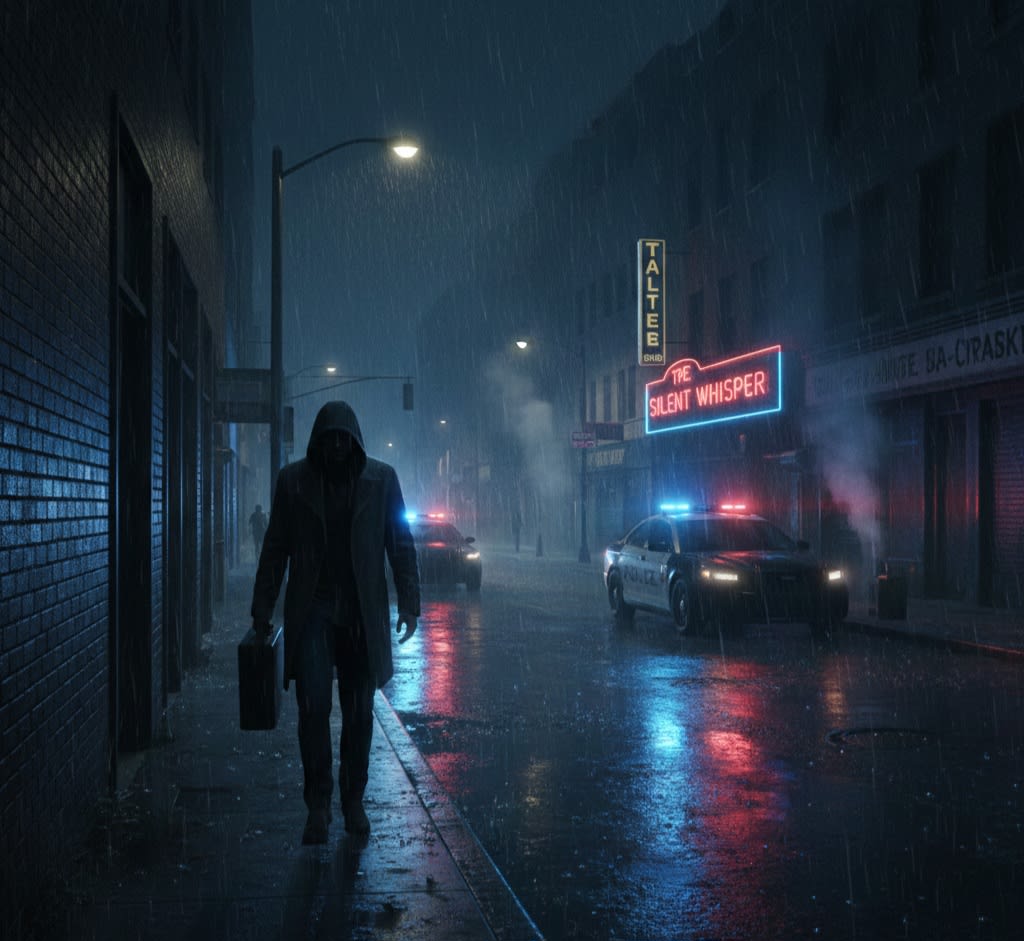
By the time the city learned his name, he was already gone.
The first confession arrived at 3:17 a.m., typed in clean paragraphs and sent from a public library computer that shut down minutes later. It wasn’t addressed to the police or the press. It was posted anonymously in an online forum frequented by insomniacs, night-shift workers, and people who believed the dark hours told the truth better than daylight.
I killed a man who deserved it, the post began. And I’ll tell you why.
Most readers assumed it was fiction—another late-night creative exercise designed to stir adrenaline. But within twelve hours, the details matched a real unsolved murder from six years earlier: the angle of the knife, the chipped tile in the kitchen, the sound of a train passing at the exact moment the heart stopped.
The moderators flagged it. The police archived it. The internet copied it.
Then came the second confession.
This one described a hit-and-run on a rain-slicked highway in Ohio, a woman left bleeding under flickering streetlights while the driver prayed no one saw the dented bumper. The case had gone cold. No witnesses. No camera footage. But the anonymous writer knew the song playing on the radio, the cracked rosary hanging from the rearview mirror, the taste of bile that rose afterward.
The country leaned in.
Reddit threads exploded. Podcasts speculated. Amateur detectives stitched timelines together like quilts made of blood and doubt. Was this one person? A collective? A hoaxer with access to police files?
Law enforcement said nothing. Silence became strategy.
The third confession changed everything.
It wasn’t violent. It was financial. A slow crime, a quiet one—the embezzlement that collapsed a Midwestern hospital wing, the missing funds that forced a neonatal unit to close. Babies transferred. Two died in transit. The confession named spreadsheets, shell accounts, and a charity board dinner where the wine was more expensive than the incubators.
That night, the post ended differently.
I don’t expect forgiveness, it read. I only expect to be heard.
That line haunted people more than the crimes.
Theories multiplied. Some believed the confessor was dying—terminal guilt seeking air before the body failed. Others argued it was performance art, a mirror held up to America’s fascination with sin and absolution. A few insisted it was a rogue AI trained on crime databases, bleeding fiction into fact.
Then the fourth confession dropped.
This one named a name.
A small-town sheriff in Texas. A missing teenager. Evidence lost. A door left unlocked. A body found miles from where it should have been. The post didn’t accuse directly—it simply described choices. Human ones. Lazy ones. Fearful ones. And it ended with coordinates.
When the police arrived, they found what the confession promised: a rusted barrel, buried shallow, with bones arranged as if someone had tried—too late—to make things right.
The sheriff resigned within hours.
America stopped sleeping.
News anchors spoke in hushed tones. Social feeds refreshed endlessly. The confessions became a countdown—each one released at 3:17 a.m., each one more precise, more devastating. People set alarms. Some poured coffee. Others prayed the next one wouldn’t sound like someone they loved.
But the fifth confession never came.
Instead, there was a final post.
You think monsters look like strangers, it read. But monsters look like neighbors. Like leaders. Like reflections.
Then the account vanished.
No IP trail. No fingerprints. No final signature.
The cases reopened anyway. Prosecutors moved. Old suspects were questioned. Forgotten evidence was reexamined. Some people were arrested. Others were publicly forgiven too late to matter. A few families finally buried the truth alongside their dead.
And something else happened—something quieter.
People started confessing on their own.
Not online. Not anonymously. In police stations. In living rooms. In letters left on kitchen tables. Small crimes. Big ones. Secrets that had calcified over decades. The confessions didn’t always bring justice, but they brought an end to pretending.
Psychologists called it “moral contagion.” Clergy called it awakening. The internet called it The Sleepless Effect.
No one ever proved who wrote the original posts.
But every year, on the anniversary of the first confession, someone posts a single sentence at 3:17 a.m., from a different account, in a different place.
The truth is still awake.
And for a moment, across the country, America remembers that crime isn’t just about what we do in the dark—but what we refuse to admit in the light.
About the Creator
He Was Innocent Until Midnight
M Mehran At exactly 11:59 p.m., the prison loudspeaker crackled to life. “Inmate 3021, prepare for transfer.” Jacob Reeves stopped breathing. Transfer meant only one thing on death row. Execution. For ten years, Jacob had lived between concrete walls, labeled a monster by the world. Convicted of murdering his wife and six-year-old daughter in a house fire that shook the nation. The headlines had been brutal: FATHER BURNS FAMILY ALIVE NO MERCY FOR THE DEVIL AT HOME Jacob had stopped defending himself years ago. No one listened anyway. But tonight—one minute before midnight—everything was about to change. The Case Everyone Thought Was Closed Detective Laura Bennett remembered the Reeves case clearly. It had launched her career. Clean evidence. Quick conviction. Public applause. Too clean. Jacob’s house had burned down in 2015. Investigators found traces of accelerant. Jacob’s fingerprints were on the gas can. Motive? Insurance money. An open-and-shut criminal case. At least, that’s what they wanted it to be. Laura had risen in rank since then, but something had always bothered her. The fire report. The witness statements. The speed. Crimes were never that simple. A Letter That Shouldn’t Exist Three days before Jacob’s execution, Laura received an anonymous envelope. Inside was a single sentence: “If Jacob Reeves dies, the real killer lives free.” And a USB drive. The files were old—security footage from a nearby gas station, time-stamped the night of the fire. Footage that had never made it into evidence. Laura’s stomach dropped. At 10:41 p.m., a man filled a gas can. At 10:44 p.m., he drove away—toward Jacob’s neighborhood. Jacob was at work until 11:10 p.m. The fire started at 10:55 p.m. Jacob physically couldn’t have done it. The Criminal Inside the System Laura dug deeper. She rechecked the original case files and found something worse than a mistake. Tampering. The accelerant report had been altered. Witness statements rewritten. Evidence “lost.” Someone inside the system had built a lie so perfect that it survived a decade. And Laura knew exactly who. Captain Henry Wallace. Her mentor. The man who trained her to “protect justice.” A Race Against Time Laura stormed into Wallace’s office. “Jacob Reeves is innocent,” she said. Wallace didn’t flinch. “You should let the past stay buried.” “Why?” Laura demanded. “Why frame him?” Wallace sighed. “Because the real killer was untouchable.” The truth spilled out like poison. Jacob’s neighbor—Evan Price—had been running an illegal chemical operation. Jacob discovered it and threatened to expose him. The fire was meant to silence him. But Evan Price was an informant. Protected. Valuable. “So you sacrificed an innocent man?” Laura whispered. Wallace’s eyes hardened. “I protected the city.” Midnight Approaches Laura ran. She sent the footage to the district attorney. Contacted the media. Filed an emergency injunction. At 11:57 p.m., Jacob was strapped to the execution table. His final words echoed through the chamber. “I forgive you,” he said calmly. “All of you.” Laura burst into the room screaming, waving the court order. “STOP!” The clock hit 12:00 a.m. The needle never dropped. The Real Criminal Exposed Within hours, Evan Price was arrested trying to flee the country. Captain Wallace resigned “for health reasons” before formal charges could be announced. The media turned savage. INNOCENT MAN NEARLY EXECUTED JUSTICE SYSTEM BUILT ON A LIE Jacob Reeves walked out of prison at dawn—a free man with nothing left to return to. No house. No family. No decade. Laura stood beside him as reporters shouted questions. “Do you hate them?” someone asked. Jacob shook his head. “Hate doesn’t bring back the dead,” he said. “Truth might save the living.” The Quiet After the Storm Months later, Laura visited the burned land where Jacob’s house once stood. Jacob was there, planting a small tree. “For my daughter,” he said. Laura swallowed hard. “I’m sorry.” Jacob looked at her. “You were brave when it mattered.” As Laura walked away, she understood something chilling. The most dangerous criminals don’t carry weapons. They carry authority. Final Thought Jacob Reeves was innocent—until midnight. And the system almost killed him to protect itself. SEO Keywords: criminal story, crime fiction, death row story, false conviction, justice system crime, psychological crime story, true crime inspired, Vocal Media criminal stories, murder mystery
By Muhammad Mehran3 days ago in Criminal



Comments
There are no comments for this story
Be the first to respond and start the conversation.