
The Crime That Shook Danvers, Massachusetts
**Colleen Ritzer**, a dedicated teacher at **Danvers High School**, was murdered in 2013 by student **Philip Chism** during an after-school tutorial, shocking **Massachusetts** and reigniting debate over juvenile justice safety.
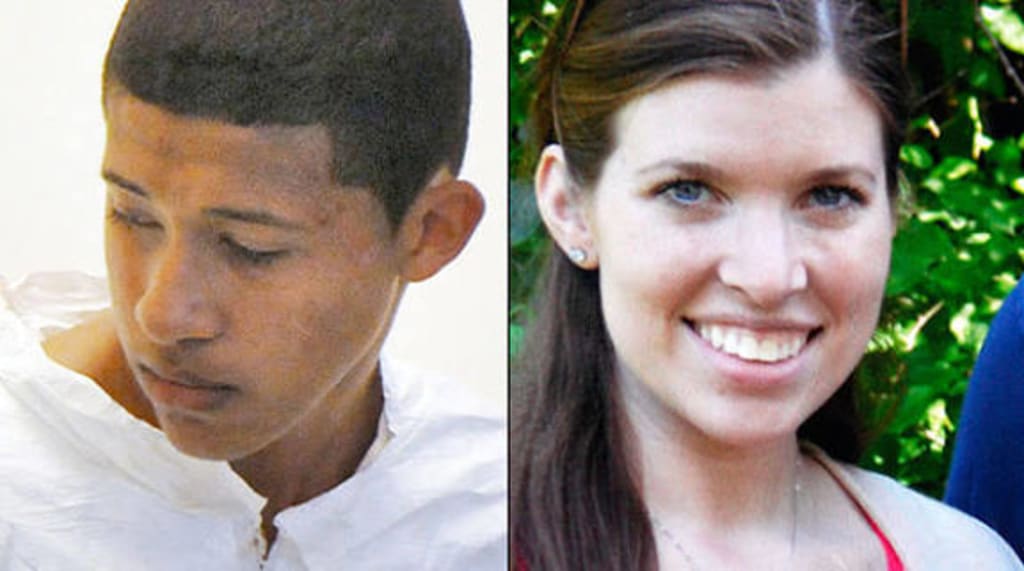
The killing of Colleen Ritzer a 24-year-old math teacher at Danvers High School in Danvers Massachusetts remains one of the most tragic and disturbing crimes to affect a school community in the United States in recent years.Colleen Ritzer was widely remembered by colleagues and students as a dedicated and compassionate educator. Early in her teaching career she was known for bringing enthusiasm and patience into the classroom and for taking a genuine interest in the academic and personal wellbeing of her students. Friends and coworkers often described her as someone who believed every student deserved attention, encouragement, and the opportunity to succeed.
In the autumn of 2013, Colleen became concerned about one of her students, **Philip Chism**, who was 14 years old at the time and struggling in his mathematics classes, particularly Algebra and Geometry. In keeping with her teaching style and commitment to helping students who were falling behind, Colleen arranged to provide him with extra academic support through an after-school tutorial session.
What was intended to be a simple and supportive meeting quickly became a horrifying act of violence.
On October 22, 2013, after the school day had ended, Colleen and the student remained on campus for the planned tutoring session. Instead of meeting in a classroom, the student followed her into a girls’ bathroom within the school building. There, he attacked and killed her.
After the assault, her body was concealed and later moved to a wooded area behind the school grounds. The crime shocked the entire community and prompted an immediate and intensive police investigation. Colleen was reported missing later that day, and a large search effort was launched involving law enforcement, school officials, and community members.
Investigators quickly focused their attention on the student who had been scheduled to meet with her after school. He was located and taken into custody, and evidence gathered by police linked him to the crime. The investigation revealed that the attack was not the result of a sudden dispute or confrontation related to schoolwork, but rather a violent act committed by a very young offender against a teacher who had been attempting to help him.
The news of Colleen Ritzer’s death devastated her family, friends, students, and colleagues. Vigils and memorials were held in the days following the discovery of her body, and the school community struggled to come to terms with how such violence could occur in a place meant to be safe and supportive. For many students, teachers, and parents, the loss deeply undermined their sense of security within the school environment.
The legal proceedings that followed were closely watched nationwide. Because the offender was a minor at the time of the crime, the case raised complex legal and ethical questions about juvenile justice, accountability, and sentencing in cases involving extreme violence.
During the trial, prosecutors presented evidence detailing the events of the afternoon and the steps taken after the attack. The defense emphasized the young age of the defendant and argued for consideration of his developmental and psychological state. The case became part of a broader public conversation about how the justice system should respond when a child commits an exceptionally serious crime.
Ultimately, Philip Chism was convicted and sentenced to a lengthy prison term. The court ruled that he would be eligible for parole only after serving 40 years. The sentence reflected the gravity of the crime while also acknowledging legal standards that limit certain punishments for offenders who were juveniles at the time of their actions.
For Colleen Ritzer’s family, no sentence could truly compensate for the loss of a daughter, sister, and friend whose life had barely begun. In public statements, they remembered her as a warm, motivated young teacher who loved working with children and believed deeply in the power of education. Her death left a lasting impact not only on her loved ones but also on the many students whose lives she had touched during her short teaching career.
The tragedy also prompted renewed discussions about safety in schools, the support available to teachers, and the challenges educators face when working closely with students who may be struggling academically, emotionally, or behaviorally. While schools are often viewed as safe havens, the case underscored the importance of continued attention to student mental health, supervision policies, and staff support systems.Above all, the story of Colleen Ritzer is remembered not for the violence that ended her life, but for the compassion and dedication that defined it. She represented the kind of teacher who went beyond basic responsibilities to help students succeed, believing that kindness and guidance could make a difference. Her legacy continues to be honored by those who remember her commitment to education and the positive influence she had on the community she served.
About the Creator
Keep reading
More stories from Kure Garba and writers in Criminal and other communities.
When an Online Affair Turned Deadly
The tragic case involving Sharee Miller her husband Bruce Miller and former investigator Jerry Cassaday is a disturbing story of manipulation obsession and a murder-for-hire plot that ultimately destroyed several lives.Sharee Miller met Bruce Miller while working at his auto salvage yard in Flint, Michigan.Their relationship moved quickly, and the two soon married. On the surface, their life appeared stable, but behind closed doors the marriage was marked by constant conflict and emotional turmoil. Friends and investigators later described the relationship as deeply troubled, with repeated arguments and growing resentment on both sides.
By Kure Garbaa day ago in Criminal
Black History Unfiltered
They Believed the Lie—So They Wrote It Into Law by Soul on Fire LEAVIE SCOTT The rumor moved like wildfire because it was designed to. It had the pacing of a ghost story and the precision of a press release. Whispers turned to headlines, headlines turned to hearings, and before long, the lie had grown legs long enough to step into the federal register.
By Organic Products about 13 hours ago in Criminal




Comments
There are no comments for this story
Be the first to respond and start the conversation.