
The Epstein Files
Truth, Power, and the Never‑Ending Quest for Accountability

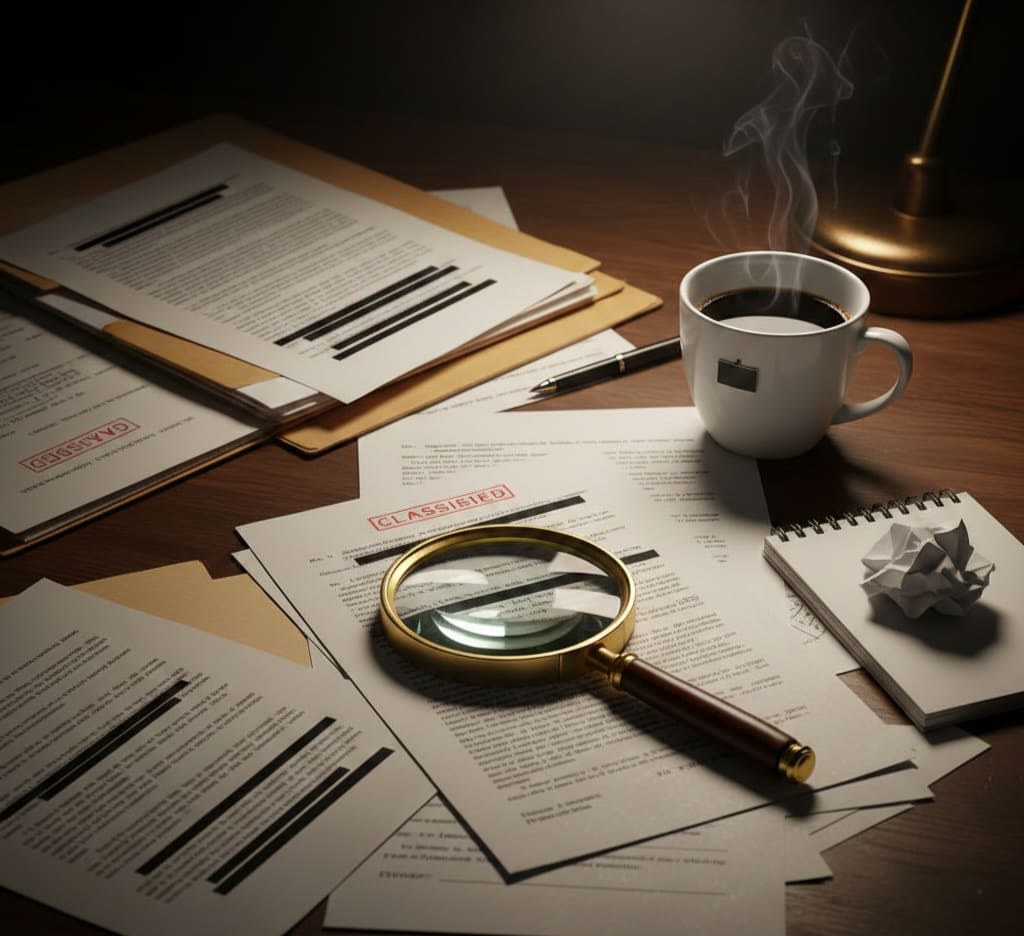
By now, the name Jeffrey Epstein carries with it far more than the story of one man’s crimes. It is shorthand for power, silence, secret networks, and the tectonic clash between justice and influence. Today, as millions of pages of Epstein Files — documents tied to the investigations into his crimes — have finally been released to the public, the world watches, debates, and sometimes recoils. But what are the Epstein Files? And why are they still shaping headlines, political fights, and global controversies years after Epstein’s death? �
Encyclopedia Britannica
What Are the Epstein Files?
The “Epstein Files” is the informal term for a massive compilation of material related to the criminal investigations into financier Jeffrey Epstein and his associate Ghislaine Maxwell. These include:
Court documents and indictments from federal cases.
Emails, flight logs, phone records, and contact lists found in Epstein’s estate.
Internal investigative files from the FBI and Department of Justice (DOJ).
Photos and videos seized from Epstein’s properties. �
Encyclopedia Britannica
Until recently, most of these materials were sealed by courts. But in late 2025 and early 2026, pressured by bipartisan lawmakers, survivors’ advocates, and public demand, Congress passed the Epstein Files Transparency Act, compelling the DOJ to release the documents. The first major releases began in December 2025, and a significant batch of over three million more pages was released on January 30, 2026. �
Wikipedia
Why It Matters: Power and Perception
For years, theories about Epstein’s connections to the world’s elite fueled speculation — and sometimes headlines — suggesting a web of complicity reaching into politics, media, and global business. The release of the files has partially vindicated some of that interest, revealing associations and correspondence that raise legitimate questions about how power operates behind the scenes.
Recent releases show:
High‑profile names in email exchanges and photo evidence. Figures from tech moguls to royalty appear in various contexts within the files — though analysts are quick to emphasize that presence in a document is not proof of criminal conduct. �
CBS News +1
New scandals abroad, such as in Norway, where documents revealed connections between Epstein and prominent politicians and diplomats, prompting formal investigations. �
Reuters
Internal political conflict in the U.S. over access and transparency, including allegations that the DOJ tracked which lawmakers were reviewing the files. �
AP News
Bipartisan efforts to unredact previously hidden names of wealthy individuals alleged to be “likely incriminated,” further intensifying the political and legal drama. �
The Guardian
What the Files Don’t Show (Yet)
Despite the avalanche of documents, there are critical limits to what has been proven so far:
No Smoking Gun ‘Client List’
Much of the speculation around Epstein included a belief in a formal “client list” — a documented roster of powerful people who participated in or facilitated his crimes. According to official DOJ reviews, no such list exists in the released files. �
GovFacts
No Convictions Beyond Epstein and Maxwell
The FBI’s internal records confirm Epstein’s sexual abuse of minors — crimes he pleaded not guilty to before his 2019 arrest and death — and Maxwell’s conviction and long prison sentence. But the files contain insufficient evidence to charge other powerful individuals with criminal involvement. �
AP News
Heavy Redactions and Missing Pieces
Many documents are heavily redacted to protect victim privacy or ongoing investigation concerns. Thousands of pages have been temporarily taken down for further review and redaction. �
Business Insider
This reality fuels frustration, since powerful names appear in the files without context that proves wrongdoing — leaving space for speculation to grow even as the public learns more.
Stories Within the Files
The Epstein Files are more than metadata and emails. Embedded within are personal narratives that underscore the human cost:
Victim testimony, statements, and interviews illustrate the profound harm inflicted on girls and women by Epstein and his circle.
Investigators’ notes reveal how law enforcement pieced together evidence over years, confronting deep organizational failures.
Correspondence between Epstein and a range of public figures shows how even casual associations can become interpretive minefields once exposed.
These stories paint a picture both of institutional blind spots and of the resilience of survivors demanding accountability.
The Debate Continues
The release of the Epstein Files does not close the book — it turns a page. Legal experts, journalists, lawmakers, and public commentators now grapple with questions that go beyond Epstein himself:
How much transparency is possible without compromising legal rights and privacy?
Do powerful individuals face the same scrutiny as ordinary citizens?
Will future releases fill the gaps or deepen the mystery?
For many, the files are not just historical evidence — they are a living challenge to systems of power and protection. For survivors, they are both vindication and frustration: proof of wrongdoing, yet often lacking the full accountability many sought.
Why the World Is Watching
The Epstein Files matter because they intersect with global power structures. They touch on:
media narratives,
public trust in institutions,
political polarization,
and the tension between transparency and privacy.
Millions are reading, debating, and analyzing these documents not because they must, but because the implications ripple far beyond one man’s crimes — into how justice works when the accused moves in circles of wealth and influence.
Whether the files eventually yield deeper revelations, or remain partially opaque, their release is one of the most consequential transparency efforts of the decade.
About the Creator
Jhon smith
Welcome to my little corner of the internet, where words come alive
Keep reading
More stories from Jhon smith and writers in Criminal and other communities.
The Missing Ingredient
The first time I saw her, she was wearing a velvety, red ribbon in her hair. She carried a small leather backpack everywhere. She searched the forest by turning stones, checking beneath shrubs, listening to the wind as if it might carry an answer.
By Imola Tótha day ago in Fiction




Comments
There are no comments for this story
Be the first to respond and start the conversation.