
The Making of a Monster: Why We Create the Criminals We Then Refuse to Understand
Behind Every Headline of Horror Lies a Story We Were Too Busy to Read
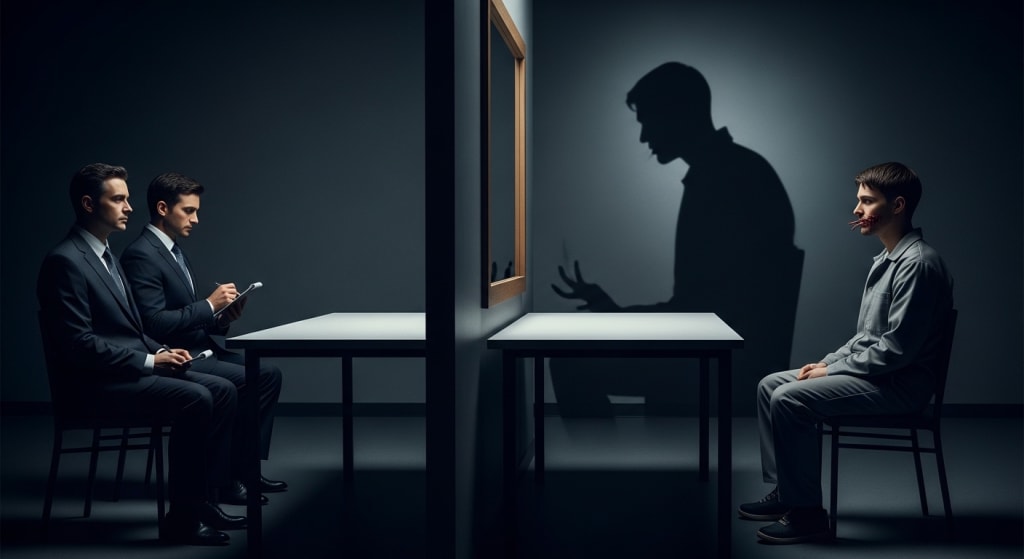
We love our monsters. We consume stories of their crimes with a hunger that borders on the sacred, clicking on headlines, devouring true crime podcasts, tuning in for the verdict, the sentencing, the final chapter that locks them away and allows us to sleep easier. We need them to be monsters—fundamentally different from us, marked by some visible stain, carrying evil in their bones like a genetic defect. This need is not casual; it is existential. If they are monsters, we are safe. If they are not, we are not.
But the uncomfortable truth, the one we work so hard to avoid, is that monsters are not born. They are made. They are assembled slowly, over years, by a world that failed them long before they failed it. Behind every headline of horror lies a story we were too busy to read—a story of childhoods stolen, of wounds never healed, of doors repeatedly closed until the person behind them stopped trying to open them. To understand this is not to excuse. It is to recognize that the line between us and them is thinner than we want to believe, drawn not in permanent ink but in the circumstances of lives we cannot imagine.
Consider the childhood of anyone who has committed the unthinkable, and patterns emerge that are difficult to dismiss. Not every abused child becomes a criminal; most do not. But nearly every criminal was, at some point, an abused child. The statistics are relentless: the majority of violent offenders experienced trauma, neglect, or violence in their earliest years. Their brains developed in environments of threat rather than safety, wiring them for survival rather than connection, for vigilance rather than trust. By the time they appear in courtrooms, judged by people who cannot fathom their inner world, the architecture of their souls has already been built—built by hands that were supposed to hold them gently.
The story is almost always the same, though the details differ. A father who left. A mother who drank. A home where love was conditional, unpredictable, or entirely absent. A school system that labeled them trouble before they understood what trouble meant. A community that saw their difference as threat rather than cry for help. A justice system that met their first mistakes with punishment rather than intervention. By the time they committed the crime that finally made them visible, they had been invisible for years—invisible in their pain, invisible in their isolation, invisible in their slow, relentless transformation into the person the world had always assumed they would become.
We do not want to hear this story. It complicates our outrage. It demands something of us—not forgiveness, not absolution, but acknowledgment that we are part of the system that produces the very people we then condemn. The comfortable narrative of pure evil allows us to look away. The uncomfortable truth of broken childhoods requires us to look inward, to ask what we might have done differently, to recognize that every monster was once a child who could have been saved.
There is a young man sitting in a cell somewhere right now whose fate was sealed not on the night of his crime but years earlier, in moments no one noticed. The teacher who gave up on him. The neighbor who looked away. The relative who knew something was wrong but said nothing. The system that processed him through its machinery without ever asking the only question that mattered: what happened to you? These absences accumulated, each one a small death of possibility, until the only path left was the one that led to where he is now.
I think about a boy I once knew, years ago, in a different life. He was nine years old and already marked—angry, disruptive, impossible to reach. His mother was addicted to things that made her forget she had a son. His father was a name he barely knew. He came to school hungry, left to streets that offered no safety, returned to an apartment where he was either ignored or screamed at. The adults around him tried, briefly, then gave up. He was too much work. Too far gone. Too likely to fail regardless. Years later, I saw his face on the news, wanted for a crime I cannot bring myself to describe. And I thought: we made him. All of us. Not by what we did but by what we failed to do, in the years when doing something might have mattered.
This is not to say that everyone who suffers becomes a perpetrator. Most do not. Resilience is real, and remarkable, and deserves its own celebration. But resilience requires something to push against—some hand extended, some door opened, some moment of recognition that says you are seen, you matter, you are not alone. When those moments never come, when the world confirms again and again that you are worthless, unwanted, beyond saving, the miracle is not that some fall but that so many somehow do not.
The criminal justice system, as currently constructed, is not designed to understand any of this. It is designed to assign blame and administer punishment—tasks it performs with mechanical efficiency. It asks what you did, not why. It measures your guilt, not your wounds. It locks you away and calls that justice, though justice would require addressing the conditions that produced you, the failures that shaped you, the society that abandoned you long before you abandoned it. The system processes the products of our collective neglect and then congratulates itself on keeping us safe.
But we are not safe. We will never be safe as long as we continue to produce the conditions that produce criminals. We will never be safe as long as we wait until the crime to intervene, rather than investing in the childhoods that precede it. We will never be safe as long as we prefer the satisfying story of monsters to the uncomfortable truth of broken children becoming broken adults in a world that could have helped but chose not to.
There are models that work differently. Programs that intervene early, with struggling families. Schools that refuse to give up on difficult children. Communities that wrap around the vulnerable instead of pushing them away. Countries that have invested in rehabilitation rather than punishment, that have recognized that the person who committed the crime is not the same person who will leave the prison, if we give them reason and resource to become someone else. These approaches are not soft; they are smart. They recognize that our safety depends not on building higher walls but on healing deeper wounds.
The next time you read a headline about a terrible crime, pause before you join the chorus of condemnation. Ask yourself: what was this person's childhood? Who failed them along the way? What moments of intervention were missed, what cries for help went unheard, what small mercies might have changed everything? You will not know the answers, but asking the questions matters. It resists the easy story of monsters. It keeps space open for the harder truth of shared responsibility.
And if that truth unsettles you, good. It should. It means you recognize that the line between us and them is not fixed, that safety is not guaranteed by distance, that we are all implicated in the world we build together. The question is not whether criminals exist. They always will. The question is whether we will continue to create them through neglect and then punish them for our failures, or whether we will finally accept that the only way to have fewer monsters is to build a world that produces fewer broken children.
The young man in that cell was once a child who did not choose the circumstances of his birth, the failures of his caregivers, the indifference of his community. He became what he became through a thousand small abandonments, each one a message that he did not matter. By the time he did something that made him matter—that made us all pay attention—it was too late to matter in the way that could have saved him. The tragedy is not that he is now where he belongs. The tragedy is that he belonged somewhere else first, somewhere that might have held him, and no one ever showed him where that was.
About the Creator
HAADI
Dark Side Of Our Society


Comments
There are no comments for this story
Be the first to respond and start the conversation.