
The Wrongful Conviction of Lynn DeJac
Lynn DeJac was wrongfully convicted for her daughter’s murder in Buffalo; testimony from boyfriend Dennis Donohue and a jailhouse informant outweighed evidence, until DNA proved Donohue was the real killer.

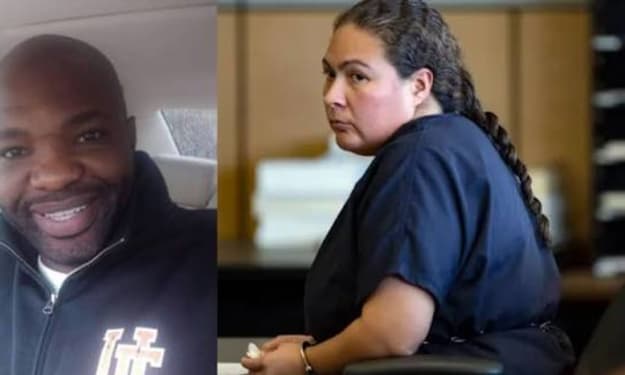
Start The case of Lynn DeJac stands as one of the most disturbing examples of wrongful conviction in modern American criminal justice—and also one of the most powerful demonstrations of how DNA profiling can uncover the truth years after a verdict has been sealed.Lynn DeJac was an American woman living in **Buffalo**, where she was raising her teenage daughter, **Crystallynn Girard**. By 1993, Lynn was in a troubled relationship with her boyfriend, **Dennis Donohue**. Their relationship would become central to a case that would eventually expose serious failures in police investigation and courtroom standards.
On the evening of February 13, 1993, Lynn and Donohue had a heated argument in a local bar. The confrontation erupted after Lynn discovered that Donohue had secretly hired a private investigator to monitor her. The fight was intense, public, and emotionally charged. It marked the last confirmed sighting of Lynn before a tragedy that would change her life forever.
The following day, Lynn returned home and encountered a horrifying scene. Her 13-year-old daughter was lying naked and lifeless on her bed. The discovery was immediate and devastating. An autopsy later determined that Crystallynn had been strangled. Investigators also reported that there was some level of cocaine present in the child’s system, a detail that added complexity and emotional weight to the case, but would later play no meaningful role in identifying the real perpetrator.
Despite the shocking nature of the crime, investigators found no physical or forensic evidence linking Lynn DeJac to the murder. There were no fingerprints, no DNA, and no material traces connecting her to her daughter’s death. Nevertheless, Lynn was quickly taken into custody and charged with second-degree murder.
The prosecution’s case relied almost entirely on testimony rather than science. Two witnesses formed the backbone of the case against her.
The first was her boyfriend, Dennis Donohue. He testified that Lynn was responsible for the killing. In exchange for his cooperation, Donohue was promised immunity from prosecution. His testimony painted Lynn as emotionally unstable and capable of violence. However, his close personal involvement, his incentive to avoid charges himself, and his position as the only adult closely connected to both Lynn and the victim were not enough to disqualify him as a credible witness in court.
The second witness was **Wayne Hudson**, an ex-convict who claimed that Lynn had confessed to him. There was no recording, no written confession, and no independent corroboration of this claim. It was simply Hudson’s word against Lynn’s.
With no physical evidence and no forensic link to the crime scene, the jury nevertheless convicted Lynn DeJac. She was sentenced to 25 years in prison.
For more than a decade, Lynn remained incarcerated for a crime she consistently denied committing. Her conviction stood largely unchallenged, and her case slowly faded from public attention. It would take thirteen years—and an entirely separate investigation—for the truth to begin to surface.
While examining three other unsolved murders involving women in the same region, detectives noticed a disturbing pattern. Each victim had previously had some form of contact with Dennis Donohue. In each case, the women were found naked in their beds. The similarities were striking, and they prompted investigators to take a closer look at Donohue’s past.
As the four cases were compared side by side, the pattern became impossible to ignore. The circumstances of the crimes, the positioning of the bodies, and Donohue’s connections to the victims all pointed in the same direction. The investigation that had once treated him as a helpful witness now began to treat him as a potential serial offender.
Modern forensic testing was finally requested on evidence from the crime scenes. When DNA testing was completed, it revealed that Donohue’s DNA was present at the scene of the murders. This scientific evidence directly contradicted the narrative that had sent Lynn DeJac to prison.
The discovery dismantled the original prosecution’s theory. The man whose testimony had helped secure Lynn’s conviction was now linked through forensic science to the killings themselves.
As a result, Lynn DeJac’s conviction was overturned. After thirteen years behind bars, she was finally exonerated.
Her case became historic. Lynn DeJac is recognized as the first woman in the United States to be exonerated of a murder conviction on the basis of DNA profiling. The significance of this milestone extends beyond her personal ordeal. It exposed how easily a case built on incentivized testimony and jailhouse informants can overshadow the absence of real evidence—and how devastating the consequences of that imbalance can be.Lynn lost more than a decade of her life, her reputation, and the chance to properly grieve her daughter outside the walls of a prison. Her story remains a sobering reminder that justice does not always arrive with a verdict, and that sometimes, only science can undo what the courtroom got tragically wrong.
About the Creator
Keep reading
More stories from Kure Garba and writers in Criminal and other communities.
From Abuse to Acquittal: The Case of Marcia Thompson and Terry Thompson
For nearly two decades Marcia Thompson lived in a marriage that, from the outside appeared stable and long-standing. In reality, her relationship with Terry Thompson was marked by fear, isolation, and repeated violence. What began as a long and complicated marriage gradually became a cycle of control, intimidation, and physical abuse—one that Marcia struggled to escape for years.According to court testimony, Terry was intensely controlling. He monitored Marcia’s movements, watched her closely, and limited her personal freedom. Friends and neighbors would later describe a pattern in which Marcia appeared increasingly withdrawn, anxious, and trapped within her own home. The abuse was not limited to emotional manipulation. Terry would sometimes beat her, leaving Marcia afraid not only for her safety but also for her ability to live independently and free from constant surveillance.
By Kure Garbaa day ago in Criminal
'Till Death We Do Art
There would be nothing divine in this world without art. Nature may surpass the divine to all intents and purposes, but like everything it absorbs and is absorbed by, it remains here, stuck on the surface of this world, ever-present, physically bound to the universe.
By Avocado Nunzella BSc (Psych) -- M.A.P 6 days ago in Art



Comments
There are no comments for this story
Be the first to respond and start the conversation.