
From Power to Persecution: Awami League Under Siege in Bangladesh
Once in power, the Awami League now fights for its survival under an increasingly authoritarian regime

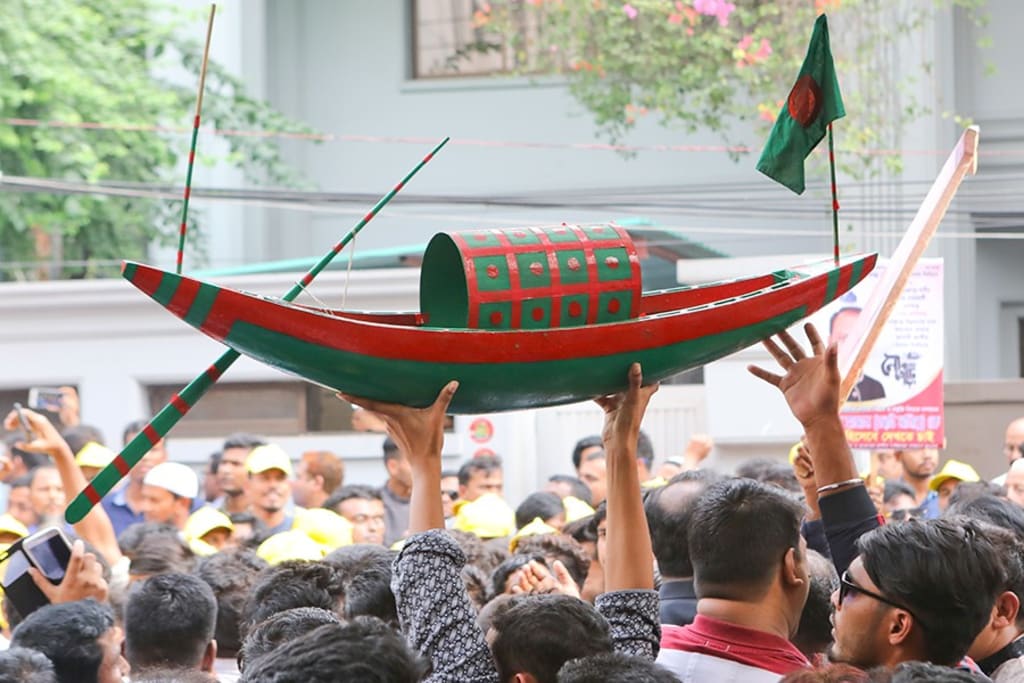
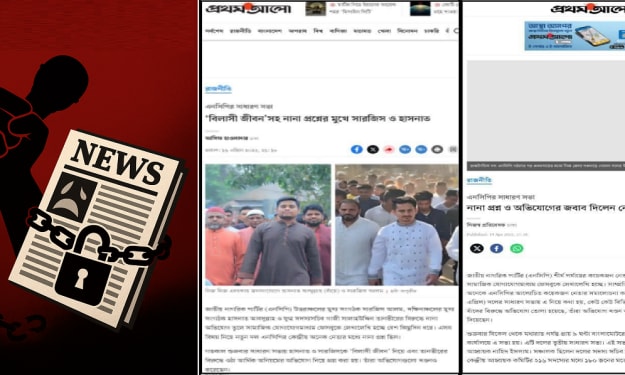
The interim government led by Nobel Peace Prize winner Dr. Muhammad Yunus is allegedly pursuing political vengeance against the former ruling Awami League. They are filing cases, arresting, attacking with mobs, and even killing Awami League leaders and activists. Awami League members cannot stay in their homes, and their leaders are not allowed to remain in the country. False cases are being filed, and staged trials for genocide are being orchestrated. There is no media freedom in Bangladesh; no news can be published against the government-backed "King's Party," the National Citizen Party (NCP). The government has declared that Awami League members cannot hold processions or meetings, and anyone doing so will be arrested.
Saying “Awami League will not be allowed to hold processions” will not intimidate the party; rather, it will provoke and energize it further. At any cost, Awami League will hold processions. You cannot deploy police, RAB, BGB, or the army at every point across the country or in every corner of the capital. There will always be some space for processions, and the emboldened Awami League activists will take to the streets.
Declaring “processions will not be allowed” is tantamount to waging war against a party born through processions and movements. Such a challenge will not weaken Awami League but will make it more determined. Where once processions had limited participation, you’ll now see growing crowds day by day. This is already happening.
There is no moral, legal, or political basis for banning processions. It’s merely a display of power and political vengeance. Targeting a party like Awami League, which may face leadership challenges but not a crisis of support or trust, is futile. The political vendetta of the past eight months has united even those supporters who were previously distant due to grievances, marginalization, or frustration with infiltrators.
Despite its leadership crisis, Awami League is now more united than ever before in its history. Notice how the initial question of why Sheikh Hasina, the party leader, went to India has faded. Instead, party workers across all levels now believe that had she not left Ganabhaban, an unruly mob would have killed her. Having lost Bangabandhu, Awami League activists are unwilling to lose Sheikh Hasina. This belief unites the party’s rank and file across the country.
Slogans like “Awami League cannot hold processions, engage in politics, participate in elections, or must be banned” are not political; they are fascist. They reflect an intent to institutionalize fascist ideology. Such thinking, demands, and circumstances are unprecedented in Bangladesh. While political instability and vendettas existed before, such overt fascist expressions and authoritarian desires to ban opposition parties to consolidate power were not.
The unrest of July-August led to many deaths, with excessive force used to suppress movements and counter-movements driving the agitation forward. All deaths are tragic, and justice for them is a legitimate demand, one I personally support. Official figures report over 800 deaths, while a UN fact-finding team estimates 1,400. The government is addressing deaths before August 5 but has granted immunity for later deaths through official decrees. Should the deaths of 600 people, including hundreds of police officers, be ignored? I believe they should not.
To me, all deaths are equal—whether it’s Abu Sayed, Ram, Rahim, Yadu, or Madhu. Viewing them differently is unjust. Highlighting someone like Abu Sayed while sidelining others, like Wasim Akram, a Chhatra Dal leader, or openly ignoring police and others, is an abuse of power.
On August 5 last year, the Awami League government fell, but the party itself has not vanished. A party and a government are distinct entities. Not every party member is part of the government, which is just a select group of representatives. A party, however, embodies the support, emotions, and sometimes blind loyalty of millions. Many Awami League supporters have never even seen Sheikh Hasina in person, yet their commitment remains unshakable. Some may criticize their own party, but if you criticize it, they’ll fiercely defend it. This applies not only to Sheikh Hasina but also to BNP’s Khaleda Zia. This reality cannot be ignored or changed.
Like it or not, Bangladesh’s politics is controlled by Awami League and BNP, symbolized by the boat and the sheaf of rice. Others may briefly emerge, and floating voters may temporarily place faith in them, but ultimately, they return to these two parties. This is unlikely to change, as most countries operate under a two-party system, and Bangladesh is no exception.
The so-called “new political arrangement” has brought forth a group of people whose credentials and motives are questionable. Where were they before last year’s July-August? No one had heard of them. They are transient guests, here today and gone tomorrow. The past eight months of national developments prove this. Initial enthusiasm for them has waned, answering all questions about their relevance.
In Bangladesh’s public sphere, Awami League and BNP are unstoppable. The more aggressively you try to suppress them, the stronger they will organize and resurge. During Awami League’s rule, BNP held brief flash processions during movements. Despite mockery of their small turnout, BNP is now a formidable force. The language used today to suppress Awami League was absent earlier. Back then, BNP held flash processions for central programs; now, Awami League uses them to assert its existence. The symbolic power of these processions is immense.
21 April 2025
About the Creator
Chowdhury Kabir
Meet Kabir — a Bangladeshi poet, journalist, and editor. His work blends lyrical depth with social insight, exploring themes of love, identity, and humanity across poetry and prose.
Keep reading
More stories from Chowdhury Kabir and writers in Critique and other communities.
Diaries to Nietzsche
Quotation from Friedrich Nietzsche "He who wrestles long with monsters should beware lest he himself become a monster. And if you gaze long into an abyss, the abyss also gazes into you. Man is not destroyed by suffering, but by the meaning he makes of it."
By LUCCIAN LAYTH6 days ago in Critique
A Whole Lot of BS: Part 2
Over the years, we've seen and heard of people suing companies, either for their own clumsiness or something that they willingly chose to do. Such examples involve Red Bull being sued because their product didn't "give them wings", Uber sued for ruining someone's marriage, and a couple suing a video game company for their son's addiction. I feel like these people who do things like this are just looking for attention. What's next? Someone suing McDonald's for making them fat? I have zero sympathy for people who file meritless lawsuits. The topic for this story, however, is about parents suing social media companies for causing their children to develop mental health issues.
By Mark Wesley Pritchard a day ago in Critique


Comments (1)
Save Bangladesh from the Devil Professor...