
I Finally Sat Down and Watched Divergent (2014)
A Critique

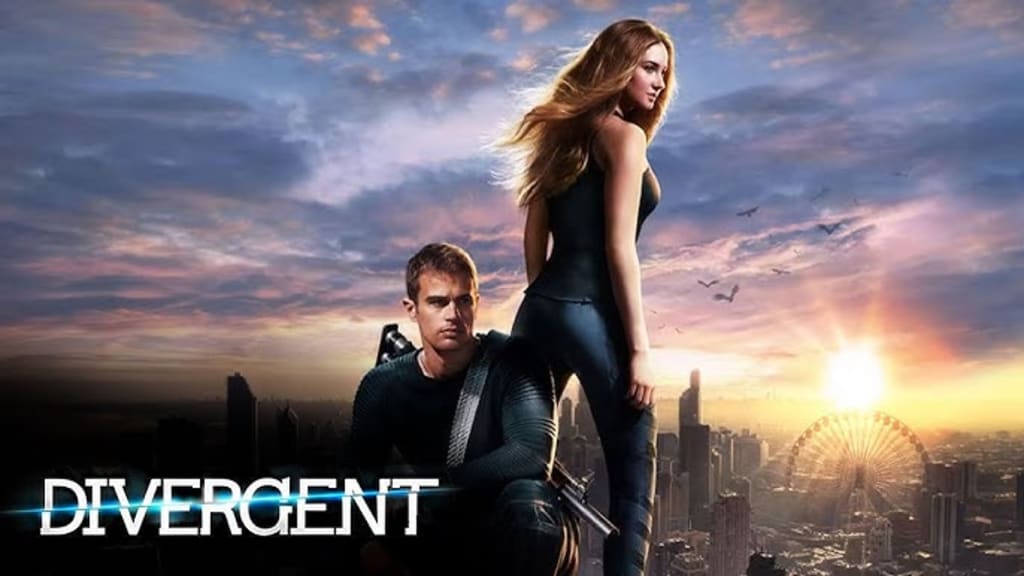
Divergent, directed by Neil Burger and released in 2014, arrived during the peak of the young adult dystopian film craze, following in the footsteps of The Hunger Games but struggling to establish its own distinct identity. Based on Veronica Roth's bestselling novel, the film presents an ambitious world where society is divided into five factions based on human virtues. While the movie demonstrates genuine strengths in certain areas, it ultimately delivers an uneven experience that both succeeds and stumbles in equal measure.
Adaptation and Source Material
The film's approach to adapting Roth's novel is both faithful and problematic. On one hand, screenwriters Evan Daugherty and Vanessa Taylor retain the novel's core narrative structure and most major plot points, which should satisfy fans of the book. The internal monologue that drives much of Tris's character in the novel is translated into visual storytelling with mixed results—the fear landscape sequences effectively externalize her psychological journey, while other moments feel rushed or inadequately explained.
However, the adaptation suffers from the common pitfall of assuming audience familiarity with the source material. The faction system, which is central to understanding this world, receives insufficient explanation and development. Viewers unfamiliar with the book may find themselves confused about why society is organized this way, what precipitated this structure, and why it continues to function despite obvious flaws. The film tells us about the factions but rarely shows us why they matter beyond plot mechanics.
Thematic Exploration
At its core, Divergent explores themes of identity, individuality versus conformity, and the tyranny of rigid categorization. These are rich, relevant themes, particularly for the film's target young adult audience navigating their own identity formation. The concept of being "Divergent"—fitting into multiple categories and refusing to be defined by a single trait—offers a powerful metaphor for rejecting societal pressure to conform to narrow definitions of self.
The film's exploration of these themes, however, remains frustratingly surface-level. The faction system itself is presented as a thought-provoking premise: what if society organized itself around specific virtues? But the film never seriously interrogates why anyone would believe this system could work, or how it has persisted for generations. The ideology behind faction-before-family feels underdeveloped, making the world feel more like a YA plot device than a believable society.
Where the film succeeds is in smaller, more personal moments of Tris choosing her own path and rejecting the limitations others place on her. Her decision to leave Abnegation for Dauntless, and later her refusal to be defined by either, gives the themes concrete emotional weight. The fear simulation sequences, particularly, offer genuinely interesting visual representations of confronting and integrating different aspects of one's identity.
Performance and Character Development
Shailene Woodley delivers a committed, grounded performance as Beatrice "Tris" Prior. She brings vulnerability and determination to the role, making Tris's transformation from uncertain teenager to confident divergent feel earned. Woodley's naturalistic acting style serves the character well, and she handles the physical demands of the role with conviction. Her performance elevates material that could have felt generic in less capable hands.
Theo James as Four (Tobias) brings brooding intensity to the role, though the character as written gives him limited range. The chemistry between Woodley and James is serviceable but never quite catches fire—their romance feels obligatory rather than essential. James does his best with Four's mysterious mentor role, but the character's own journey and emotional depth are often sidelined in favor of advancing Tris's story.
The supporting cast offers a mixed bag. Kate Winslet brings gravitas as Jeanine Matthews, though she's clearly working with an underwritten villain whose motivations remain murky. Jai Courtney makes an impression as the sadistic Eric, embodying physical menace effectively. Miles Teller provides welcome energy as Peter, though his antagonism sometimes verges on cartoonish. The most disappointing underutilization comes with talented actors like Ashley Judd, Tony Goldwyn, and Maggie Q, who are given little to do beyond functional plot requirements.
Tris's character arc is the film's strongest element. Her evolution from self-doubting to self-assured feels genuine, and Woodley ensures we understand the emotional cost of her choices. However, many supporting characters remain frustratingly one-dimensional—Christina, Will, and Al serve their plot functions but never feel like fully realized people with lives beyond Tris's story.
World-Building and Dystopian Setting
The world of Divergent is simultaneously its most interesting and most problematic element. The visual design of post-apocalyptic Chicago is striking, with the decaying cityscape and the imposing fence surrounding it creating an atmosphere of isolation and decay. The production design differentiates each faction through distinct color palettes, architecture, and costume design—Abnegation's gray simplicity, Dauntless's black leather aesthetic, Erudite's clinical blues, Amity's warm earth tones, and Candor's black and white formality.
However, the world-building lacks depth and internal logic. The film never adequately explains the history of this society or why this particular social organization emerged. Why five factions based on these specific virtues? What was the catastrophe that led to building the wall? Why does the outside world matter if no one can leave? These questions linger unanswered, making the world feel less like a fully realized dystopia and more like an elaborate backdrop for the plot.
The faction system itself strains credibility. The idea that people can be neatly categorized by a single dominant trait contradicts basic human psychology, and the film doesn't sufficiently explore how society functions when people are forced into such rigid categories. The factionless—people who failed to fit into any faction—are mentioned but barely explored, representing a missed opportunity to examine the system's casualties.
Compared to The Hunger Games, which grounds its dystopia in recognizable political and economic inequality, Divergent feels more abstract and less connected to real-world concerns. The faction system doesn't clearly parallel any existing social structure, making it harder to find relevance beyond the metaphorical.
Technical Elements
Neil Burger's direction is competent but rarely inspired. The action sequences are clearly shot and coherently edited, particularly the Dauntless initiation challenges and the zip-lining scene through Chicago. However, Burger struggles to create a consistent visual style or atmosphere. The film alternates between gritty realism and glossy Hollywood production without finding a comfortable middle ground.
The cinematography by Alwin H. Küchler captures the scale of the ruined Chicago landscape effectively, and the fear landscape sequences demonstrate visual creativity. However, much of the film has a flat, television-like quality that undermines the epic scope the story requires. The lighting is often overly bright and clean for a supposedly post-apocalyptic world, reducing the sense of danger and decay.
The pacing is problematic throughout the 139-minute runtime. The film takes considerable time establishing the faction system and Tris's initiation into Dauntless, which is necessary but sometimes feels repetitive. The training sequences, while showcasing Tris's growth, follow predictable beats: she struggles, she's told she's weak, she perseveres, she improves. The final act, when the conspiracy plot accelerates, feels rushed by comparison, with major revelations and action beats compressed into a hasty conclusion that doesn't allow events to breathe.
The score by Junkie XL (Tom Holkenborg) is serviceable, with pounding electronic beats during action sequences that energize the Dauntless training. However, the music rarely elevates the emotional moments, and no themes prove particularly memorable. The soundtrack also features contemporary pop songs that feel jarring against the dystopian setting, constantly reminding viewers this is a commercial YA product.
Place Within the YA Dystopian Boom
Divergent cannot be discussed without acknowledging its context within the early 2010s wave of YA dystopian adaptations. Arriving two years after The Hunger Games became a cultural phenomenon, Divergent carries the burden of inevitable comparison. While both franchises feature strong female protagonists navigating oppressive societies, The Hunger Games benefits from sharper world-building, clearer thematic purpose, and more compelling social commentary.
Where The Hunger Games uses its dystopia to explore media manipulation, economic exploitation, and the spectacle of violence, Divergent uses its world primarily as a framework for personal identity exploration. This isn't inherently inferior, but it results in a less urgent, less politically engaged narrative. The film feels more interested in Tris's personal journey than in seriously examining or critiquing the faction system itself.
Divergent also suffers from arriving during peak genre fatigue. By 2014, audiences had already seen The Hunger Games, The Maze Runner was releasing the same year, and The Giver and countless other YA dystopias were flooding the market. The film needed to distinguish itself but instead hit many of the same notes: a teenage protagonist discovers they're special, the system is corrupt, a rebellion is brewing, and a romance develops with a brooding mentor figure. The familiarity of these elements works against the film's attempt to establish its own identity.
Strengths Worth Noting
Despite its flaws, Divergent deserves credit for several achievements. The film takes its young protagonist seriously, never condescending to her or the audience. Tris's fears and struggles are treated as legitimate, and her victories feel earned rather than given. The physical demands of Dauntless initiation put real obstacles in her path, and the film doesn't shy away from showing her fail, get hurt, and have to try again.
The fear landscape sequences represent genuinely creative filmmaking, offering surreal, nightmarish imagery that stands apart from the rest of the film's more conventional aesthetic. These moments tap into something psychologically resonant, visualizing the process of confronting one's deepest fears in ways that feel both fantastical and emotionally true.
The film also deserves recognition for casting Shailene Woodley, whose intelligence and authenticity shine through even when the material doesn't always support her. Her Tris feels like a real, complicated person rather than a collection of YA protagonist traits.
Conclusion
Divergent is a film of unrealized potential. It contains the seeds of interesting ideas about identity, conformity, and self-determination, but lacks the courage or insight to fully explore them. The world is visually striking but logically underdeveloped. The performances are committed but hampered by underwritten characters. The technical execution is professional but rarely inspired.
For fans of the book and the target young adult audience, Divergent delivers enough action, romance, and wish-fulfillment to satisfy. Shailene Woodley's performance gives the film a strong emotional center, and the basic story of a young woman discovering and claiming her power remains compelling despite the surrounding weaknesses.
However, for viewers seeking a truly exceptional dystopian narrative or a film that transcends its genre limitations, Divergent disappoints. It's neither bad enough to dismiss entirely nor good enough to wholeheartedly recommend. Instead, it occupies that frustrating middle ground—a film with moments of genuine quality surrounded by mediocrity, a franchise starter that hints at better things to come while never quite achieving them.
In the landscape of YA dystopian films, Divergent is competent but forgettable, a adequate entertainment that fails to leave a lasting impression. It's a film that chose the safe path rather than risking divergence from the formula—an irony not lost on anyone paying attention to its central theme.
About the Creator
Parsley Rose
Just a small town girl, living in a dystopian wasteland, trying to survive the next big Feral Ghoul attack. I'm from a vault that ran questionable operations on sick and injured prewar to postnuclear apocalypse vault dwellers. I like stars.
Keep reading
More stories from Parsley Rose and writers in Critique and other communities.
So I watched M3GAN 2.0 (2025)
M3GAN 2.0 (2025), directed by Gerard Johnstone, arrives with the challenging task of following up the surprise hit of 2023. Where the original film carved out a unique niche blending campy horror with surprising emotional depth and sharp social commentary on technology and parenting, the sequel makes a decisive shift in tone and genre that proves to be both its greatest strength and most significant weakness.
By Parsley Rose 4 months ago in Critique
Standing While Falling
Quotation from Friedrich Nietzsche "He who wrestles long with monsters should beware lest he himself become a monster. And if you gaze long into an abyss, the abyss also gazes into you. Man is not destroyed by suffering, but by the meaning he makes of it."
By LUCCIAN LAYTH26 days ago in Critique
Rock Bottom
I began counting backwards to the night Debbie dumped me. Scott said that was an understatement, but hell, our divorce isn’t even final yet, and we were barely married before she started up with her ex behind my back, ultimately leaving me for him after his stupid app made him a millionaire.
By Harper Lewis3 days ago in Critique


Comments
There are no comments for this story
Be the first to respond and start the conversation.