
The Philosophy of Nero
Power, Perception, and the Tragic Emperor

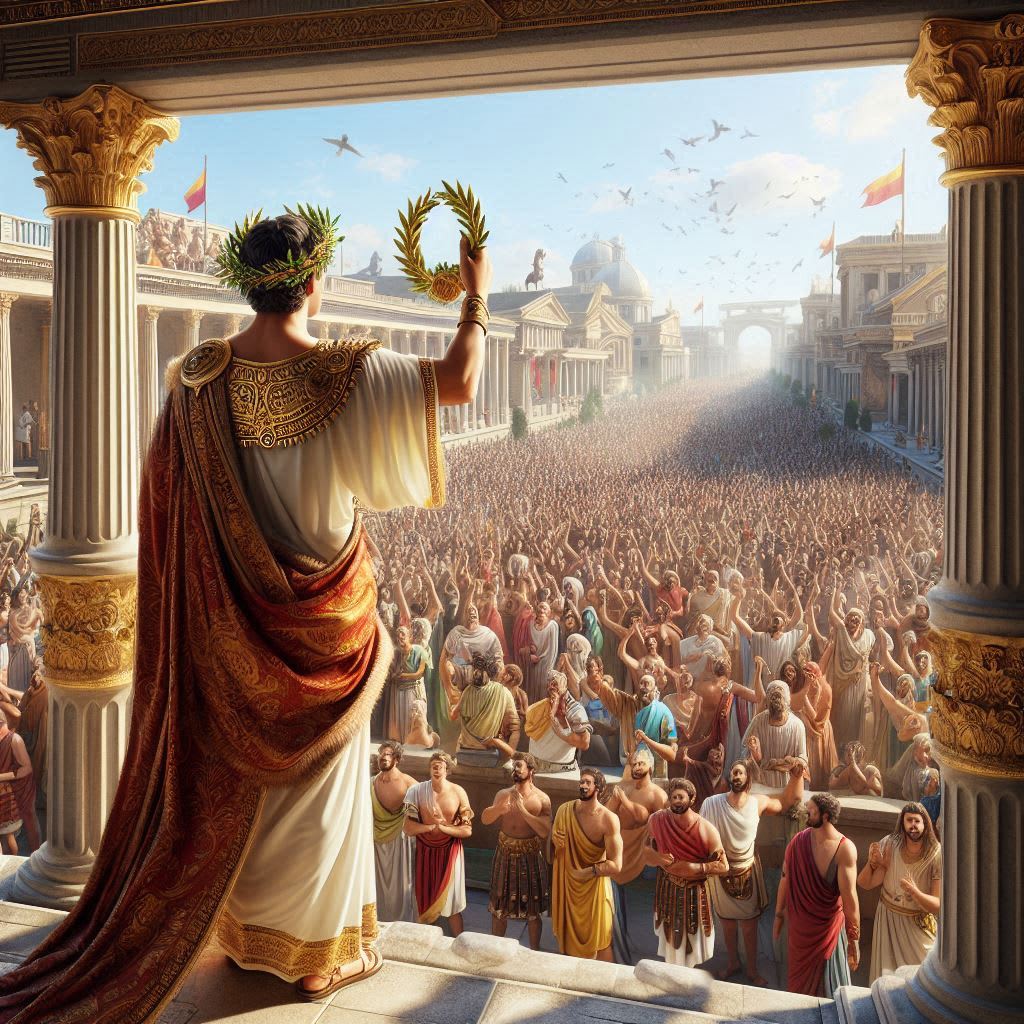
Emperor Nero is often remembered for his infamous reign, marked by excess, cruelty, and debauchery. In popular culture, he is the embodiment of tyranny, infamous for allegedly "fiddling while Rome burned" and for committing gruesome acts of violence, including the murder of his mother and wife. Yet, beneath this bloodstained legacy lies a more complex philosophical and psychological narrative that reveals deeper themes of power, perception, and personal struggle. Understanding the philosophy of Nero requires a closer look at his life, his leadership, and the ideas he may have entertained.
Though Nero himself is not often associated with grand philosophical ideas in the way that figures like Socrates or Marcus Aurelius are, his reign offers a fascinating lens through which to explore questions of moral authority, self-deception, and the corrupting influence of absolute power. In many ways, Nero’s philosophical inclinations were shaped by the contradictions within his character, his exposure to various intellectual currents, and the pressures of ruling the Roman Empire. Let’s dive into the intellectual undercurrents that may have informed his reign.
1. The Influence of Stoicism and Nero’s Early Years
Nero was not always the tyrant he is remembered as. As a young ruler, he was tutored by the Stoic philosopher Seneca, one of Rome's most famous thinkers. Stoicism, which emphasizes virtue, self-control, and rationality, was a philosophy that placed a premium on living in accordance with nature and reason. In his early years, Nero seemed to embrace these teachings and was even described as a ruler who initially sought to govern with wisdom and restraint. Seneca, in particular, had a strong influence on Nero's early political decisions, advocating for just rule and the importance of philosophical wisdom in governance.
But Stoicism, at its core, calls for the wise and virtuous individual to detach from the pursuit of pleasure and power, cultivating an inner life of tranquility. Nero’s early adherence to Stoic principles, however, was short-lived. The emperor's eventual descent into decadence and cruelty may have been a response to the intoxicating effects of absolute power and the political pressures that came with it. Nero's early life, influenced by philosophical teachings, was gradually overshadowed by the darker impulses of a ruler seeking to assert his authority.
2. The Struggle Between Philosophy and Desire for Power
As Nero grew into power, the complexities of his character became more pronounced. He began to distance himself from the philosophical teachings of his early years. His reign was marked by extravagant indulgence, including lavish parties, performances, and an obsession with personal fame. Nero loved the spotlight—he fancied himself as an artist and sought to present himself as a figure of immense cultural and personal importance, even forcing the Roman public to attend his musical performances, which were considered humiliating for his aristocratic audience.
Nero's struggle between philosophy and power can be viewed as a tragic conflict between his intellectual ideals and the seductive pull of absolute rule. In some ways, this tension reflects a deep philosophical question: can a ruler truly be virtuous in the face of the overwhelming desires and pressures that come with unchecked power? The more Nero sought to cultivate personal grandeur, the further he drifted from the Stoic teachings that had once shaped his early governance. The philosophical underpinnings of a just ruler were overrun by the pursuit of self-aggrandizement and the overwhelming need to maintain control.
3. The Philosophy of Self-Destruction: Paranoia and Persecution
Another aspect of Nero’s philosophy involves his descent into paranoia and self-destruction. As his reign continued, he became increasingly erratic, ordering executions of family members, political rivals, and even those closest to him, including his own mother, Agrippina. This is often attributed to a combination of psychological instability, ambition, and fear of losing power. However, it also reflects the darker philosophical undercurrent of Nero's worldview: a belief in the necessity of purging perceived threats, even at great personal cost.
This mindset echoes a form of nihilism, one where the survival of the ruler becomes paramount, and where the preservation of power becomes an obsessive, destructive force. It’s as if Nero viewed himself as the central figure in a cosmic drama, one where the elimination of perceived enemies—whether real or imagined—was an existential necessity. His reign, filled with paranoia, cruelty, and self-centeredness, seems to represent a tragic version of the idea that “the ends justify the means,” even if those means involve committing horrific acts against one’s own family and citizens.
In addition, Nero's cruelty could be seen as an attempt to control not only his empire but his very image. He recognized that he would be judged by history, and in his later years, he sought to shape his legacy through grand displays of power and by suppressing any perceived opposition. Yet, in doing so, he only contributed to the negative historical perception of his rule. His self-destructive behavior was paradoxically tied to an attempt at self-preservation—an effort to create a lasting image while losing his grasp on the morality and humanity that once governed his rule.
4. Art and Performance as Philosophy: The Emperor as Artist
Nero's obsession with performance art also reflects a peculiar philosophical dimension. Unlike other emperors, who focused on military prowess or governance, Nero sought to be remembered as an artist and performer. He believed that he was a gifted singer, lyre player, and charioteer, and his passion for the arts was not only personal but also political. By positioning himself as an artist, he could directly engage with the people of Rome, bypassing the traditional structures of power. He saw himself as both a ruler and a cultural icon, blurring the lines between political authority and artistic expression.
This belief in the importance of performance, both literal and figurative, might stem from a deeper philosophical notion about the power of spectacle in shaping public perception. In Nero's case, his identity was tied to the persona he crafted for himself, rather than any actual philosophical or moral consistency. His reign, in many ways, exemplifies the dangers of a ruler who is more concerned with controlling the narrative and his public image than with ruling justly.
5. The Tragic End: The Fall of Nero and His Existential Crisis
Nero’s reign ultimately ended in tragedy, with a revolt against his rule leading to his downfall. In 68 CE, faced with an army rebellion and desertion by his closest allies, Nero was declared a public enemy by the Senate. Isolated and betrayed, he retreated to his private palace and, in a final act of desperation, took his own life. His last words, "What an artist dies in me!" are said to reflect his belief in his own artistic greatness even at the moment of his demise.
In this final, existential moment, Nero's life comes full circle—his philosophical crisis culminates in a tragic realization of the futility of power and self-aggrandizement. His attempt to reconcile his identity as both a ruler and an artist, caught between philosophical ideals and the corrupting force of absolute power, ends in disillusionment and death.
Final Thoughts: Nero's Philosophy as a Cautionary Tale
While Nero's reign is remembered for its cruelty, excess, and eventual collapse, his life also offers important philosophical insights into the nature of power, identity, and self-deception. His story is a cautionary tale of how personal desires, unrestrained ambition, and the pursuit of fame can distort philosophical ideals and lead to self-destruction. In Nero’s tragic decline, we see the consequences of abandoning virtue for spectacle, of allowing power to eclipse personal integrity, and of failing to confront the internal contradictions that govern the human condition.
Ultimately, the philosophy of Nero is one of tragedy—a journey from youthful philosophical potential to the destructive impulses of power. His life stands as a complex interplay between the ideals of Stoicism and the dark allure of imperial power, reminding us of the fragility of human character when faced with the intoxicating forces of influence and control.
About the Creator
Fred Bradford
Philosophy, for me, is not just an intellectual pursuit but a way to continuously grow, question, and connect with others on a deeper level. By reflecting on ideas we challenge how we see the world and our place in it.
Keep reading
More stories from Fred Bradford and writers in Critique and other communities.
5 Life Lessons from Miyamoto Musashi
Miyamoto Musashi (1584–1645) is widely regarded as one of the greatest samurai and swordsmen in Japanese history. Beyond his legendary duels and undefeated record, Musashi was also a philosopher, strategist, and artist. His magnum opus, The Book of Five Rings, contains profound wisdom that extends far beyond combat and can be applied to everyday life. Here are five key life lessons from Miyamoto Musashi that can inspire and guide us.
By Fred Bradfordabout a year ago in Art




Comments
There are no comments for this story
Be the first to respond and start the conversation.