
Vanessa Kirby Breaks Bad in "Night Always Comes"
Vanessa Kirby delivers a gripping performance in Netflix’s Night Always Comes, a tense, character-driven thriller exploring survival, morality, and family in Portland’s dark underbelly.

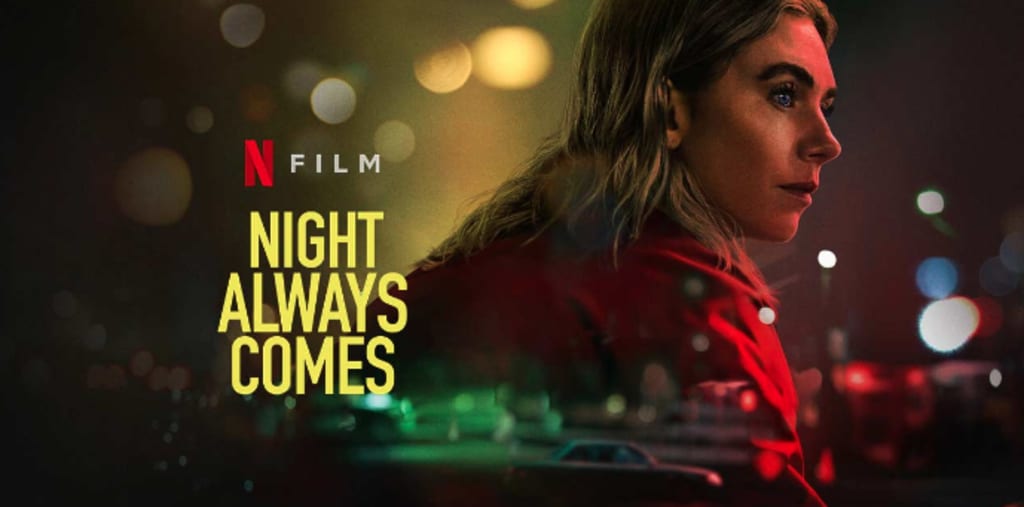
In a cinematic moment where thrillers are often dressed in glossy action tropes, Night Always Comes strikes a rawer note, placing Vanessa Kirby at the heart of a story as much about America’s crumbling safety nets as about a woman’s descent into crime.
If you've ever wondered what happens when a woman with nothing left to lose decides to risk it all, Night Always Comes is here to show you.
Released on Netflix on August 15, 2025, this gritty thriller stars Vanessa Kirby as Lynette, a woman on a desperate quest to raise $25,000 in a single night to save her family's home in Portland, Oregon. And trust me, this is no casual stroll through the city; it’s a pulse-pounding journey that refuses to loosen its grip.
Lynette's night is an odyssey through trade-offs, dark secrets, and unlikely alliances. Every encounter tests her resilience, intelligence, and willingness to bend or break the rules. The film examines identity and the ripple effects of the choices we make under pressure.
Director Benjamin Caron, known for his intricate work on The Crown, presents a vision of a woman navigating the underbelly of society. His direction keeps the tension taut, capturing both the physical and emotional stakes of Lynette's strained mission.
The screenplay, adapted from Willy Vlautin's novel, is equally relentless, and the dialogue snaps and crackles with urgency, painting Lynette’s world in sharp, vivid strokes. Occasionally, the pacing dips, reminding us that even a high-stakes night has its quiet, reflective moments. Yet, these slower scenes often add unexpected depth, showing us who Lynette is beyond her survival instincts.
Some secondary characters, such as Doreen, played by Jennifer Jason Leigh's streetwise confidante, and Zack Gottsagen portraying Kenny’s unlikely ally, are intriguing but slightly underexplored, a minor flaw in an otherwise engrossing script.
Leigh, in particular, feels underutilized; her sharpness recalls her work in Single White Female and The Hateful Eight, but here she flickers at the edges, leaving us to imagine a richer dynamic that never materializes.
Kirby, however, is the film's undeniable anchor. She embodies Lynette’s mixture of vulnerability, grit, and raw determination. Watching her navigate this treacherous night, you can feel the weight of every turning point, every risk, and every moral compromise.
Kirby’s performance hinges on the smallest details: the brittle laugh that never reaches her eyes, the way she grips a steering wheel as if bracing for impact, and the sudden stillness that turns silence into menace.
It’s a performance that reminds us why Kirby has become one of the most compelling actresses of her generation. Supporting cast members add color and texture to the story; however, the film could have leaned further into their backstories to heighten the emotional impact.
Visually, the film is a love letter to Portland's grit and charm. Cinematographer Damián García captures a city that is simultaneously haunting and strangely beautiful, with neon reflections on wet pavement, dimly lit alleyways, and expansive nightscapes that feel lived-in.
Caron leans on handheld camerawork that traps us in Lynette’s perspective, forcing the viewer into her claustrophobic, adrenaline-drenched nights. The editing favors jagged cuts, mimicking the disorientation of fighting to stay afloat in crisis.
Adam Janota Bzowski’s score heightens the suspense without ever overwhelming the narrative, mixing electronic pulses with subtle orchestral flourishes that echo the characters’ emotional arcs.
At its core, Night Always Comes is more than a thriller; it’s a meditation on the lengths one will go to protect family and preserve dignity. Lynette’s night mirrors broader issues, like poverty, housing instability, and systemic inequality.
Caron himself highlights this thematic resonance, stating, “I think the idea that you can work three jobs and not be able to afford your home is a uniquely modern tragedy.” This line resonates far beyond the screen, making the film feel urgent and socially aware.
Beyond its thriller mechanics, the film echoes a distinctly American tragedy, the precarity of the working poor. In a year marked by rising rents and widening inequality, Lynette’s frantic behavior is less like a character flaw and more like a systemic indictment.
If the film sometimes stumbles in pacing and sidelines its supporting players, Kirby’s magnetic presence ensures Night Always Comes lingers. It is not flawless cinema, but it is a vital thriller that doubles as a social lament and a showcase of an actress turning raw desperation into art.
Read More Reviews... Here
About the Creator
Sara Yahia
Welcome to The Unspoken Side of Work, sharing HR perspectives to lead with courage in JOURNAL. And, in CRITIQUE, exploring film & TV for their cultural impact, with reviews on TheCherryPicks.
More Here: Website | HR Insight | Reviews | Books
Keep reading
More stories from Sara Yahia and writers in Critique and other communities.
Beauty in Black Season 2: Power, Money, and Chaos Are Back on September 11, 2025!
Okay, friends, grab your snacks and a comfy chair, because Beauty in Black Season 2 is almost here, on September 11, on Netflix. It promises even more drama, intrigue, and jaw-dropping moves than the first season. Yes, like before, there’s plenty of time to soak in the chaos, bringing the signature mix of charm and edge.
By Sara Yahia5 months ago in Critique
Nancy Guthrie: Is a miracle still possible after close to two weeks?
Close to two weeks since Nancy Guthrie's abduction As of February 12, 2026, Nancy Guthrie remains classified as missing for 12 days, but there is no official confirmation that she is deceased. Blood matching Guthrie’s DNA was found on her front porch, indicating she likely suffered an injury during the abduction.
By Cheryl E Preston4 days ago in Geeks



Comments (1)
Great review and Venessa Kirby was knockout in the Crown. Will certainly check this out