


Frank had been a farmer at Helm farm since he was 16. He was 62 now and showed no signs of slowing down. Not that he could have even if we wanted to. He often joked that the farm was his wife, and he needed to stand by her in sickness and in health, because nobody else was going to do it. He had never married, or had children, and his few nieces and nephews quickly left the nearby city of Plymouth for more exciting larger cities. None of them had ever intended to become farmers themselves, the work was too relentless and financially unforgiving. Frank was acutely aware that once he was no longer able, the farm would likely become abandoned and become another part of windswept Dartmoor wilderness.
It was with extreme reluctance that he had taken advantage of the government scheme providing a robot worker to assist him. This was partly pride, but mostly because he had always had an intense distrust of the government. His grandfather had often told him about the shooting of George Raymond Walden and how non farmers - but politicians in particular - were all had poor hearing and big egos, and as such were dangerous. George had been ordered by the Hampshire War Agricultural Executive Committee to plow up parts of his farm to aid the war effort. The problem was that these fields were used as pasturage for his horses and cattle, and it would have meant that they would all need to be destroyed. George had refused, and under the new powers the government had granted themselves, this meant that he could be forcefully evicted from his own farm. A farm that he owned and had been in his family for generations. He would not even be allowed to remain in his home, as the policy was never to leave the farmer in his home when his land had been taken over. When the policemen arrived to remove him, George open fire and barricaded himself in the house. After an all-night siege George was shot by one of the policemen in the head and died in hospital a few days later. Franks grandfather would often point out how it had been the policy of the government to cull all “non useful’ animals too. Millions of sheep, horses and even dogs and cats had been killed to avoid using up recourses.
“They should have thanked their lucky stars that the war ended when it did, they killed all the animals that made the fertilisers!” He had said.
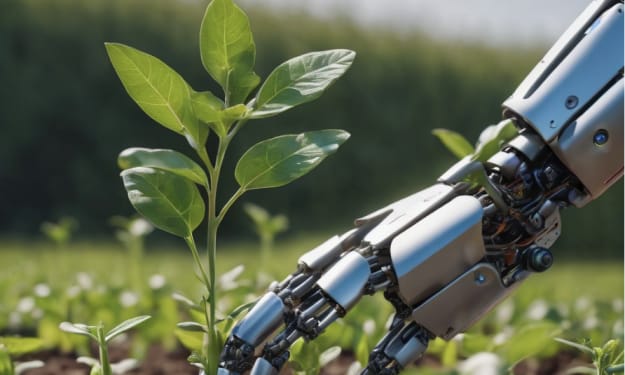
Anxious about over involvement with government, Frank waited several years before he finally accepted the robot. When he finally did he observed it with apprehension, but begrudging acceptance that the robot was indeed very useful. It could easy carry a hay bale under each arm, operate the tractor and obey commands perfectly - provided no euphemisms, common expressions or allegories were used. Being told to work “until the cows came home” had mixed results.
After a year or two Frank would often be seen working his farm side by side with his robot, which he had named i. When asked why, he would say that it was the best iPhone he’d every owned.
About the Creator
Keep reading
More stories from Klaire de Lys and writers in Earth and other communities.
I, Willhelm
She had been dreaming again. The dreams during her pregnancy had always been vivid and intense, with sounds and smells included. But now that the baby was born, everything had turned into a muddy haze with the constant backdrop of a baby screaming for her. There was no escape from the constant sound of crying, and the relentless tension in her chest that made it hard to think and breath.
By Klaire de Lys2 years ago in Earth
Australia Agricultural Biologicals Market 2026: Sustainable Farming, Crop Protection & Biological Innovation
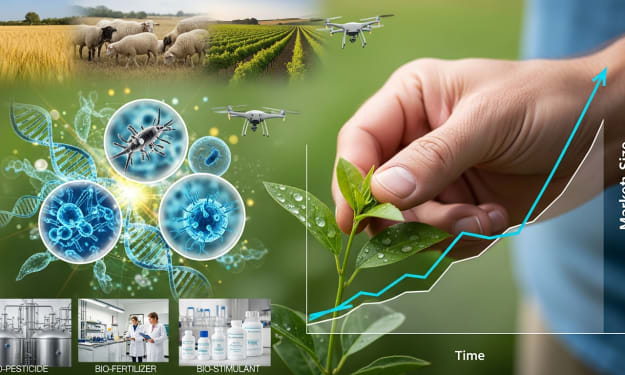
Australia Agricultural Biologicals Market Overview The Australia agricultural biologicals market is gaining steady momentum as farmers, agribusinesses and policymakers increasingly focus on sustainable crop production and environmentally responsible farming practices. Agricultural biologicals include products derived from natural sources such as microorganisms, beneficial insects, plant extracts and naturally occurring compounds. These products are used for crop protection, soil enhancement and plant growth promotion, offering alternatives or complements to conventional chemical inputs. According to IMARC Group, the Australia agricultural biologicals market size reached USD 218 Million in 2025. Looking forward, IMARC Group expects the market to reach USD 680 Million by 2034, exhibiting a growth rate (CAGR) of 13.5% during 2026-2034. This growth reflects increasing adoption of integrated pest management, rising demand for residue-free produce and expanding organic and regenerative farming practices.
By Amyra Singh3 days ago in Earth


Comments (1)
"Frank's story is a reminder that even in the face of change, there's always something to learn and appreciate about the past."