
Scientists Just Made a Groundbreaking Discovery in Antarctica
Antarctica
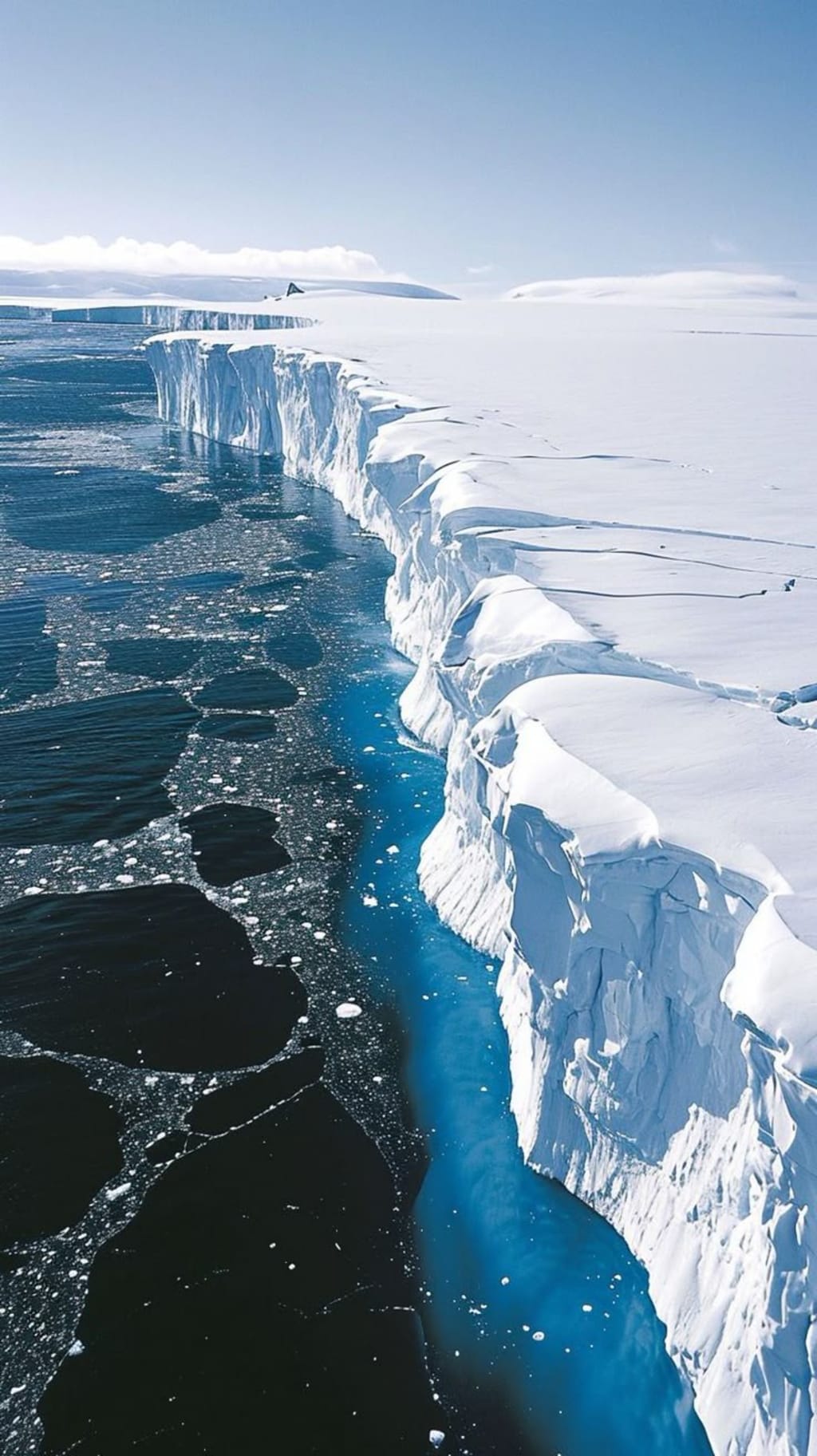
antarctica a snowy world of about -46° F covered in ice for millions of years But it wasn't always this way Scientists just found something buried deep beneath the seafloor that shouldn't exist Tiny golden droplets of amber This means that Antarctica was once teeming with life and thick with trees But something happened to it Something that could reshape the way we see our own future Antarctica has been a land of howling winds for millions of years No tree can grow here today But scientists who studied those lands decided to drill deep beneath the Antarctic surface They went thousands of feet below the ice pulling up ancient layers of sediment And there trapped in time they found tiny pieces of golden amber Amber is basically fossilized tree resin It's found all over the world often with perfectly preserved pieces of ancient life Insects trapped mid-flight Pollen frozen in time Entire tiny ecosystems can be locked inside golden droplets In every continent but not in Antarctica until now They discovered tiny specks from 0.5 to 1 millimeter in size smaller than a grain of sand but with huge significance This droplet had once oozed from the bark of a tree about 90 million years ago What's even wilder amber is only produced by certain types of trees the ones that grow in humid temperate rainforests and jungles That's when the realization hit Antarctica used to be a rainforest Those tiny flexcks of amber clearly seen only under a microscope tell us a vivid story of a living and breathing ecosystem Around 90 million years ago during the Cretaceous period when dinosaurs ruled the Earth Antarctica could have been covered in lush swampy forests filled with towering conifers ferns and ancient plants Some of the fragments showed signs of damage That means the trees that produced them had been injured perhaps by wildfires or parasites Though despite that and despite the fact it spent millions of years on the seafloor this amber was almost perfectly preserved solid transparent and free of cracks Normally amber buried under extreme pressure and heat just crashes over time But this piece it survived That means other pieces could survive as well and we might find more of them on the ocean floor But this wasn't the first sign that Antarctica had once been a different place entirely It started in 2017 A team of scientists drilled deep into the seabed near Pine Island Glacier on Antarctica's west coast They pulled up sediment cores long cylindrical samples of earth that had been buried for millions of years And it was insane Inside these layers they found fossilized roots pollen spores traces of an ancient forest that had once thrived here And that's exactly what they'd been studying ever since then In order not to damage anything they had to spend years of hard work breaking down the sediment into thousands of tiny pieces and scanning them all under fluorescent microscopes The same team also found another piece of the puzzle back in 2020 They found more sedimentary samples from the ocean floor that pointed to a land of dense trees rivers and wetlands a world that looked more like the Pacific Northwest or New Zealand But why was Antarctica so warm back then Well that's all because of the atmosphere 90 million years ago Earth's carbon dioxide levels were terrifyingly high It was literally one of the warmest periods in history with temperatures soaring even at the poles Think about it Antarctica had no ice caps Instead it could have had buzzing insects and maybe even dinosaurs wandering through its forests But in order to learn what happened to them the team has to find more evidence Antarctica really is a place full of mysteries It's hard to study because it's covered in snow and ice so much that we don't even know its true shape and size Some parts of the ice sheet are over 3 m thick half the depth of the Mariana Trench the deepest trench on Earth Luckily snow has a great quality It can freeze things in time perfectly layer by layer year after year It buries nature's past like a time capsule Luckily snow has a great quality It can freeze things in time perfectly Layer by layer year after year it buries nature's past like a time capsule At first fresh snow is soft and shifts easily in the wind full of air But as more snow piles on top it compresses squeezing out the air pockets and hardening into dense ice This freezing pressure locks everything inside It traps ancient plants animals and even entire landscapes and they literally get frozen in time because the extreme cold slows down decay It stops bacteria growth preventing rot and keeping things almost perfectly intact for thousands sometimes even millions of years That's exactly what's going on in Antarctica Scientists have to literally scan it all the way down this snow in order to find what this place looked like millions of years ago What they found is an entire lost world buried under miles of ice It was beneath the thickest ice of East Antarctica near the Aurora and Schmidt subglacial basins The weight of the ice has been so immense for so long that it actually protected the land from erosion Scientists call it the ghost of Antarctica's landscape And it's nothing like the smooth flat wasteland seen from above They found rivers that once flowed freely now frozen in place Valleys carved by water Even three massive sharply peaked hills But what are they To understand that we need to go even further back in time to the era when Antarctica was still part of a lost superc continent Hundreds of millions of years ago the land we now call Antarctica was part of Gonduana an enormous superc continent that included South America Africa India Australia and Antarctica all fused together But as Earth's tectonic plates slowly drifted apart Gonduana broke into pieces Antarctica was ripped apart its land stretched and fractured The massive ice sheets that formed later covered these broken land masses preserving them like frozen fossils As the ice shifted and melted over time valleys formed and ancient rivers likely carried water toward a coast that was hundreds of miles away from where it is now But that's not the only thing Antarctica has hidden If you stripped away the ice you wouldn't see a smooth empty continent You'd see a super dramatic landscape towering mountains deep valleys even fiery volcanoes In West Antarctica at least 138 volcanoes are buried under the ice One of them Mount Arabus is still active And inside it has warm volcanic caves where you could walk in a t-shirt Oh and if it wasn't weird enough Arabus is also spewing out gold Yep The actual tiny specks of gold from deep within the Earth Scientists believe this happens because magma the superheated semiolten rock beneath the Earth's surface carries liquid gold with it as it rises Every single day Arabus releases about 0.2 lb of it That's worth around 6,000 bucks per day In a year that adds up to 64 lb or more than $2 million floating into the sky Unfortunately before we grab shovels we got to remember that those are just microscopic particles They're often smaller than 60 micrometers thinner than a human hair Not even mentioning that they're scattered around up to 620 m away from the volcano itself Finding them is nearly impossible But that just shows that even in such a harsh place that looks just like a white desert there are still many fascinating mysteries to discover For example somehow life still clings there In 2017 scientists drilled deep beneath the ice of the Ross ice shelf looking for water but they found something fantastic instead A river hidden beneath 1,640 ft of ice running through the dark and inside it hundreds of tiny shrimplike creatures They swarmed around the camera blocking the lens welcoming the scientists in deep caves beneath the ice DNA evidence has also shown traces of moss algae and possibly even unknown tiny animals So turns out even in one of the harshest places on Earth life finds a way And who knows what else we'll discover in the South Pole
About the Creator
Keep reading
More stories from Riya singh and writers in Earth and other communities.
Scientists Just Solved the Loch Ness Monster Mystery
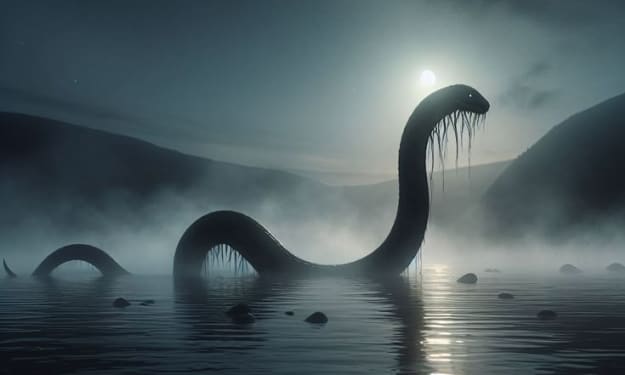
scientists have finally solved the loch nest monster mystery here's the spoiler you ready it's not a real monster it's probably a dinosaur that survived Through the Ages or just a bunch of debris floating on the water thanks to many findings on the loch nest creature we have proof of another story to tell you it was 1933 when a man named George Spicer and his wife were driving along the shores of Loch Ness that's when they saw something massive with a long neck moving across the road looked like a creature straight out of the prehistoric era a dinosaur like Beast unlike anything they'd ever seen that was the moment that loch nest monster theories started spreading around like wildfire one of the most famous Lock Des monster sightings came just a year later in 1934 when a man took a photograph that became the most well-known image of Nessie that's the nickname she was given she anyway the photo known as the surgeon's photograph showed a long neck creature rising out of the water and for years it convinced people that the monster was real but years later the truth came out one of the men who helped take the photo confessed it was all a hoax the photo had been staged after all when the photo was published it had been significantly cropped this made the animal in the picture look much bigger than in real life fueling the theories that the loch nest monster did in fact exist exist in the 1960s one of the first big scientific attempts to investigate the mystery of the loch nest monster happened a research team took sonar equipment to the lake and spent hours scanning the waters in search of evidence of large creatures what they found was puzzling they recorded several objects moving deep in the lock or lake with no clear explanation as to what it was though the team didn't manage to capture anything definitive this sighting helped fuel the belief that there was indeed something massive living in Loch Ness after that research about the mystery of the Loch Ness monster kept popping up in 1972 with the help of underwater photography some researchers managed to capture strange images which got people's hopes up for a minute but the truth is this early research about the Loch Ness monster was far from conclusive now of course not everyone bought into the mystical magical theories about The Lochness Monster Theory 1 from a professor of zoology at Oxford University has made it clear that the monster is a biological impossibility hey my pediatrician said that about me too meanwhile he says that no skeletal remains have ever been found in the region plus no fishermen have ever caught anything resembling the creature in their fishing nets for him this works as proof that it simply can't be real when it comes to the famous photos of the loch nest monster as evidence well that's pretty simple the professor offers a more downto Earth explanation he argues that these images are either showing floating debris or birds like corant which have long necks and often appear to be low in the water when people refute his suggestion he takes us back to human psychology and explains that people often make mistakes and misjudge the size of things especially when they just caught a glimpse of it and even more so when they are hoping to see something specific now many of those alleged photos depict an animal with a long neck and a small head which has led some to believe that what they're seeing is a placosa a giant Marine reptile that lived 215 million years ago and disappeared with a dinosaurs the idea of a plesiosaur surviving all these years is a theory that's been around since the first sightings of the creature but this researcher isn't buying it m he explains that no plesiosaur fossils have been found in the region dating to anything later than 66 million years ago the idea of a prehistoric creature still lurking in the waters of Loch Ness just doesn't hold up scientifically then there's Theory number two from a British naturalist who has spent over 50 years investigating the loch nest monster phenomenon his conclusion is a little less dramatic he believes that most people who report sightings of long neck creatures are misidentifying other animals He suggests people think they are seeing a sea serpent reports of sightings from the loch nest monster have been around since the 6th Century CE long before they were distilling Scotch whiskey or other explanations early reports of these SE serpents describe large creatures with long snake-like bodies and multiple humps some say the creatures were as big as boats and many swore they saw something swimming in the waters many of these early sea serpent sightings may have been misunderstandings or exaggerations of normal animals in the lock like large fish or even swimming Birds they could have been large eels which are known to live in loch nest these eels especially when they're moving might have given the impression of a long undulating creature in the water people who saw these eels from a distance particularly in low light or Misty conditions might have mistaken them for something much more mysterious Theory number three says something else Nessie is just a series of standing waves these happen when two boat wakes move in opposite directions creating a big hump in the water that could look like a Creature From a Distance Loch Ness enthusiasts even showed how it works with footage from Fort Augustus where a river meets Loch Ness these enthusiasts had big plans to use drones with infrared cameras and special underwater microphones to search the lock Now Loch Ness is massive stretching around 23 M long and more than 700 ft deep so they thought they needed drones and infrared cameras to put an end to this discussion but despite everything they haven't found Nessie but it's not only the loch net monster that lacks scientific explanation there have also been scores of sightings of Yetis and sat squatches that no one can really explain folks have made movies dreaming of finding the truth about these creatures but according to recent research and evidence it looks unlikely that we'll ever find definitive evidence of their existence science says they can explain Squatch sightings and this is how biologists who study Wildlife using camera traps which are set up in remote areas to capture images of passing animals have long attempted to find elusive species these cameras detect movement and snap pictures providing invaluable data on the biodiversity of different ecosystems as camera traps collect more photos over time the number of species recorded grows however after a while the number plateaus suggesting that no new species are being detected while it's impossible to claim 100% certainty researchers say that after significant camera deployment it's safe to say the likelihood of discovering new species especially large ones like Bigfoot or the yeti dropped significantly camera trap Studies have been running for years in regions where these creatures are rumored to live but so far no conclusive evidence has surfaced instead the supposed proof of bigfoot or the yeti often comes from blurry photos or shaky videos taken by individuals who claim to have encountered them the scientific understanding of biology also makes the existence of Bigfoot highly unlikely often described as a great ape Bigfoot would have had to evolve in North America however great apes evolved in Africa and the only great ape to make it to the Americas is homo sapiens whose ancestors crossed the bearing straight only about 16,000 years ago this is far too short a time for a new species like Bigfoot to have evolved while it may be disappointing for these mysterious creature enthusiasts the scientific evidence points firmly toward the conclusion that creatures like Bigfoot and the yeti are more fantasy than reality after Decades of extensive scientific research it's safe to say that yes science has solved the mystery of the Loch Ness monster and it's pure fiction so what do you think
By Riya singh11 months ago in Earth
‘Final Nail in Coffin’: Scottish Sector Under SNP Tax Threat
A growing political and economic debate is unfolding in Scotland as critics warn that proposed or expanding tax pressures under the Scottish National Party (SNP) government could act as the “final nail in the coffin” for a struggling sector of the economy. Business groups, industry leaders, and political commentators are increasingly raising concerns about competitiveness, investment, and long-term sustainability.
By Aarif Lashari5 days ago in Earth
Clintons to Testify in Epstein Inquiry
Reports that former U.S. President Bill Clinton and former Secretary of State Hillary Clinton could testify in an inquiry related to Jeffrey Epstein have sparked widespread international attention. The inquiry is part of ongoing efforts by authorities and investigators to understand the full scope of Epstein’s network, financial dealings, and connections with high-profile individuals.
By Aarif Lashari3 days ago in Earth
Should We Not Try to Get Too Political?
Here's something you often hear people say, "I try not to get too political." I understand the sentiment and I sympathize with it... while at the same exact time, I completely disagree with the notion. Whether it's referring to social media or wherever, it's kind of unavoidable. You can attempt to sidestep it, not engage, leave the less important things for actual politicians to discuss... you can want it to not take over your life, your conversations, your relationships, and that makes perfect sense.
By Stephen Kramer Avitabilea day ago in Writers



Comments
There are no comments for this story
Be the first to respond and start the conversation.