Sustainability
Australia Specialty Gases Market: Industrial Applications, High-Purity Demand & Technology Growth. AI-Generated.
Australia Specialty Gases Market Overview The Australia specialty gases market is developing steadily as industries increasingly require high-purity and precisely formulated gases for advanced manufacturing, healthcare, environmental monitoring and research applications. Specialty gases include ultra-high-purity gases, calibration gases and gas mixtures designed to meet strict quality and performance specifications. These products are used in applications where consistency, accuracy and contamination control are critical. The Australia specialty gases market growth reached USD 168.4 Million in 2025. Looking forward, IMARC Group expects the market to reach USD 290.2 Million by 2034, exhibiting a growth rate (CAGR) of 6.24% during 2026-2034. This growth reflects gradual expansion of technology-driven industries and rising emphasis on quality standards.
By Amyra Singhabout 2 hours ago in Earth
The Invisible Grid Build-out
by Futoshi Tachino Why this is under-the-radar progress Everyone talks about how slow it is to build new transmission lines. Less noticed is how much capacity is being freed — right now — on the wires we already have. Three families of “grid-enhancing technologies” (GETs) are scaling fast: (1) advanced reconductoring with modern high-performance conductors that can double capacity within existing rights-of-way; (2) dynamic and ambient-adjusted line ratings (DLR/AAR) that raise safe operating limits based on real weather, not worst-case assumptions; and (3) power-flow control, topology optimization, and other software tools that route power away from bottlenecks to under-used lines. Together, these are connecting more renewables, cutting curtailment and congestion, and buying precious time while big new lines are planned and built [1–3,13–14].
By Futoshi Tachinoa day ago in Earth
Why Humanity Keeps Getting in Wrong. AI-Generated.
Humanity’s mistakes aren’t mysteries. They are equations we keep refusing to solve. Every collapse we face follows the same pattern: a predictable interaction between belief, perception, and behavior. There is nothing chaotic about it — only unexamined.
By Meridian Vox2 days ago in Earth
Stanislav Kondrashov on the Subtle Rise of Technology-Connected Influential Circles
Stanislav Kondrashov stands out as a modern entrepreneur whose thinking extends well beyond conventional metrics of growth and profit. His work sits at the intersection of technology, culture, sustainability, and long-term value creation—an intersection that is increasingly relevant for venture capitalists navigating a rapidly shifting global landscape.
By Stanislav Kondrashov4 days ago in Earth
Understanding the Air Quality Index: Why Breathing Bad Air Feels Like Lighting Up a Pack
In a world where wildfires burn longer, cities are filled with traffic fumes, and industrial emissions linger, the quality of the air we breathe is under intense scrutiny. As we move into 2026, recent reports highlight a troubling reality: global particulate matter (PM2.5) concentrations climbed by 1.5% in 2023 compared to the previous year. This pushed levels nearly five times above World Health Organization guidelines in many areas.
By Walter Schiller-Anders6 days ago in Earth
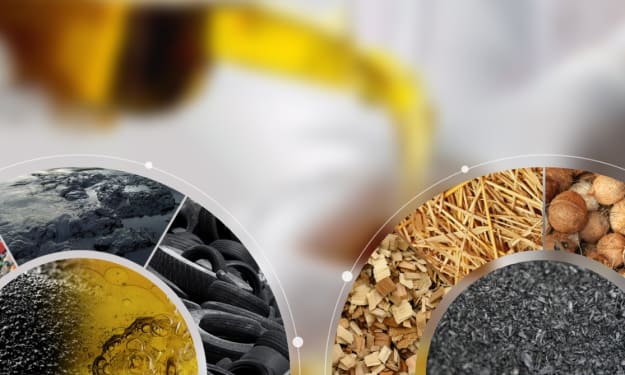
The Impact of Biochar Stability: How Fixed Carbon Dictates Sequestration Success. AI-Generated.
In the urgent global effort to scale effective carbon dioxide removal (CDR), biochar has emerged as a leading contender. But not all biochar is equal in its climate-fighting power. The true measure of its long-term sequestration potential lies in one critical property: the stability of its fixed carbon. Understanding this is key to maximizing biochar's role in our carbon toolbox.
By Bestonpyrolysis6 days ago in Earth
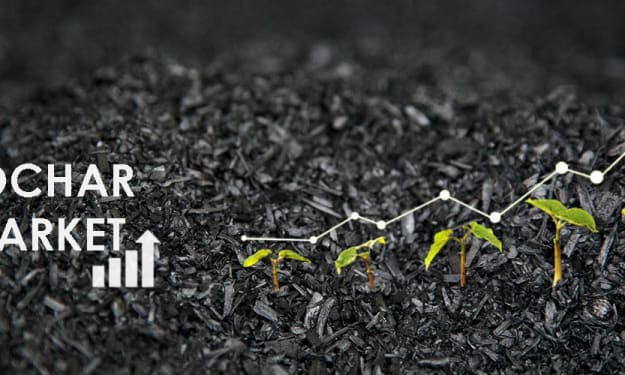
Positive Policy Signals for Biochar Carbon Removal
As the world intensifies its efforts to combat climate change, biochar has emerged as a promising technology for carbon removal. The process of converting biomass into biochar involves heating organic material in the absence of oxygen, which traps carbon in a stable form and prevents it from re-entering the atmosphere. Biochar can be used as a soil amendment, improving soil fertility, water retention, and microbial activity. In addition to these agricultural benefits, biochar also plays a role in reducing greenhouse gas emissions. Recent policy signals from governments worldwide indicate a growing recognition of the importance of biochar in the global carbon removal landscape. These policies are creating an encouraging environment for the development and deployment of biochar carbon removal projects.
By Wayne Shen6 days ago in Earth
Australia Glamping Market: Nature Tourism, Sustainable Stays & Experience-Led Travel. AI-Generated.
Australia Glamping Market Overview The Australia glamping market is developing as travelers increasingly seek accommodation that combines outdoor experiences with modern comfort. The Australia glamping market share was valued at USD 110.5 Million in 2025. Looking forward, IMARC Group estimates the market to reach USD 304.3 Million by 2034, exhibiting a CAGR of 11.91% from 2026-2034.This growth reflects broader shifts in tourism preferences toward nature-based, experience-led and environmentally conscious travel.
By Amyra Singh6 days ago in Earth