
Water can freeze at 2000℃?
Water actually has a 20th form: ice

Solid or liquid
There are no more than three phases of matter, solid, liquid, and gas, which determine the basic physical properties of matter, and of course there is a relatively special kind of phase-free fluid.
But it is not true that there are no phases; the conditions for the formation of such substances are often very demanding and cannot be found in conventional environments.
Supercritical fluid of carbon dioxide, for example, is a special state that lies between the three and is of great help to geological science.
In another study, perhaps slightly similar to supercritical flow, it also required extreme conditions to emerge.

Ice 18, also known as superionized water. This is another form of water that scientists have discovered today, an unlikely substance that actually exists.
In a nutshell, superionized water is both a solid and a liquid.
It exists in an environment that can completely overturn our conventional understanding. Water can remain solid at a high temperature of 2000℃, in the form of ice.
In the case of superionized water, scientists initially thought it was a real possibility and that it would appear in the gas giant planets Uranus and Neptune.
Earlier, American physicist Percy Bridgman discovered five solid phases of water in 1912.

Later scientists have built on his work, and today more than 17 crystalline ice structures and several amorphous ice structures are known.
The key is the weak hydrogen bonds between water molecules, which are where new superionized water is born under extreme environments and pressures, such as deep planets, where various phases of water appear.
Scientists have theorized that superionized water may occur when the pressure of water exceeds 100 gigahertz and the temperature exceeds 1700 ° C.
Water, at this point, diffuses protons through vacancies in the oxygen solid lattice, giving the ionic conductivity of water more than 100 Siemens per centimeter.
At this point water is as conductive as metal, and when ice is in this superionic state, it has to reach thousands of degrees Celsius to melt.
As the water molecules form a tightly packed oxygen lattice, new ice forms emerge.
Before the 1990s, scientists mainly used molecular dynamics simulations to predict the presence of superionized water.
Although theorized for decades, experimental evidence for superionized water emerged only later.
A 1999 scientific analysis showed that Neptune and Uranus could meet the conditions for superionized water, in the form of ammonia and water on those two planets.
The first experimental evidence came from optical measurements of laser-heated water in a diamond anvil chamber.
In the 21st century, scientists gradually learned the truth of superionized water through the laboratory and were able to make superionized water with experimental equipment.
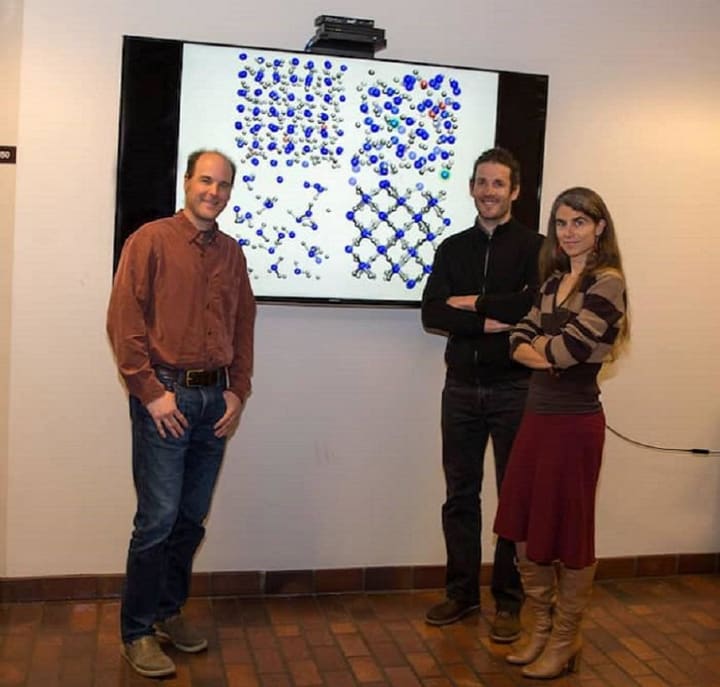
The eighteenth state of ice
We have a basic understanding of the properties of superionized water, which is obviously very difficult to represent in the laboratory.
The researchers first used a small drop of water, just 30 microns thick and 1.5 millimeters wide, and filled in a small cavity formed between two thin diamond disks.
The scientists then placed the tiny drop of water in the Laser Energy Laboratory at the University of Rochester.
Six more high-power lasers were used to generate a series of shock waves through the vacuum at the center of the Omega laser's target chamber.
The phase change of this small drop of water is done by simulating the environment of high temperature and pressure.
To test this part of the hypothesis, the researchers took X-ray diffraction measurements of the sample within a billionth of a second of the blast wave.
The measurements were carried out using an extra set of 16 high-power lasers, which emit 8, 000 joules of light in a nanosecond into a 2 mm square sheet of thin iron foil.
The tiny patch of foil creates a 250-micron light spot that affects the water droplets on it.
Under such intense radiation, most of the iron foil evaporates and ionizes into hot plasma.
It initially emits X-ray photons at very specific energies, due to the extremely tiny nanoice cubes that have just formed.
Some of these X-rays will be diffracted and hit by the beam to appear in the image plate detector.
The equipment will help researchers confirm that the atoms are arranged in a regular lattice, and experiments show that they have indeed solidified from liquid water into a crystalline oxygen lattice of superionized water ice in just three to five nanoseconds.
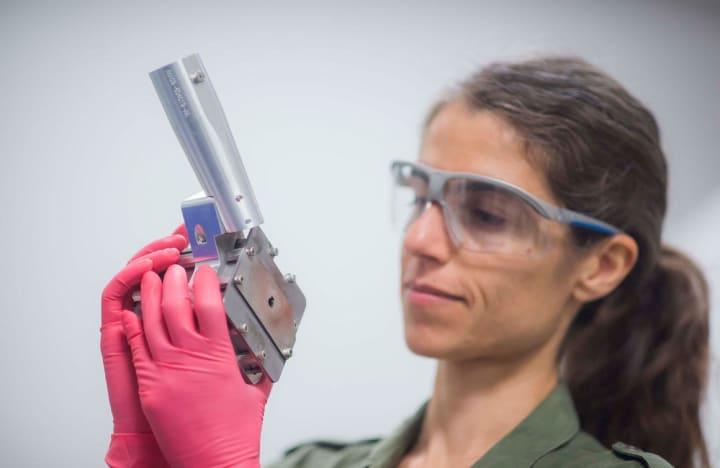
The experiment confirmed the existence of superionized water ice, so it is likely to be found deep inside a gas planet like Uranus.
The lattice in the superionized water has definite, direct characteristics, and the ice should not rotate as fast as Earth's liquid iron fluid, the scientists explained.
Instead, if it were to appear in Uranus, it would look something like the mantle. So on geological time scales, superion ice can be convective.
Research now suggests that superionized water could help scientists better understand the inner structures of ice giants, water-rich exoplanets like them and even explain the magnetic fields of such ice giants.
This reliance on machine learning methods to optimize molecular dynamics performance in experiments enables the use of advanced free energy sampling methods to accurately determine phase boundaries.
This experiment will continue in the future, although it is not seen in daily life, but it has a lot of use in machine learning, ice giant research, future research on ice morphology is very hopeful.
About the Creator
The Reality of the Illusion of Time
Recently, as I strolled along the short stretch to my strength training session, I aimlessly took in the row of tatty shops and shabby buildings along the route and passed an off-street, in which one of my sisters used to live, around thirteen years ago.
By Chantal Christie Weiss7 days ago in Earth
Earthquakes Today
Earthquakes are a daily reminder that the planet beneath our feet is constantly in motion. Today was no exception. Across different regions of the world, seismic instruments recorded a series of small to moderate earthquakes—most of them unnoticed by the general public, yet each one contributing to scientists’ understanding of how Earth releases stress along its tectonic boundaries. While major, destructive earthquakes capture headlines, the reality is that earthquakes happen every day, often dozens at a time. Today’s activity followed that familiar pattern: brief moments of shaking in some areas, subtle ground movement in others, and long strings of data flowing into global monitoring systems. A Snapshot of Earthquakes Today Throughout the day, earthquakes were detected in both well-known seismic zones and regions where shaking is less common. Coastal fault systems, subduction zones near ocean trenches, and continental plate boundaries all showed signs of movement. Most of today’s earthquakes were relatively low in magnitude, meaning they posed little to no danger to people or infrastructure. In places where earthquakes are frequent, such as parts of the Pacific Rim, small tremors are considered routine. Residents may feel a quick jolt, hear a faint rumble, or notice hanging objects sway briefly before everything settles again. Elsewhere, similar-sized quakes might go entirely unnoticed, detected only by sensitive instruments. The takeaway from today’s seismic activity is not alarm, but continuity: Earth is behaving exactly as geologists expect it to. Why Earthquakes Occur So Frequently Earth’s outer shell is broken into massive slabs called tectonic plates. These plates are constantly moving, though usually at speeds measured in centimeters per year. Where they collide, pull apart, or slide past one another, stress builds up over time. When that stress is released suddenly, an earthquake occurs. Today’s earthquakes are part of that ongoing process. Some happened along major fault lines that have been active for millions of years. Others occurred within plates themselves, caused by smaller fractures responding to distant stress changes. Each event, no matter how small, helps redistribute energy within the crust. Importantly, a day with multiple earthquakes does not necessarily signal that a larger one is imminent. In many cases, frequent small quakes actually release stress gradually, reducing the likelihood of a major rupture in the short term. What Scientists Learn From Today’s Quakes Every earthquake recorded today adds to a growing global dataset. Seismologists analyze factors such as depth, magnitude, wave patterns, and location to understand what is happening below the surface. Shallow earthquakes, even if small, are more likely to be felt by people, while deeper ones may pass unnoticed. Today’s events included a mix of both, offering insights into how stress is distributed at different levels of the Earth’s crust. Scientists also watch for earthquake “swarms,” where many small quakes occur in a concentrated area over a short period. These swarms can be linked to fluid movement underground, volcanic systems, or gradual fault adjustments. When swarms appear, researchers monitor them closely, though most fade without leading to a larger event. How Communities Experience Earthquakes Today For most people, today’s earthquakes were little more than a brief interruption—if they noticed them at all. In regions accustomed to seismic activity, daily life continues with little concern after minor shaking. Buildings designed to withstand earthquakes absorb the motion, and residents know basic safety steps by heart. In areas where earthquakes are less common, even a small tremor can spark curiosity or concern. Social media often fills with posts asking, “Did you feel that?” These moments serve as reminders that preparedness matters everywhere, not just in high-risk zones. Today’s earthquakes, while largely harmless, reinforce the importance of awareness. Knowing what to do during shaking—such as dropping to the ground, taking cover, and holding on—can make a critical difference during stronger events. Are Earthquakes Becoming More Common? A common question after days like today is whether earthquakes are increasing. The short answer is no—at least not in a way that indicates growing danger. What has increased is our ability to detect them. Modern seismic networks are far more advanced than those of previous decades. Instruments now pick up tiny earthquakes that would have gone unnoticed in the past. As a result, it can seem like earthquakes are happening more often, when in reality we are simply observing them more accurately. Today’s activity fits well within historical norms. Earth has always been active, and it will continue to be so long after human timelines have passed. The Role of Preparedness Even on a day dominated by small earthquakes, preparedness remains essential. Large earthquakes are rare, but they do occur without warning. Today’s minor tremors are a reminder to review safety plans, secure heavy furniture, and ensure emergency supplies are accessible. Preparedness is not about fear—it is about readiness. Communities that invest in earthquake-resistant infrastructure and public education recover more quickly when stronger shaking occurs. Looking Ahead As today comes to a close, seismic monitoring will continue uninterrupted. New earthquakes will occur overnight, tomorrow, and every day after that. Most will be small. A few may be felt. Very few will cause damage. Earthquakes today remind us that the planet is alive with motion beneath its surface. While we cannot stop or predict them with precision, we can understand them, respect them, and prepare for their impact. In that sense, today’s earthquakes are not just geological events—they are lessons in coexistence with a dynamic planet, one that is constantly reshaping itself, one subtle tremor at a time.
By Saboor Brohi about 11 hours ago in Earth
Trouble at the Tea Leafing Café
The rain had started right around the time that Annie was buttering her second thick slice of homemade toast for breakfast, and hadn’t paused since. Not that anyone could tell. The windows of the café were fogged over, and with every seat filled with happy customers munching on fresh baked pastries or steaming bowls of the delicious soup of the day, it was hardly surprising. Annie looked around the room, finally taking a moment to breathe after the lunch time rush. Her old life already felt like a bad memory, a part of her history, always, but just that. History.
By Hannah Moore6 days ago in Fiction


Comments
There are no comments for this story
Be the first to respond and start the conversation.