
ecommerce in marketing trends
"The Advantages of Ecommerce in Marketing: Why Ecommerce is the Future"

Ecommerce has been on the rise for several years now, and it's showing no signs of slowing down. In fact, ecommerce sales are projected to reach $6.5 trillion by 2023, up from $3.5 trillion in 2019. This rapid growth is driven by several factors, including the increasing number of internet users, the rise of mobile devices, and the convenience of online shopping. But what does this mean for marketing trends? In short, ecommerce is the future of marketing, and here's why.
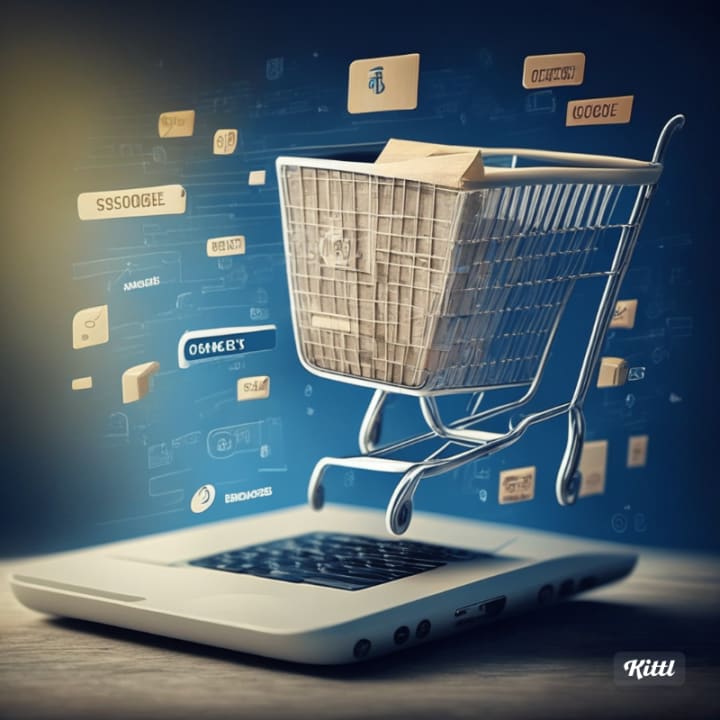
First and foremost, ecommerce provides businesses with an unparalleled opportunity to reach a global audience. With a physical store, businesses are limited by their geographic location. They can only reach customers who live nearby or who are willing to travel to their store. However, with ecommerce, businesses can sell their products to anyone, anywhere in the world. This means that businesses can tap into new markets and reach a wider audience than ever before.
In addition to reaching a global audience, ecommerce also offers businesses the ability to collect valuable data on their customers. By tracking customer behavior on their website, businesses can gain insights into what products customers are interested in, what pages they visit most frequently, and how long they spend on each page. This data can then be used to create targeted marketing campaigns that are tailored to each customer's individual interests and preferences. This level of personalization is impossible to achieve with traditional marketing methods.

Another advantage of ecommerce is the ability to offer customers a seamless shopping experience. With traditional shopping, customers often have to deal with long lines, crowded stores, and limited inventory. However, with ecommerce, customers can shop from the comfort of their own homes, at any time of day or night. They can easily compare prices, read reviews, and make purchases with just a few clicks. This convenience and ease of use is one of the main reasons why ecommerce is becoming the preferred way to shop for many consumers.
Ecommerce also allows businesses to offer a wider variety of products than they would be able to in a physical store. With limited shelf space, physical stores have to be selective about what products they carry. However, with ecommerce, businesses can offer an unlimited number of products without having to worry about running out of space. This means that customers have access to a wider variety of products and can find everything they need in one place.

One of the biggest advantages of ecommerce is the ability to track and measure the success of marketing campaigns in real-time. With traditional marketing methods, it can be difficult to determine the effectiveness of a campaign. However, with ecommerce, businesses can track exactly how many people clicked on an ad, how many people made a purchase, and how much revenue was generated as a result. This data can then be used to refine and optimize marketing campaigns for maximum effectiveness.
Another advantage of ecommerce is the ability to offer personalized recommendations to customers based on their browsing and purchase history. By using algorithms and machine learning, ecommerce platforms can analyze customer data to offer product recommendations that are tailored to each customer's individual tastes and preferences. This not only improves the customer experience but also increases the likelihood of repeat purchases and customer loyalty.

Ecommerce also offers businesses the ability to leverage social media and other digital marketing channels to reach customers. With social media, businesses can target specific demographics and interests, and create engaging content that encourages customers to visit their website. They can also use email marketing, influencer marketing, and other digital marketing strategies to reach customers at every stage of the buying journey.
Finally, ecommerce offers businesses the ability to sell their products 24/7, 365 days a year. With a physical store, businesses are limited by their operating hours and can only generate revenue when the store is open. However, with ecommerce, businesses can make sales around the clock, even when they're not actively marketing their products. This means that ecommerce can generate revenue even when businesses are closed, making it a highly lucrative and profitable business model.
In conclusion, ecommerce is the future of marketing trends. It offers businesses the ability to reach a global audience, collect valuable customer data, provide a seamless shopping experience, offer a wider variety of products, track and measure the success of marketing campaigns in real-time, offer personalized recommendations, leverage social media and other digital marketing channels, and generate revenue around the clock. As ecommerce continues to grow and evolve, businesses that embrace this trend will be well-positioned to succeed in the years to come.
About the Creator
Keep reading
More stories from nabil alami and writers in Education and other communities.
ecommerce marketing on google
The world of retail has undergone a significant transformation in recent years, with the rise of ecommerce and the decline of traditional brick-and-mortar stores. Ecommerce has disrupted the retail industry and has become the go-to option for consumers looking to purchase goods and services. In fact, ecommerce sales are projected to reach $6.54 trillion by 2023, according to Statista. This shift towards ecommerce is driven by a number of factors, including convenience, accessibility, and the rise of mobile devices. In this essay, we will explore why ecommerce is the future and how ecommerce marketing on Google plays a crucial role in its growth.
By nabil alami3 years ago in Education
The Human Advantage Russia’s Soft Skills Renaissance in the Age of AI (2026)
In the rapidly shifting economic landscape of 2026, Russia has entered a new era of human capital development. For years, the Russian job market was dominated by a "Hard Skills First" mentality prioritizing technical degrees, engineering prowess, and tangible manufacturing expertise. However, as Artificial Intelligence (AI) and automation begin to handle the heavy lifting of data analysis and routine tasks, a fundamental realization has swept through the offices of Moscow and the industrial hubs of the Urals: technical skills get you the job, but soft skills keep the business alive. Today, soft skills training in Russia has evolved from a "corporate luxury" into a survival-critical investment, driven by a need for agility, emotional intelligence, and human-centric leadership in an increasingly complex world.
By Neeraj kumar6 days ago in Education
Timestamp Precision, Clock Synchronization, and Data Integrity in FX Platforms
Foreign exchange (FX) trading platforms work in very fast and busy markets. Prices change in milliseconds, trades happen automatically, and systems must keep perfect timing. To stay reliable and trustworthy, FX platforms depend on three important ideas: timestamp precision, clock synchronization, and data integrity. Together, these make sure that price data, trades, and system records stay correct and well organized. This blog gives some ideas about Timestamp Precision, Clock Synchronization, and Data Integrity in FX Platforms
By james halla day ago in Education



Comments
There are no comments for this story
Be the first to respond and start the conversation.