

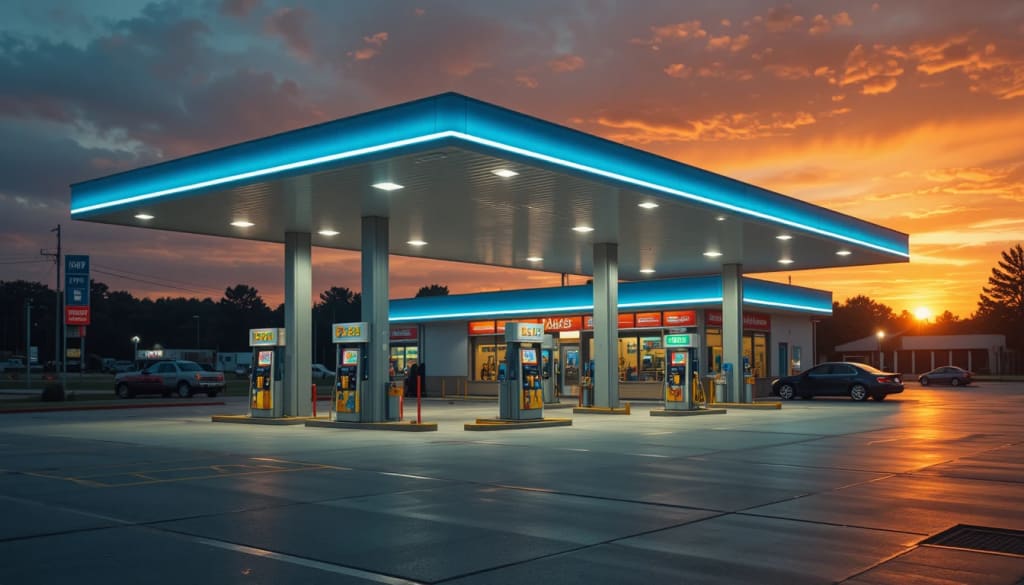
The hidden secrets to success in a fuel station business — from steady income to a reliable market and secure investment opportunities
Running a successful business in today’s competitive world requires choosing an industry that offers stability, long-term demand, and steady financial returns. Among the wide range of business opportunities available, gas stations stand out as one of the most reliable and consistently profitable ventures. Whether in urban centers, highways, or remote areas, the need for fuel remains constant. This makes gas stations an attractive and resilient investment choice for entrepreneurs looking to build a sustainable income stream.
A Business Built on Continuous Demand
One of the biggest advantages of owning a gas station is the guarantee of consistent demand. As long as people rely on vehicles for transportation, deliveries, travel, and daily activities, fuel will remain essential. Even with the rise of electric vehicles, the global shift is slow, and gasoline remains dominant in many regions. This means the fuel retail industry continues to provide stable revenue and predictable customer flow throughout the year.
Unlike trend-based businesses that can fluctuate with changing customer preferences, gas stations serve a need, not a desire. People buy fuel because they must—making the business more resilient against economic downturns and market shifts.
Multiple Revenue Streams Beyond Fuel
While fuel sales are the core of the operation, most profitable gas stations earn a significant portion of their income from additional services. Many modern stations include convenience stores, car washes, tire services, oil changes, and even small cafés. These extra services not only boost revenue but also attract more customers.
A well-managed convenience store can sometimes generate more profit than the fuel pumps themselves. Items such as snacks, drinks, car accessories, and travel essentials are high-demand products with good profit margins. By diversifying income sources, gas station owners reduce risk and increase overall profitability.
Strategic Locations Lead to Strong Success
Location is one of the most important factors in the success of a gas station. Fuel stations placed near highways, busy city streets, intersections, or densely populated neighborhoods tend to perform extremely well. Travelers, daily commuters, and local residents all contribute to a constant flow of customers.
Even in rural areas, where competition may be lower, a single gas station can dominate the local market and enjoy loyal customer support. Selecting the right location can transform a standard fuel station into a highly profitable business that attracts customers day and night.
A Secure and Stable Investment
Many entrepreneurs prefer businesses that offer a secure environment for investment. Gas stations fit this requirement because fuel is a product that is always in demand. Additionally, once the station is established, operating costs can be relatively predictable. With proper management, inventory control, and regular maintenance, the business can run smoothly with minimal interruptions.
Another benefit is the potential for long-term property value appreciation. Land used for fuel stations, especially in high-traffic areas, can increase significantly in value over the years, providing an additional layer of financial security.
Opportunities for Growth and Expansion
A gas station is not just a standalone business—it can evolve into a larger commercial hub if planned wisely. Many successful stations gradually expand by adding new services or upgrading existing ones to attract more customers. Examples include faster fueling systems, more pumps, modern payment options, or solar-powered lighting to reduce operational costs.
Technology also offers new opportunities. Digital payment systems, automated fuel dispensers, and modern monitoring tools make it easier to manage the business efficiently. As customer expectations change, stations that adapt quickly gain a strong competitive edge in the local market.
Building Customer Trust and Loyalty
Customer satisfaction is a key factor in the fuel retail industry. Drivers often prefer stations that offer clean facilities, accurate fuel measurement, friendly staff, and competitive prices. A good reputation encourages customers to return, especially regular commuters and local residents.
Small improvements such as clean restrooms, well-lit surroundings, and a welcoming environment can significantly increase customer loyalty. Many gas stations also implement loyalty programs or offer small discounts, which encourage repeat visits and help build a strong and dependable customer base.
Challenges to Consider
Like any business, fuel stations also come with challenges. Fuel price fluctuations, environmental regulations, and maintenance requirements are common concerns. However, with thoughtful planning and compliance with safety standards, these challenges can be effectively managed.
Choosing reliable suppliers, maintaining quality standards, and ensuring accurate fuel pumps are essential steps in building a trustworthy business. When managed properly, the challenges become manageable and do not outweigh the long-term benefits.
A Business With a Future
Even as the world slowly moves toward cleaner energy, gasoline-powered vehicles will remain dominant for decades in many countries. In addition, gas station owners can start integrating future energy solutions—such as EV charging stations—to stay competitive. This creates a hybrid business model that serves both current and future customers.
Conclusion
Starting a gas station is more than just opening a fuel pump—it is an investment in a business that provides continuous demand, strong profit potential, and long-term stability. With the right location, smart management, and diversified services, a gas station can become a highly successful and reliable source of income. For entrepreneurs seeking security, growth, and a future-proof business model, a fuel station is truly a business that never stops.
About the Creator
Keep reading
More stories from Bilal Mohammadi and writers in Education and other communities.
YouTube New Policy Changes
YouTube, one of the largest video-sharing platforms in the world, is constantly evolving to meet the needs of its diverse community of creators and viewers. On November 17, YouTube will introduce new policy changes that will have a significant impact on how content is managed, viewed, and monetized on the platform. These changes aim to enhance user safety, improve the experience for viewers, and ensure a more transparent environment for creators. In this article, we will break down these upcoming changes and explain what you, as a content creator or viewer, need to know.
By Bilal Mohammadi3 months ago in Education
From Expertise to Excellence: Advancing Patient Care Through Professional Experience
In the modern healthcare environment, delivering outstanding patient care requires more than academic training or technical qualifications. While medical knowledge is essential, true excellence comes from real-world experience, continuous improvement, and the ability to connect with patients on a human level. The transition from expertise to excellence is shaped by years of practice, compassion, and dedication to better outcomes.
By Yousuf A. Gaffar, M.Da day ago in Education
Off the Book
It ended like every other stupid idea. Badly, and alone. I’m researching digital confession ethics, he said. A tech ethicist. He gestured at floating data I couldn’t see then pulled out a physical notebook. Actual paper, fountain pen. He held it up like he was showing me scripture.
By Nicky Frankly4 days ago in Fiction


Comments
There are no comments for this story
Be the first to respond and start the conversation.