
How Can Tokenization Platforms Integrate Real-Time Valuation for Physical Assets?
Enhancing Accuracy and Liquidity: Integrating Real-Time Valuation Mechanisms for Tokenized Physical Assets

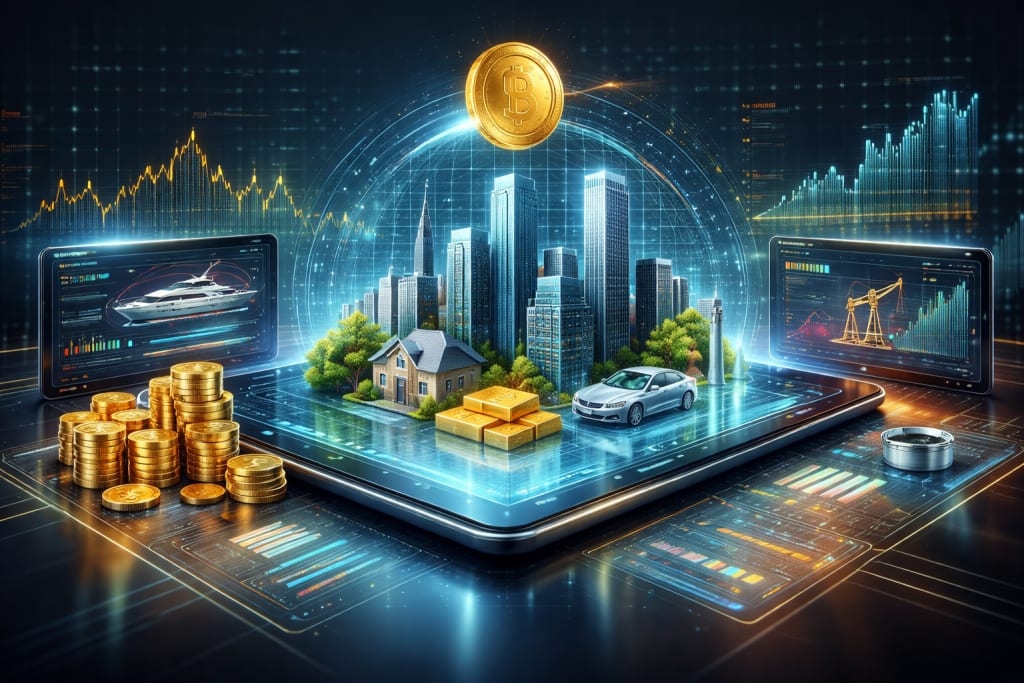
Tokenization has emerged as a powerful tool for bringing physical assets onto the blockchain. By converting physical assets, such as real estate, commodities, or artwork, into digital tokens, it enables fractional ownership, liquidity, and democratized access to investment opportunities. However, to make tokenization platforms truly effective, they must also be able to offer accurate, real-time valuation for these physical assets. Without real-time valuation, tokenized assets risk losing credibility, liquidity, and overall market value. This blog explores how tokenization platforms can integrate real-time valuation for physical assets, the technologies involved, and the challenges they face in creating seamless, accurate valuation systems.
Understanding Tokenization of Physical Assets
Before diving into real-time valuation, it is crucial to understand tokenization. Tokenization involves converting physical assets into digital tokens on the blockchain. Each token represents a share in the physical asset, and these tokens can be traded, bought, and sold, just like any other digital asset.
For example, with real estate tokenization, a building might be divided into a large number of tokens, each representing a fraction of the property. Investors can then purchase tokens instead of purchasing the entire property, allowing them to own a share and benefit from any capital appreciation or rental income generated by the property.
While the process of real world asset tokenizing an asset is relatively straightforward, providing an accurate valuation for those assets is more complicated. Physical assets are typically subject to fluctuations in market value based on various factors like demand, condition, location, and broader economic trends. Therefore, integrating real-time valuation into tokenization platforms is critical for maintaining investor confidence and ensuring market liquidity.
The Importance of Real-Time Valuation in Tokenization
Real-time valuation provides accurate, up-to-date data on the current value of an asset, reflecting any changes in market conditions. For tokenized assets, real-time valuation serves several purposes:
- Liquidity: Tokenized assets that are valued in real-time can be more easily traded because investors can see exactly what the current market value is.
- Transparency: Real-time valuations build trust among investors. If investors know that the value of their asset is regularly updated, they are more likely to participate in the tokenized market.
- Risk Management: Accurate valuation helps investors make informed decisions and manage risks effectively, particularly in volatile markets.
- Regulatory Compliance: Real-time asset valuation ensures that tokenized assets comply with financial regulations, such as ensuring that the asset is priced according to its actual value.
The Technological Foundation: Blockchain, Smart Contracts, and Oracles
Blockchain serves as the immutable ledger where token ownership, transactions, and metadata are recorded. Smart contracts — programmable logic executed on the blockchain — enable tokens to carry rules for trading, dividends, or governance. Yet blockchains themselves do not inherently know external, off‑chain asset values. This gap is where oracles and external data pipelines come into play.
Oracles are systems that fetch, validate, and deliver off‑chain data into the blockchain environment. In the context of valuations, oracles can supply price feeds from trusted data sources, market indices, or automated models into smart contracts. Trusted oracles, like Chainlink, Band Protocol, or custom data aggregators, act as bridges between the real world and on‑chain ecosystems.
Without oracles, a tokenization platform would be limited to static valuation data embedded at minting time, requiring manual updates that are neither scalable nor real‑time. By integrating oracle networks, platforms can pull regular valuation updates — whether every minute, hour, or day — and trigger smart contract functions based on conditions like price thresholds, settlement events, or margin calls.
What Constitutes Real‑Time Valuation for Physical Assets?
Real time does not necessarily mean instantaneous like a stock price ticker — it means continuously updated and responsive to underlying market drivers. For physical assets, real‑time valuation can derive from:
1. Market Price Indexes and Trading Platforms
Some physical assets, like gold or oil, are traded continuously on commodity exchanges. These markets provide real‑time price feeds that tokenization platforms can ingest through oracles. For example, a token representing physical gold stored in vaults can be dynamically priced relative to the current London Bullion Market Association (LBMA) gold spot price. This integration ensures that the token moves in sync with the broader commodity market.
2. Automated Valuation Models (AVMs)
For assets that lack public market pricing — such as real estate, private equity, or fine art — platforms can use AVMs. AVMs draw from extensive datasets to estimate current market value using machine learning and statistical modeling. In real estate, an AVM might analyze recent sales in a neighborhood, current rental yields, zoning changes, and economic indicators to produce a valuation. Integrated with regular data updates, AVMs can approximate near real‑time value.
AVMs are already widely used in mortgage underwriting and automated appraisal systems, but integration with blockchain and oracle feeds allows these models to power valuation updates on tokenized assets and reflect changes in demand, local market conditions, or economic trends.
3. IoT and Sensor Data
IoT (Internet of Things) devices can feed real‑time operational and condition data for certain asset classes. For example, agricultural tokenization projects can use sensors for crop yield, weather impact, soil quality, and harvest metrics to adjust asset value dynamically throughout a season. Similarly, industrial equipment can report utilization, maintenance events, or depreciation schedules, enabling valuation adjustments based on physical condition.
4. Hybrid Approaches
The most robust real‑time valuation systems blend multiple data sources — market prices, AVM outputs, IoT feeds, and expert adjustments — to produce composite valuations. Smart contracts can weigh inputs based on predefined rules and confidence scores, ensuring that outliers or faulty data do not skew prices.
Step‑by‑Step Integration of Real‑Time Valuation
Let’s walk through how a tokenization platform might integrate real‑time valuation from conception to execution:
Step 1: Asset Data Aggregation and Modeling
Before tokenization, the platform must gather comprehensive data about the physical asset. For real estate, this might include property characteristics, location data, comparable sales, rental trends, tax records, and historical price movements. For commodities like gold, it might involve linking to price exchanges.
An AVM or valuation model is developed using this data, calibrated with historical trends, local market nuances, and statistical validations. For assets with active markets, APIs to price feeds are identified — such as commodity exchange feeds or OTC price aggregators.
Step 2: Oracle Selection and Data Pipeline Setup
The platform configures oracle services that will push external valuation data into blockchain. Oracle setup involves ensuring data authenticity through multi‑source aggregation, redundancy to prevent single‑point failures, and secure cryptographic signing to prevent tampering.
Oracles can be permissioned (controlled by trusted entities) or decentralized (aggregating multiple reporters), depending on the asset class and regulatory requirements. For regulated environments, permissioned oracles from audit firms, market data vendors, or institutional partners may be preferred.
Step 3: Smart Contract Integration
Smart contracts are written to reference oracle feeds and incorporate valuation logic. For example, a contract may include functions that trigger once a new valuation is received — updating the token’s reference price, recalculating collateralization ratios, or initiating investor notifications.
Smart contract design should account for data latency and consensus rules — for instance, averaging multiple oracle feeds over a time window to smooth volatility.
Step 4: Governance and Override Mechanisms
Even highly automated systems require governance protocols. Platforms should include mechanisms for dispute resolution, oracle failures, or model recalibration. Stakeholders (e.g., investors, auditors) might participate in governance via governance tokens or board representation.
Override mechanisms allow human intervention if a valuation model produces questionable results due to extraordinary events, data disruptions, or unusual market conditions.
Step 5: Continuous Monitoring and Model Updating
Real‑time valuation systems must be maintained, validated, and improved. AVMs evolve with new data, economic shifts, and structural market changes. Regular audits, performance assessments, and machine learning retraining ensure that valuations remain trustworthy.
Use Cases: Where Real‑Time Valuation Matters Most
Real‑time valuation unlocks new opportunities in tokenized markets:
Liquidity and Secondary Markets
Investors in tokenized assets often expect the ability to trade tokens on secondary markets. When valuations update regularly, traders have better pricing transparency, reducing bid‑ask spreads and increasing market depth.
Collateralization and DeFi Integration
Tokenized assets can be used as collateral in decentralized lending platforms. Real‑time valuation ensures that collateral values reflect current market conditions, enabling margin calls and liquidation triggers to function effectively and securely.
Fractional Ownership and Dividend Distribution
In property tokenization, rental income or cash flows may be distributed to token holders. Accurate valuation ensures that distributions reflect fair ownership shares and that periodic valuation adjustments inform yield calculations.
Risk Management and Regulatory Compliance
Regulators often scrutinize valuation methodologies to protect investors. Real‑time valuation systems, especially those built on transparent models and auditable oracle feeds, enhance compliance and reduce systemic risk.
Addressing Challenges and Risks
Despite its promise, integrating real‑time valuation for physical assets presents several obstacles:
Data Quality and Reliability
Valuation is only as good as the data feeding it. For assets with limited transaction histories (like fine art or bespoke properties), data scarcity can lead to noisy models. Platforms must mitigate this through data partnerships, expert inputs, and conservative valuation buffers.
Model Risk
Automated models can fail under atypical market conditions. The 2008 financial crisis demonstrated how correlated models can produce significant errors. To manage model risk, platforms should employ diverse modeling techniques, stress testing, and augmentation with human expertise.
Regulatory Uncertainty
Securities laws in many jurisdictions treat tokenized asset shares as regulated instruments. Real‑time valuation methodologies may be subject to disclosure requirements, audit obligations, and fiduciary standards — forcing platforms to align with local laws and global best practices.
Oracle Manipulation
Oracles are a critical trust layer. A compromised oracle can feed incorrect valuations into smart contracts, leading to mispricing or financial loss. Decentralized oracle networks with multi‑party validation, cryptographic proofs, and slashing mechanisms for bad actors offer stronger protections.
The Role of AI and Machine Learning in Valuation
Artificial Intelligence (AI) is increasingly central to real‑time valuation, particularly for complex or opaque asset classes. AI systems can analyze nontraditional data sets — satellite imagery for farmland yield, social sentiment for luxury goods demand, or transportation trends for commercial real estate viability.
Machine learning models can detect patterns humans might miss, adapt to changing market conditions, and improve predictive accuracy over time. However, AI models must be interpretable and auditable. Black‑box models that cannot explain valuation rationales present challenges for investor trust and regulatory scrutiny.
What the Future Holds
As tokenization evolves, real‑time valuation will transition from a competitive advantage to a baseline expectation. Several trends will shape this:
- Standardized Valuation Protocols: Industry consortia may develop open standards for valuation oracles, data quality benchmarks, and model evaluation frameworks.
- Cross‑Platform Liquidity Pools: Shared valuation feeds across exchanges and platforms could promote interoperability and consistent pricing.
- Regulatory Frameworks: Governments may codify valuation standards for tokenized assets, defining acceptable data sources and transparency requirements.
- Integration with IoT and Digital Twins: As physical assets become more instrumented, real‑time condition data will directly influence valuation, enhancing accuracy and dynamism.
Conclusion
Tokenization represents a seismic shift in how investors engage with physical assets, converting traditionally illiquid holdings into divisible, tradable digital tokens. However, the promise of this innovation hinges on one critical capability: real‑time valuation. Without it, investors may face mispricing, systemic risk, and a trust deficit.
Integrating real‑time valuation requires a convergence of blockchain oracles, automated valuation models, data aggregation systems, AI analytics, and robust governance mechanisms. By thoughtfully combining these technologies — and addressing the challenges of data quality, regulatory compliance, and model risk — tokenization platforms can unlock new levels of transparency, liquidity, and fairness in digital asset markets.
About the Creator
Gabrielle
Blockchain enthusiast and NFT writer dedicated to merging technology with art on decentralized platforms, driving innovation for a creative future. Embracing the potential of digital expression.
7 Latency Sources Inside Cloud Computing Request Paths
You click a button and wait. Then wait some more. That frustrating pause comes from latency hiding inside your cloud computing request path. Every millisecond counts when users expect instant responses from applications. Cloud infrastructure promises speed and reliability, but numerous bottlenecks slow down data travel between your device and distant servers.
By Judy Watson5 days ago in Education
The Interview That Tested More Than Skills
The interview was scheduled for ten in the morning, but I arrived at the building an hour early. I didn’t want to risk being late, not today. This opportunity meant more than just a job. It felt like a doorway to a future I had been quietly working toward for years. As I sat in the lobby, watching people pass by with confident strides, I realized how small the moment looked from the outside—and how enormous it felt on the inside.
By NAIB REHMANabout 3 hours ago in Education



Comments
There are no comments for this story
Be the first to respond and start the conversation.