
How Coloring Can Improve Overall Mental Clarity?
Overall Mental Clarity and Coloring

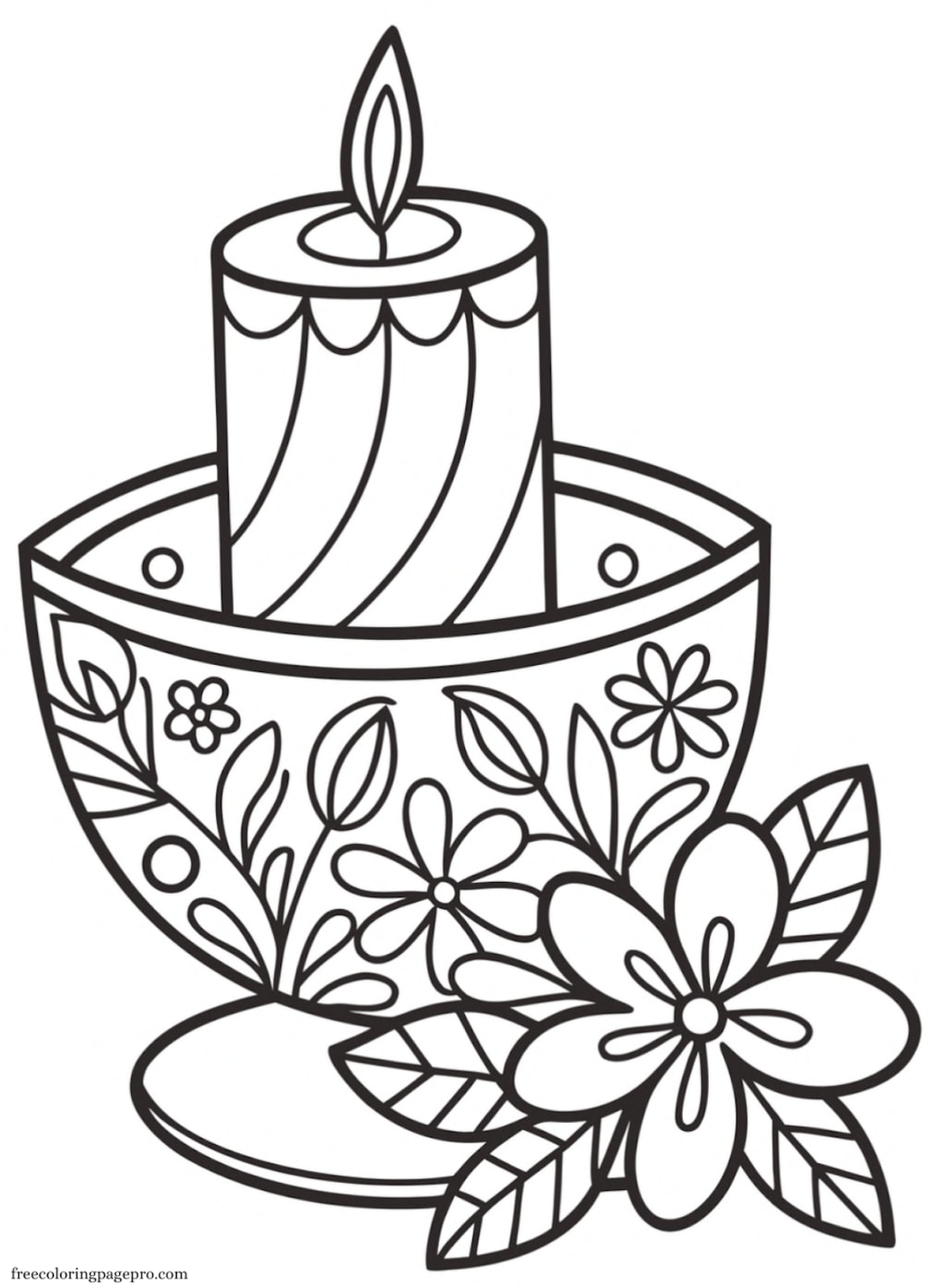
In the hectic pace of life today, finding simple yet powerful practices to improve our mental clarity is more vital than ever. Among the most surprisingly helpful and accessible is coloring ,whether an intricate mandala, a fanciful pattern, or a freeing sketchbook page. Though often dismissed as a child's pastime, coloring for adults is gaining serious attention for its ability to calm the mind, sharpen focus, and support clearer thinking. In this extended blog post, we'll explore how coloring promotes mental clarity, why it works (from neuroscience to psychology), what kinds of coloring work best, and how to incorporate it into your daily routine for maximum benefit.
1. What we mean by "mental clarity"
As we dive into how coloring works, it's helpful to define what we mean by "mental clarity." Basically, mental clarity is where your mind is when you:
- Feel less scattered, less distracted, and more focused.
- Can apply more focused attention to the task
- Can think more smoothly, decide more easily
- Have fewer intruding, whirling thoughts (ruminating, worrying)
- Feel clear, with headspace and readiness, rather than fog or confusion.
That is, mental clarity entails mental bandwidth, focus, and a calm mind, all converging. Now: what role does coloring have to play?
2. Why coloring works: the evidence and mechanisms
More research, as well as numerous experts, is emerging and converging on several avenues through which coloring contributes to mental clarity. Let's lump them into big categories:
2.1 Coloring and mindfulness – remaining anchored in the here and now
Coloring keeps your focus in the here and now ,choosing colors, staying inside the lines, sensing the pencil or pen on paper. The process of remaining in the "here and now" is similar to that of the practice of mindfulness.
According to the Mayoe Clinic Health System, coloring always can help you focus on what is occurring in the moment and shut down the hum of background chatter.
One article says: "When you're lost in thought … your brain activates the Default Mode Network … Mindfulness-type practices,including coloring,help turn it down."
One study found that coloring improved tests of focused attention (mindful attention) compared to some controls.
Why is this useful for clarity? Because mental clarity typically suffers when our minds are split, stuck on the past/future, or jittery. Coloring supplies the brain with a light task that takes attention away from anxious cycles.
2.2 Coloring as a form of "meditation light"
Though not technically a formal meditation, coloring replicates many of its benefits: reduced brain chatter, a calmer nervous system, and a sense of flow.
A psychologist calls adult coloring "very much like a meditative exercise": your attention flows beyond self-consciousness, you soothe your brain, and you experience low-stakes, rewarding outcomes.
According to the University of Texas Southern report, coloring reduces activity in the "fear centre" of the brain (amygdala) and induces a meditative state.
Flow state and meditative states help the mind detach from worry and regain mental clarity: that is, when you are less mentally cluttered, you are more clear-headed.
2.3 Stress reduction, anxiety reduction & quieter physiology
Mental clarity is impaired when stressed, anxious, or overwhelmed. Your thinking is fuzzy, your concentration is divided, and your decision-making suffers. Reducing stress and anxiety indirectly heightens clarity.
One article states that coloring for as little as 10–20 minutes can soothe anxiety, especially when coloring complex shapes/patterns.
The Mayo Clinic notes coloring keeps you out of the "overbooked to-do list" distractions and lets you unwind.
The Allina Health resource suggests that when you color, your brain receives the same physiological benefits as mindfulness: a more relaxed heart rate, deeper breathing, etc.
With anxiety and concern diminished, mental fogginess lifts, focus returns, and clarity is regained.
2.4 Bilateral brain activation — enhancing cognitive function
Coloring not only soothes – it also gently conditions the brain: decision-making (what color, what pattern), planning (which piece to complete next time), hand-eye coordination.
A source has been quoted as stating: "Coloring stimulates both the left and right hemispheres of the brain … your brain is getting a 'full workout'."
Yet another source quotes a study showing coloring reduces anxiety and improves other moods — i.e., it helps both affect (emotion) and cognition (thought).
This intellectual exercise helps sharpen attention, maintain concentration, and therefore support clarity.
2.5 Distracting from intrusive thoughts/rumination
It sounds weird, but one of the subtle reasons coloring is beneficial is that it gives your mind a break from the typical cycles of worry, planning, and judgment with an engrossing, non-threatening task.
Example: "Coloring can help you disconnect from negative thoughts" by maintaining your focus on outward rather than inward worry.
Because the stakes are low (you can't "fail" at coloring), you're less likely to berate your work, which lowers mental tension.
And when you let go of intrusive thoughts, clarity has more space to shine through.
3. Specific ways coloring increases mental clarity
Below are some specified benefits attributed specifically to clarity and how they occur:
3.1 Improved focus & attention span
By engaging in coloring, you're conditioning your mind to stay focused on a single task rather than jumping from one stimulus to another.
For example, Allina Health explains that coloring "puts your attention on something lovely and transports you away from any depressing thoughts."
The better the concentration, the less you're distracted, and thus you think more clearly and work more efficiently.
3.2 Enhanced calmness leading to clearer thinking
When anxious or tense, mental focus falters. You may feel cloudy, reactive, or overwhelmed. Coloring offers calming peace.
Example: the "Creative Coloring" PDF discusses how, by reducing amygdala activity, coloring allows for peaceful mind time.
nutsouthwestern.edu
With peace, the clarity natural to the mind can return—decisions become easier, thinking less burdensome, understanding more likely.
3.3 Enhancing the "flow state"
The flow state – being deeply immersed in a single task, losing sense of time, fully present – is often linked to high performance and clarity of thought. Coloring can catalyze a mild version of flow.
As noted, when coloring complex patterns like mandalas, participants reported lower anxiety and a meditative state.
When you're in flow, you're less reactive, more centered, and thus more mentally present.
3.4 Enhanced creativity and problem solving
As coloring engages both hemispheres of your brain (imaginative and analytical) and allows for safe play without risk, you can augment your thinking creatively.
– Castle Arts article: "Coloring taps into your creativity … your brain is getting a full workout."
A more fluid, acute thinking process yields greater clarity when you approach choices or creative endeavors.
3.5 Increased downtime and mental resetting
Too frequently, we think we're relaxing, but we're still working in our minds (phone checks, tomorrow planning, worrying). Coloring is an actual mental break.
– The JED Foundation article: coloring is "a way to take a step back … quiet your mind, and create something just for you."
When your mind actually gets a break, clear thinking returns more quickly.
3.6 Better sleep → clearer daytime thinking
Improved sleep aids cognitive clarity. Since coloring can calm and reduce screen use an hour or two before bedtime, it leads to improved sleep.
– PDF toolkit: bedtime coloring aids relaxation, promotes the release of melatonin, and enhances the quality of sleep.
Having slept, your brain functions — attention, memory, decision-making — are clearer.
4. What types of coloring are most beneficial for clarity?
All colors are not equal in their ability to produce mental clarity. Take the following into consideration:
4.1 Design complexity
Studies have shown that more intricate designs (mandalas, detailed patterns) have more potent effects on reducing anxiety and improving concentration than straightforward ones.
– "Research has discovered that colouring for a mere 10 minutes a day … 20 minutes … reduced anxiety … especially when colouring complex patterns or shapes."
Although it may be too difficult to anger, some balance is required.
4.2 Choosing colour palette & intention
Colour choice matters: certain colours evoke a specific mood. In addition, colouring with intention or mindfulness gives value.
– For example, one study found that blue and pink can lower stress.
– The JED Foundation article suggests selecting a colour scheme based on your intention (relax, energize, etc.).
4.3 Habit or regularity
Even short times (10-20 minutes) regularly done show effects.
– Castle Arts: "A study also showed that colouring with the therapy in patients … could have a mood-enhancing effect."
– JED Foundation: "Spending 10 to 15 minutes a day coloring … makes it more likely to become a long-term habit."
4.4 Environment & mindset
Where and how you do it matters.
– JED Foundation: Choose a quiet area, minimize distraction, focus on the process.
– Mayo Clinic: Focusing on what you're doing (being present) rests your brain.
4.5 Low pressure, high pleasure
Coloring is optimal when you let go of perfection. The low stakes are part of the benefit.
– From Cleveland Clinic article: "The result of coloring isn't predictable or prescriptive … it can be as tidy — or as messy — as you want, and that is one of its calming perks."
Actually, if colouring is stressful ("my page needs to look perfect"), you lose some of the clarity gain.
5. How to integrate coloring into your clarity enhancing routine
Here is a practical how-to guide for using coloring to improve mental clarity:
Step 1: Choose your tools
A colouring book (adult version) with designs that you prefer (mandalas, nature, abstract)
Quality colouring pencils/markers (if you prefer)
A comfortable location (seat, good lighting)
Optional: calming music, candle, no electronic distractions
Step 2: Define your intention
Take a minute or so before you begin. Ask yourself: What do I want from this session? A mental reboot? Focus for subsequent work? Unwinding before sleep?
Choose a palette or style based on this. e.g.: gentle blues/greens for unwinding; bright colours for an energy boost.
Step 3: Determine frequency & duration
Leave 10-20 minutes per session as a minimum. Research shows benefits even for shorter sessions.
Allocate time: post-work to unwind, before sleep, or as a daily break.
Strive to do it habitually (daily or nearly daily) so the brain becomes accustomed to anticipating this clear-minded activity.
Step 4: Colour mindfully
As you labor, keep an eye on the process: pencil, page, colors.
When your mind does wander (which it will), respectfully bring it back to coloring. This is in the pay-off.
Avoid multitasking (e.g., checking TV or phone) if you want clarity. A more focused session yields stronger clarity pay-offs.
Step 5: Brief reflection afterwards
When finished, step back and notice how you feel. Are you more relaxed? Is your mind less cluttered?
Leave a quick comment if you wish: "felt more concentrated after colouring" — that serves as reinforcement of the value.
Step 6: Maximise the benefit
Turn colouring into a mental "reset button" in the middle of the day if you feel overwhelmed.
Use a nighttime ritual instead of scrolling on yoon ur phone.
Use it before a creative or demanding task to prime your mind for clarity and focus.
6. Addressing obstacles and making it sustainable
Like any habit, coloring for clarity may meet some challenges. Here are common obstacles and ways around them:
Obstacle: "I'm not an artist / my colouring looks messy."
That's just terrific. One of the plus sides of colouring is how low-stakes it is. Cleveland Clinic puts it this way: because you're not being judged, you'll be less stressed.
Reminder: You don't need to get this right; it's about calm, concentration, and clarity.
Tip: Color simpler designs first. Or experiment with markers/pencils you adore without worrying about outcomes.
Obstacle: "I don't have time"
Even 10 minutes is valuable. Research shows significant benefits with short intervals (10-20 min).
Tip: Keep a small colouring kit in your bag/backpack or on your desk. Use waiting times or breaks.
Obstacle: "My mind wanders / I get distracted while colouring"
Response: Fine and normal. Part of the benefit is being able to notice when the mind wanders and bring it back (like meditation).
Tip: Set a soft timer for 10 minutes. Focus on the/sensations of colouring. When you drift off, return.
Challenge: "It's too repetitive/boring"
Solution: If patterns bore you, try a different type (nature scenes, abstract, geometry) or switch up colour palettes frequently.
You can even include themes (e.g., your "treehouse village" colouring pages, if whimsical prompts are your thing). Adding some variety keeps the brain engaged while still getting the benefit.
7. Real Life Stories & Anecdotes
The following are some of the ways that people utilize colouring to support mental clarity and wellbeing (through community posts):
"My mental health has not been too good and I need something to keep me busy to drive me mad… colouring allows me to focus on the page only, it gets me flowing."
"Once I got over that initial fear, it's been so, so rewarding. My screen usage dropped dramatically."
These anecdotal reports mirror the tendencies realized in the study: concentration, calm, clarity.
8. Where coloring fits into the bigger picture of wellbeing
While coloring is proper, it is only one of many tools. To get the most out of using it to improve mental clarity, complement it with:
- Adequate sleep
- Exercise or movement
- Healthly diet
- Mindfulness practice
- Reduction of digital overload or Over screen time
Coloring is not a replacement, but an addition. When you're feeling more stuck, distracted, or overwhelmed, coloring always provides an immediate way to regain clarity.
9. Conclusion: How coloring contributes to mental clarity
Let's recap the primary channels:
- Anchors attention → enhances focus & dampens distractibility.
- Encourages presence/mindfulness → mental chatter, rumination stilled
- Decreases stress & anxiety → physiology (heart rate, breathing) quiets → clarity enhances
- Engages brain in a light mental workout → creativity + logic, bilateral engagement → sharper thinking
- Gives you a mental reboot → helps you recharge and return to clarity
- Enables better sleep/downtime → which in turn contributes to clearer thinking the following day
Coloring thereby becomes an efficient, low-cost, low-threshold activity that supports mental clarity in several ways.
10. Conclusion & call to action
If you're feeling intellectually befuddled, disorganized, bewildered, or want to get your thoughts straightened out and move past mental distractions, do some colouring. It requires no great gift, vast amounts of time, or equipment. All it needs is a colouring page, some colouring medium, and a bit of time to connect with your brain.
Start small: carve out a 10 minute window today, grab a simple design, pick your colors, and do it. See how you feel later. Once you get into the rhythm of it, coloring can become your go to for boosting clarity.
And if you're already color habituated (e.g., your charming obsession with fantastical treehouse village, cupcake town, cozy Japan, or safari-adventure motifs), then add a clarity intention each time you lay out the colors: "I'm coloring to clear my mind, focus my thoughts, calm my brain." The activity then is no longer just fun, it's purposeful.
Here's to clearer heads, quieter evenings, sharper focus—and the simple magic of a colouring pencil.
About the Creator
Shenal Jay
All about Free Coloring Pages and Learning Materials (Pre-K to 5th)
For free download
Visit
https://freecoloringpagepro.com/
Or
https://www.patreon.com/FreeColoringPagesPro
Keep reading
More stories from Shenal Jay and writers in Education and other communities.
How Do Beginners Start Coloring Without Feeling Overwhelmed?
Coloring isn't just for kids anymore — it's a creative escape for adults, a form of relaxation, and even a tool for mindfulness. But if you're a beginner staring at a box of pencils and a blank coloring page, it's easy to feel overwhelmed.
By Shenal Jay4 months ago in Education
Menu Boards for Cafés: Design Ideas and Benefits
I'll never forget the first time I walked into a local coffee shop that had just upgraded from their hand-written chalkboard to a sleek digital menu display. The difference was striking—not just visually, but in how quickly I could scan the menu, see vibrant images of specialty drinks, and notice the seasonal promotions rotating in the corner. That experience opened my eyes to how much menu presentation actually matters in café environments.
By Jerry Kane 5 days ago in Education
Writing About Writing: The Rainbow Trap
The good thing about living in modern times is that LGBTQ representation in media is increasing. Not just in niche and Independant media, either, but also in mainstream media. Books, movies, TV shows, comics... they're finally catching on that LGBTQ+ people form a significant part of their audience, and deserve to see themselves on screen and in fiction, not just as victims in documentaries and true crime shows.
By Natasja Rose3 days ago in Writers



Comments
There are no comments for this story
Be the first to respond and start the conversation.