
India's Rise as a Global Economic Power: An Analysis of Key Sectors and Future Prospects
Examining the drivers of growth, current challenges and government initiatives driving India's economy towards being one of the leading global players.
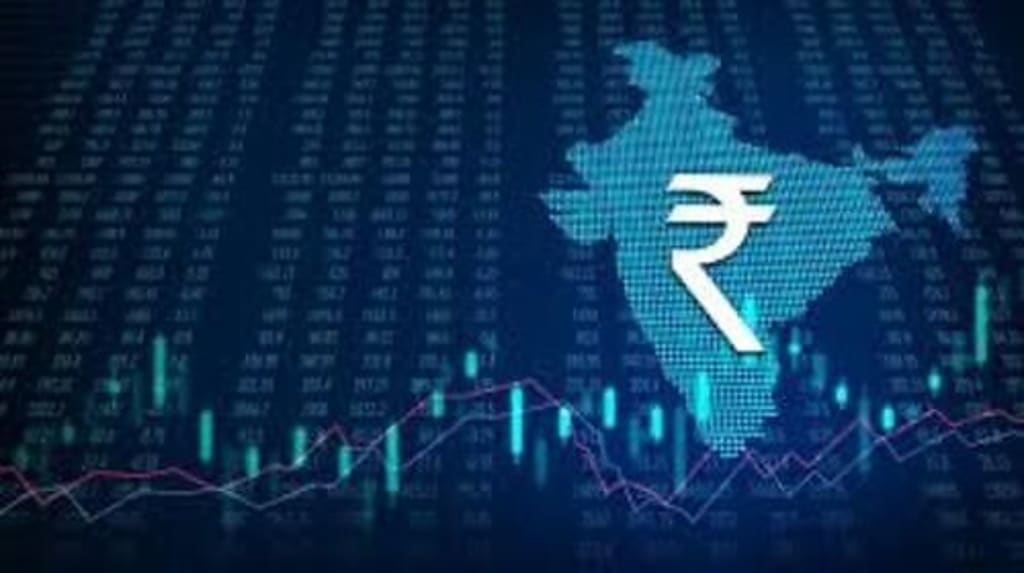
India is a rapidly developing country with a rapidly growing economy. In recent years, the country has seen significant growth in key sectors such as technology, manufacturing, and services, and is projected to continue this growth in the future.
One of the main drivers of India's economic growth is its large and rapidly growing population. With over 1.3 billion people, India has a large domestic market that is highly attractive to businesses, both domestic and foreign. Additionally, India has a large and growing middle class, which is fueling growth in sectors such as retail, real estate, and consumer goods.
Another important factor driving India's economic growth is the country's rapidly developing technology sector. India has a large and highly skilled workforce, and the country has become a major global hub for software development, IT services, and business process outsourcing. Additionally, India is a leader in the field of information technology, with many of the world's leading tech companies having a significant presence in the country.
The manufacturing sector is also a major contributor to India's economic growth. The country has a large and diversified industrial base, and it is becoming an increasingly important global hub for manufacturing, particularly in sectors such as automobiles, textiles, and pharmaceuticals.
In addition to these factors, India's government has been undertaking various initiatives to promote economic growth and development, such as "Make in India" campaign, Digital India, and ease of doing business . These initiatives aim to improve the business environment, increase foreign investment, and create jobs for the country's growing population.
Despite these strengths, India does face some significant challenges that could impact its economic growth in the future. These include high levels of poverty and inequality, as well as infrastructure and resource constraints. Nevertheless, with a large and young population and a rapidly developing economy, India is well positioned to become a major economic power in the future.
Another important aspect of India's economy is its agriculture sector, which employs around 50% of the country's workforce. However, this sector's contribution to India's GDP is relatively small, around 17%, and the sector has been facing several challenges such as low productivity, limited mechanization and irrigation, and land degradation.
To address these issues, the government has been implementing various schemes and initiatives such as the Pradhan Mantri Fasal Bima Yojana, the Pradhan Mantri Krishi Sinchai Yojana, and the Pradhan Mantri Kisan Samman Nidhi to improve the productivity and income of farmers.
Another key sector for India's economy is the energy sector. India is one of the largest consumers of energy in the world, and the country is dependent on imports to meet a significant portion of its energy needs. To overcome this dependence, the government has been promoting the use of renewable energy sources such as solar and wind power, and has set a target to increase the share of renewables in the energy mix to 40% by 2030.
In terms of the services sector, India is a leading global provider of back-office and call-center services, and the country has a well-established reputation for providing high-quality services at competitive prices. The service sector has been a major contributor to the country's economic growth, accounting for around 55% of GDP and providing employment to a large number of people.
India is also on the path to emerge as a leading player in the global innovation scene. The government has been promoting and investing in research and development across various domains, including advanced technology like AI, IoT, and Quantum computing. The establishment of premier educational and research institutions and nurturing of a conducive ecosystem for startups are steps towards this goal.
In summary, India is a rapidly developing country with a diverse and rapidly growing economy that has been and is expected to continue to grow in the future. With a large and young population, a rapidly developing technology sector, a diversified industrial base, growing services sector, and various government initiatives, India is well positioned to become a major economic power in the future.
About the Creator
Keep reading
More stories from Krishnaraj B Nair and writers in Education and other communities.
Chat GPT: ushering in a new era of conversational AI
Chat GPT is a powerful conversational AI model that is ushering in a new era of natural and human-like interactions. It is based on the GPT (Generative Pre-training Transformer) architecture, which is pre-trained on a large dataset of text and fine-tuned for specific natural language processing tasks.
By Krishnaraj B Nair3 years ago in Education
Why Mobile App Development in the USA Costs More?
Mobile app development has become a crucial part of business strategies worldwide, and the USA stands as a dominant player in this field. However, if you’ve ever looked into the costs of developing a mobile app, you may have noticed that the prices can vary significantly depending on the location. In particular, app development in the USA tends to be more expensive than in many other countries. But why is that? What factors contribute to the higher cost of mobile app development in the USA?
By DianApps Technologies4 days ago in Education


Comments
There are no comments for this story
Be the first to respond and start the conversation.