
Judy W. Reed
A Technical Breakthrough in Bread‑Making
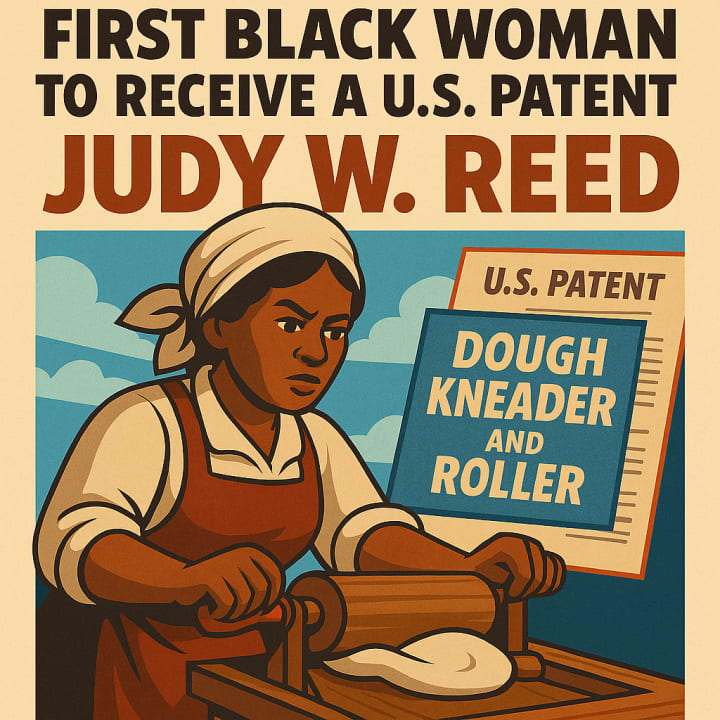
📰 Historic Figure: Judy W. Reed, the First Documented Black Woman to Receive a U.S. Patent
By Staff Writer
Updated February 2026
Washington, D.C. — More than a century after her groundbreaking invention was filed with the United States Patent Office, Judy Woodford Reed is increasingly recognized as a pivotal figure in American innovation. Born around 1826 in Charlottesville, Virginia, Reed is widely regarded as the first African American woman to receive a U.S. patent, marking a historic milestone in the nation’s technological and social advancement. [en.wikipedia.org]
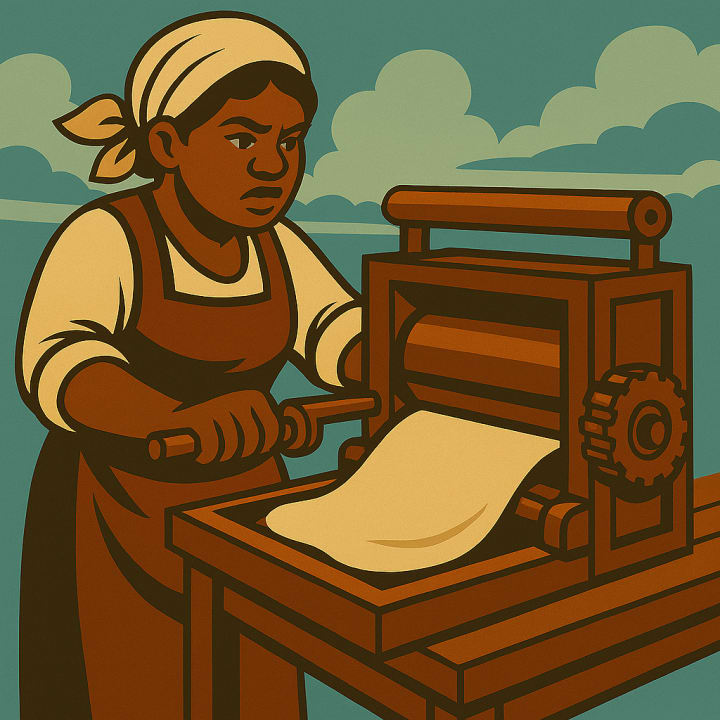
Reed secured U.S. Patent No. 305,474 on September 23, 1884, for her “Dough Kneader and Roller,” an improved mechanism designed to make bread‑making more efficient, sanitary, and consistent. Her device featured intermeshed corrugated rollers that kneaded dough evenly while keeping it protected from dust and contaminants — a significant advancement for commercial bakers and home cooks alike.
A Rare Achievement in a Restrictive Era
Reed’s achievement stands out sharply against the backdrop of 19th‑century America, when both race and gender imposed severe restrictions on literacy, legal access, and economic opportunity. Census records indicate that Reed and her husband, Allen, were listed as illiterate, a common legacy of slavery‑era laws that punished African Americans for learning to read or write. Reed signed her patent with an “X,” one of the few surviving personal marks of her life. [en.wikipedia.org]
Historical documentation about Reed is extremely limited. She first appears in the 1870 Federal Census as a seamstress living with her husband and five children in Fredericksville Parish, near Charlottesville. By 1880, the family remained in Virginia, now including a grandson. After her husband’s death sometime between 1880 and 1885, Reed relocated to Washington, D.C., where she lived with her children on K Street NW.
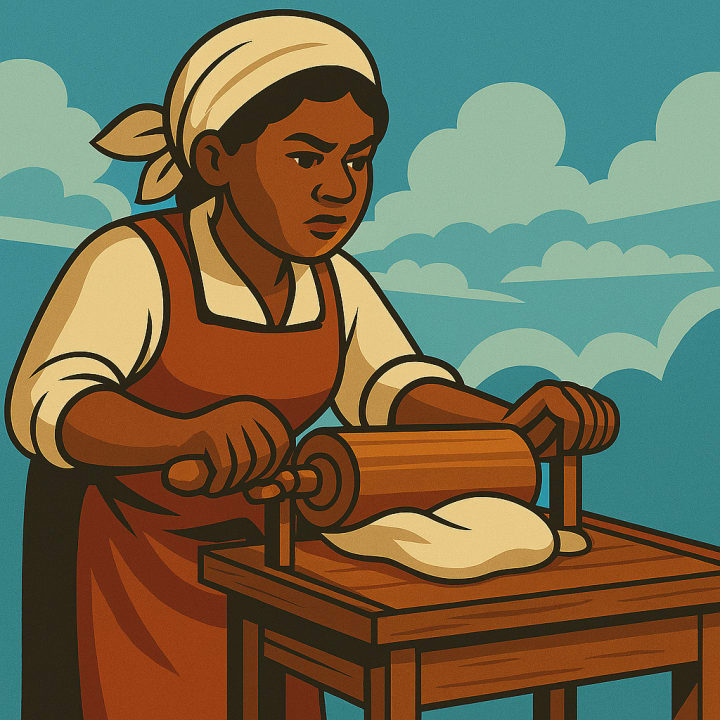
Despite the scarcity of records, what survives underscores the magnitude of her accomplishment. At a time when American women often used initials to conceal their gender on patent forms, and when Black inventors lacked institutional support, Reed’s successful patent filing represented a remarkable assertion of agency and ingenuity.
A Technical Breakthrough in Bread‑Making
Reed’s invention arrived at a time when manual kneading dominated American kitchens and commercial bakeries. The process was physically demanding, inconsistent, and susceptible to contamination. Her design sought to solve these problems by:
Passing dough through intermeshing corrugated rollers for uniform kneading
Shaping dough into a continuous ribbon for efficient processing
Protecting dough inside a covered receptacle to keep out dust and impurities
A Legacy Preserved Through Innovation
Though the historical trace of Judy W. Reed fades after the late 1880s, her patent remains a landmark in American history. Her achievement highlights not only the creativity of early Black inventors, but also the determination required for African American women to participate in the national innovation system at a time of profound social barriers.
Reed died around 1905, leaving behind one of the earliest recorded examples of a Black woman securing official recognition for her technical ingenuity.
Today, scholars and historians cite her patent as an essential reminder that innovation has never belonged solely to those with privilege, wealth, or formal education — and that countless transformative ideas have come from individuals whose names nearly vanished from the record.
👉 Follow me for more powerful history spotlights
👉 Check out my store for products celebrating Black inventors and innovators
About the Creator
TREYTON SCOTT
Top 101 Black Inventors & African American’s Best Invention Ideas that Changed The World. This post lists the top 101 black inventors and African Americans’ best invention ideas that changed the world. Despite racial prejudice.
Keep reading
More stories from TREYTON SCOTT and writers in Education and other communities.
Genius of Benjamin Banneker
In the quiet hills of Maryland in the early 18th century, a young Benjamin Banneker grew up surrounded not by grand libraries or formal schools, but by the whispering trees and the steady rhythm of farm life. Born free in 1731—a rare circumstance for African Americans of his era—Benjamin’s world was shaped by curiosity rather than chains, learning rather than limitation.
By TREYTON SCOTTabout 2 hours ago in Education
Career Growth Paths After Completing a Network Technician Program
Embarking on an Information Technology career can be very thrilling and fulfilling, especially when you choose a high-demand field that offers a clear path for career advancement. A computer network technician training gives a very good foundation for those who are new to the field of networking to learn and get acquainted with the very basics of networking, hardware, software, and troubleshooting. Getting through a computer network technician program would not only make you technically competent to enter the IT field but would also open multiple pathways for your career growth.
By Meaghan Howe7 days ago in Education


Comments
There are no comments for this story
Be the first to respond and start the conversation.