
Pork on Your Fork: Weighing the Risks and Rewards
A Look at the Health Considerations Behind a Global Staple
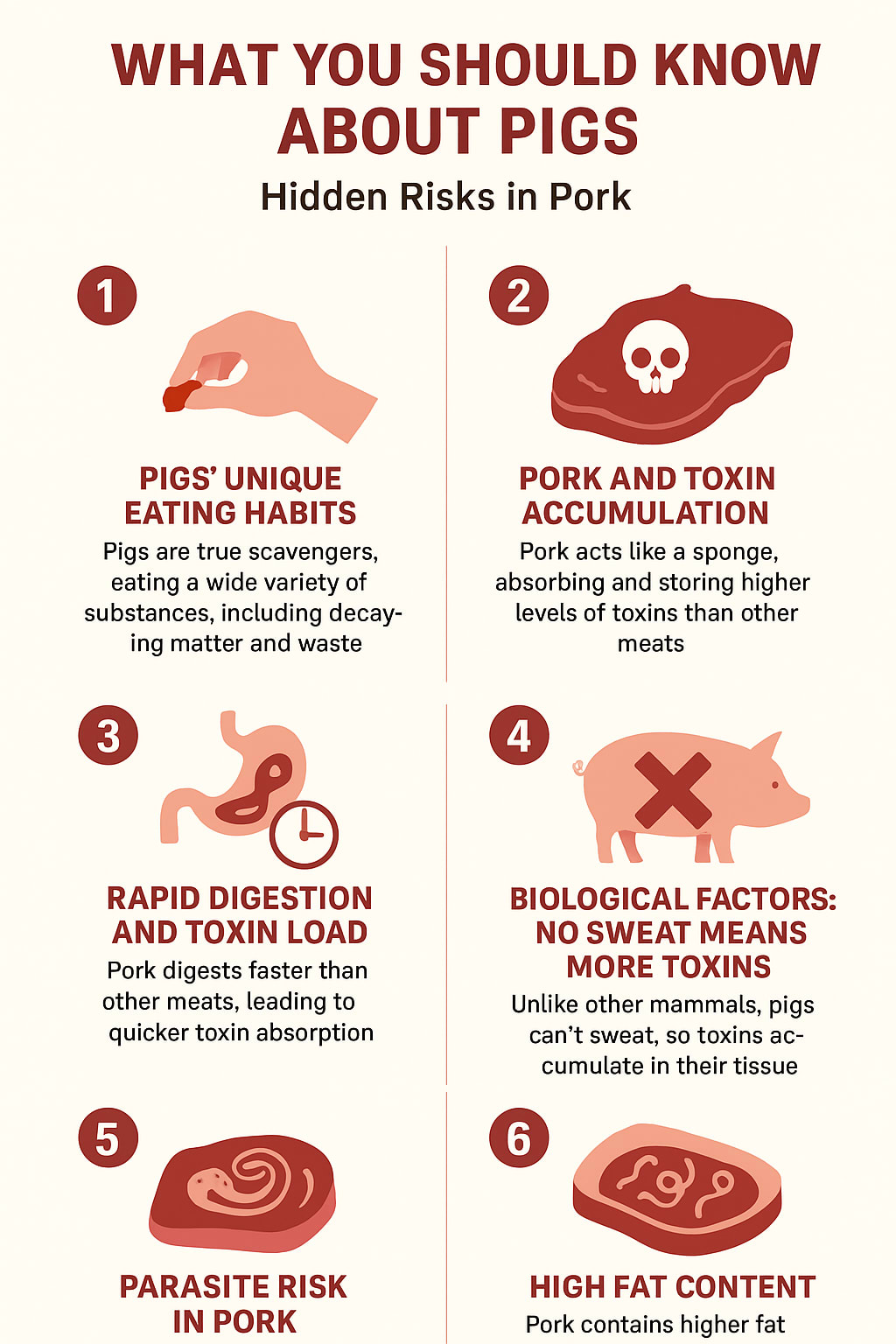
1.0 Introduction
Pork is a dietary staple in numerous cultures worldwide, valued for its flavor and culinary versatility. However, a scientific examination of porcine biology and husbandry reveals several unique health considerations that distinguish it from other common meats. This report outlines the biological and dietary factors contributing to these potential risks to inform consumer choices.
2.0 Key Health Considerations
2.1 Scavenger Dietary Habits
Pigs are omnivorous scavengers with non-selective eating habits. Their diet can include a wide range of organic and inorganic matter, such as plants, decaying animal flesh, and waste products. This consumption pattern presents a direct pathway for the accumulation of environmental toxins and pathogens within the animal's tissues.
2.2 Toxin Accumulation in Adipose Tissues
The biological composition of pigs, particularly their adipose (fat) tissues, facilitates the storage of toxins absorbed from their diet and environment. This characteristic, combined with their scavenger nature, results in a higher potential for toxin load in pork compared to meats from animals with more restricted diets, such as grazing ruminants.
2.3 Accelerated Human Digestion and Toxin Uptake
Pork is digested by the human system significantly faster than beef. While the digestion of beef can take 8-9 hours, allowing the liver more time to neutralize harmful compounds, pork digestion can occur in approximately 4 hours. This accelerated process may lead to a more rapid and concentrated release of toxins into the human body.
2.4 Absence of Functional Sweat Glands
Unlike humans and many other mammals, pigs possess very few functional sweat glands. Perspiration is a critical excretory pathway for metabolic waste and toxins. The absence of this detoxification mechanism in pigs means that absorbed toxins are more likely to be retained and stored within their bodily tissues.
2.5 Innate Resistance to Certain Toxins
Pigs demonstrate a notable tolerance to various toxins, including certain snake venoms. This resilience indicates a biological capacity to harbor harmful substances without exhibiting immediate adverse effects. Consequently, these substances may persist in the meat and be transferred upon consumption.
2.6 Parasitic Infectivity
Pigs are known hosts to several parasites transmissible to humans, including tapeworms, flukes, and Trichinella spiralis. While thorough cooking is effective at reducing this risk, the potential for infection underscores the importance of rigorous food safety protocols from farm to table.
2.7 High Intrinsic Fat Content
Pork is inherently higher in fat than many comparable cuts of other meats. For instance, a standard pork chop contains over double the fat of a similar-sized T-bone steak. This elevated fat content not only increases dietary calorie intake but also serves as a primary storage medium for fat-soluble toxins and contaminants.
2.8 Simplified Digestive System
As monogastric (single-stomach) animals, pigs have a simpler and faster digestive process than ruminants like cows. The ruminant's multi-chambered stomach allows for an extended digestion period, which can help break down and neutralize plant-based toxins. The pig's simpler system lacks this extensive processing capability, potentially allowing more harmful compounds to be absorbed and retained in its meat.
2.9 Rapid Decomposition Post-Mortem
Pork has a demonstrated tendency to spoil more rapidly than other meats like beef. This accelerated decomposition is linked to its fat composition and makes it more susceptible to bacterial colonization and spoilage if not handled, stored, and cooked with utmost care.
3.0 Conclusion
The consumption of pork presents distinct health considerations rooted in the animal's biology, including its scavenger diet, capacity for toxin storage, and high-fat composition. Awareness of these factors is essential for risk mitigation.
4.0 Recommendations for Consumers
To ensure the safe consumption of pork products, the following practices are recommended:
Thorough Cooking: Cook pork to the recommended safe internal temperatures as per public health guidelines to destroy pathogens and parasites.
Conscientious Sourcing: Procure pork from reputable, certified suppliers that adhere to high standards of animal husbandry and hygiene.
Moderate Consumption: Limit the intake of high-fat and processed pork products to reduce exposure to accumulated toxins and manage caloric intake.
Rigorous Hygiene: Implement proper food handling practices, including safe storage and the prevention of cross-contamination in the kitchen.
5.0 References
Centers for Disease Control and Prevention. (2023). Trichinellosis: General Information. Retrieved from https://www.cdc.gov/parasites/trichinellosis/gen_info/faqs.html
World Health Organization. (2020). Botulism Fact Sheet. Retrieved from https://www.who.int/news-room/fact-sheets/detail/botulism
Dewey-Mattia, D., et al. (2019). Surveillance for Foodborne Disease Outbreaks—United States, 2009–2015. Foodborne Pathogens and Disease, 16(7), 465–471.
IARC Working Group. (2015). IARC Monographs: Red Meat and Processed Meat. International Agency for Research on Cancer. Retrieved from https://www.iarc.who.int/wp-content/uploads/2018/07/pr240_E.pdf
make nice small nice title and subtitle
Of course. Here is the report with a more concise and engaging title and subtitle.
Pork on Your Fork: Weighing the Risks and Rewards
A Look at the Health Considerations Behind a Global Staple
1.0 Introduction
Pork is a dietary staple in numerous cultures worldwide, valued for its flavor and culinary versatility. However, a scientific examination of porcine biology and husbandry reveals several unique health considerations that distinguish it from other common meats. This report outlines the biological and dietary factors contributing to these potential risks to inform consumer choices.
2.0 Key Health Considerations
2.1 Scavenger Dietary Habits
Pigs are omnivorous scavengers with non-selective eating habits. Their diet can include a wide range of organic and inorganic matter, such as plants, decaying animal flesh, and waste products. This consumption pattern presents a direct pathway for the accumulation of environmental toxins and pathogens within the animal's tissues.
2.2 Toxin Accumulation in Adipose Tissues
The biological composition of pigs, particularly their adipose (fat) tissues, facilitates the storage of toxins absorbed from their diet and environment. This characteristic, combined with their scavenger nature, results in a higher potential for toxin load in pork compared to meats from animals with more restricted diets, such as grazing ruminants.
2.3 Accelerated Human Digestion and Toxin Uptake
Pork is digested by the human system significantly faster than beef. While the digestion of beef can take 8-9 hours, allowing the liver more time to neutralize harmful compounds, pork digestion can occur in approximately 4 hours. This accelerated process may lead to a more rapid and concentrated release of toxins into the human body.
2.4 Absence of Functional Sweat Glands
Unlike humans and many other mammals, pigs possess very few functional sweat glands. Perspiration is a critical excretory pathway for metabolic waste and toxins. The absence of this detoxification mechanism in pigs means that absorbed toxins are more likely to be retained and stored within their bodily tissues.
2.5 Innate Resistance to Certain Toxins
Pigs demonstrate a notable tolerance to various toxins, including certain snake venoms. This resilience indicates a biological capacity to harbor harmful substances without exhibiting immediate adverse effects. Consequently, these substances may persist in the meat and be transferred upon consumption.
2.6 Parasitic Infectivity
Pigs are known hosts to several parasites transmissible to humans, including tapeworms, flukes, and Trichinella spiralis. While thorough cooking is effective at reducing this risk, the potential for infection underscores the importance of rigorous food safety protocols from farm to table.
2.7 High Intrinsic Fat Content
Pork is inherently higher in fat than many comparable cuts of other meats. This elevated fat content not only increases dietary calorie intake but also serves as a primary storage medium for fat-soluble toxins and contaminants.
2.8 Simplified Digestive System
As monogastric (single-stomach) animals, pigs have a simpler and faster digestive process than ruminants like cows. The ruminant's multi-chambered stomach allows for an extended digestion period, which can help break down and neutralize plant-based toxins. The pig's simpler system lacks this extensive processing capability, potentially allowing more harmful compounds to be absorbed and retained in its meat.
2.9 Rapid Decomposition Post-Mortem
Pork has a demonstrated tendency to spoil more rapidly than other meats like beef. This accelerated decomposition is linked to its fat composition and makes it more susceptible to bacterial colonization and spoilage if not handled, stored, and cooked with utmost care.
3.0 Conclusion
The consumption of pork presents distinct health considerations rooted in the animal's biology, including its scavenger diet, capacity for toxin storage, and high-fat composition. Awareness of these factors is essential for risk mitigation.
4.0 Recommendations for Consumers
To ensure the safe consumption of pork products, the following practices are recommended:
Thorough Cooking: Cook pork to the recommended safe internal temperatures as per public health guidelines to destroy pathogens and parasites.
Conscientious Sourcing: Procure pork from reputable, certified suppliers that adhere to high standards of animal husbandry and hygiene.
Moderate Consumption: Limit the intake of high-fat and processed pork products to reduce exposure to accumulated toxins and manage caloric intake.
Rigorous Hygiene: Implement proper food handling practices, including safe storage and the prevention of cross-contamination in the kitchen.
5.0 References
Centers for Disease Control and Prevention. (2023). Trichinellosis: General Information. Retrieved from https://www.cdc.gov/parasites/trichinellosis/gen_info/faqs.html
World Health Organization. (2020). Botulism Fact Sheet. Retrieved from https://www.who.int/news-room/fact-sheets/detail/botulism
Dewey-Mattia, D., et al. (2019). Surveillance for Foodborne Disease Outbreaks—United States, 2009–2015. Foodborne Pathogens and Disease, 16(7), 465–471.
IARC Working Group. (2015). IARC Monographs: Red Meat and Processed Meat. International Agency for Research on Cancer. Retrieved from https://www.iarc.who.int/wp-content/uploads/2018/07/pr240_E.pdfdf
About the Creator
Naeem
Dr. Muhammad Naeem Shah from Pakistan is a polymer scientist developing sustainable materials for energy, electronics, and advanced technologies. He speaks Chinese, English, Urdu, pashto and Hindi.
How Emerging Energy Technologies Are Reshaping Financial Markets in 2026
The year 2026 marks a pivotal moment for the global energy landscape as emerging technologies redefine how energy is generated, stored, and consumed. These innovations are not only transforming the infrastructure of modern power systems but also profoundly influencing financial markets. Investors, policymakers, and energy companies are watching closely as new technologies drive shifts in capital allocation, reshape risk management, and open entirely new economic opportunities. The financial impact is far-reaching, affecting everything from investment strategies to long-term planning across both traditional and renewable energy sectors.
By Matthew J Smith5 days ago in Education
The Credit Reset: Why Portugal is Embracing the USD 239.35 Million ‘Buy Now, Pay Later’ Wave
Walking through the Chiado district in Lisbon or scrolling through a Portuguese fashion boutique online, you’ll notice a significant change at the checkout. The traditional credit card is no longer the undisputed king. Instead, a new player has arrived: Portugal Buy Now Pay Later.
By Neeraj kumar5 days ago in Education
The Salt in her Voice
The myth says mermaids sing to lure sailors to their death. But why? The ocean is huge. Only 5 percent has been discovered by man. Why would a creature of the sea with that much space to roam ever care about the fate of men on ships? The answer, as it turns out, is not a simple one at all. The truth about the myth is older than the tides. Long ago before the first ship ever cut across the surface, the sea made a pact with the sky. The sky would take the souls of the drowned. Anyone who died in storms or any quiet accidents of the deep would have their soul lifted upward to the Heavens while the bodies would remain below, feeding the oceans endless hunger. The greedy sea however wanted more souls than the sky would claim. So it created mermaids. It gave them beautiful voices woven from currents and moonlight. It commanded them to sing. "Bring forth the ones who float where they should sink." it instructed them. So they did. They never killed out of malice but out of obligation. They sung to summon, not to seduce. A mermaid's voice could loosen the tether between the body and soul, making any man step willingly into the water. The sea would take the body and the sky would take the soul. Balance maintained.
By Sara Wilson2 days ago in Fiction




Comments
There are no comments for this story
Be the first to respond and start the conversation.