
Smart Classrooms: The Rise of AI in K-12 Learning
Explore the benefits, challenges, and future of Smart Classrooms: The Rise of AI in K-12 Learning and how it’s reshaping young minds.


Introduction
Imagine walking into your classroom, and instead of just a teacher and a whiteboard, you see smart screens, talking apps, and AI systems that actually know how you learn best. Sounds like something out of a sci-fi movie, right? But it’s real—and it’s happening right now in schools across the United States.
Smart classrooms powered by artificial intelligence (AI) are quickly becoming the new normal. They’re helping students learn in ways that are faster, more fun, and more personal. This blog dives deep into what smart classrooms are, how they work, the cool things they can do, the issues we need to think about, and where things are headed in the future.
Let’s take a journey into the classroom of tomorrow—and how it’s already changing the way young minds learn today.
What Are Smart Classrooms and Why Are They Gaining Momentum?
A smart classroom isn’t just about having a few tablets or computers in the room. It’s about combining technology and intelligence to make learning more interactive and customized. Smart classrooms use tools like AI software, smartboards, voice recognition, and learning apps to help students understand things better and faster.
These classrooms are gaining momentum because students today grow up with technology. They’re used to smartphones, video games, and voice assistants like Siri or Alexa. So, using technology to learn feels natural. Plus, schools want to help every student succeed—and AI makes it easier to give each person what they need.
The Evolution of Traditional Classrooms
From Chalkboards to Chatbots: A Quick Look Back
Not too long ago, classrooms were filled with wooden desks, chalkboards, and paper textbooks. Teachers would write everything on the board, and students copied notes into notebooks. Fast forward to today—many classrooms now have touchscreen boards, tablets, and software that can grade your tests in seconds!
Chatbots are even helping students find answers to questions when teachers are busy. These changes didn’t happen overnight. Step by step, technology became part of learning. The goal has always been the same: to make learning better, smarter, and more fun.
The Push for Innovation in K-12 Education
Schools are constantly looking for ways to improve. That’s why there’s a big push to use more technology and innovation, especially in grades K through 12. The idea is to help students learn in ways that suit them best. Some students love reading, while others learn better with videos or games. AI can adapt to each student’s needs, making learning more effective for everyone.
Understanding Smart Classrooms
Defining Smart Classrooms in the Age of AI
So, what exactly makes a classroom “smart”? A smart classroom is one where AI and other digital tools are used to personalize learning. It’s a space where technology understands your strengths and helps you work on your weaknesses. It can recommend practice questions, give instant feedback, or suggest new ways to learn a topic.
Think of it as having a personal tutor that’s available 24/7—one that remembers everything you’ve learned and what you struggle with.
Key Technologies Powering Smart Classrooms Today
Behind the scenes, smart classrooms run on some pretty amazing tech:
- Artificial Intelligence (AI): Helps personalize your lessons.
- Machine Learning: Learns from your answers to improve future quizzes.
- Smartboards: Interactive whiteboards you can write on, touch, or use for video lessons.
- Voice Assistants: Can answer questions, set reminders, or read things aloud.
- Augmented Reality (AR): Makes learning more visual—like turning a science lesson into a 3D adventure!
These tools work together to make learning exciting and customized.
The Role of AI in Modern Educational Tools
AI is like the brain behind the scenes. It helps teachers manage assignments, grades, and even class participation. It can spot when a student is struggling and suggest different ways to help. Instead of giving everyone the same lesson, AI tools can offer unique experiences based on how each student learns best.
AI doesn’t replace teachers—it helps them do their jobs even better.
Benefits of Smart Classrooms in K-12 Learning
Personalized Learning Experiences for Every Student
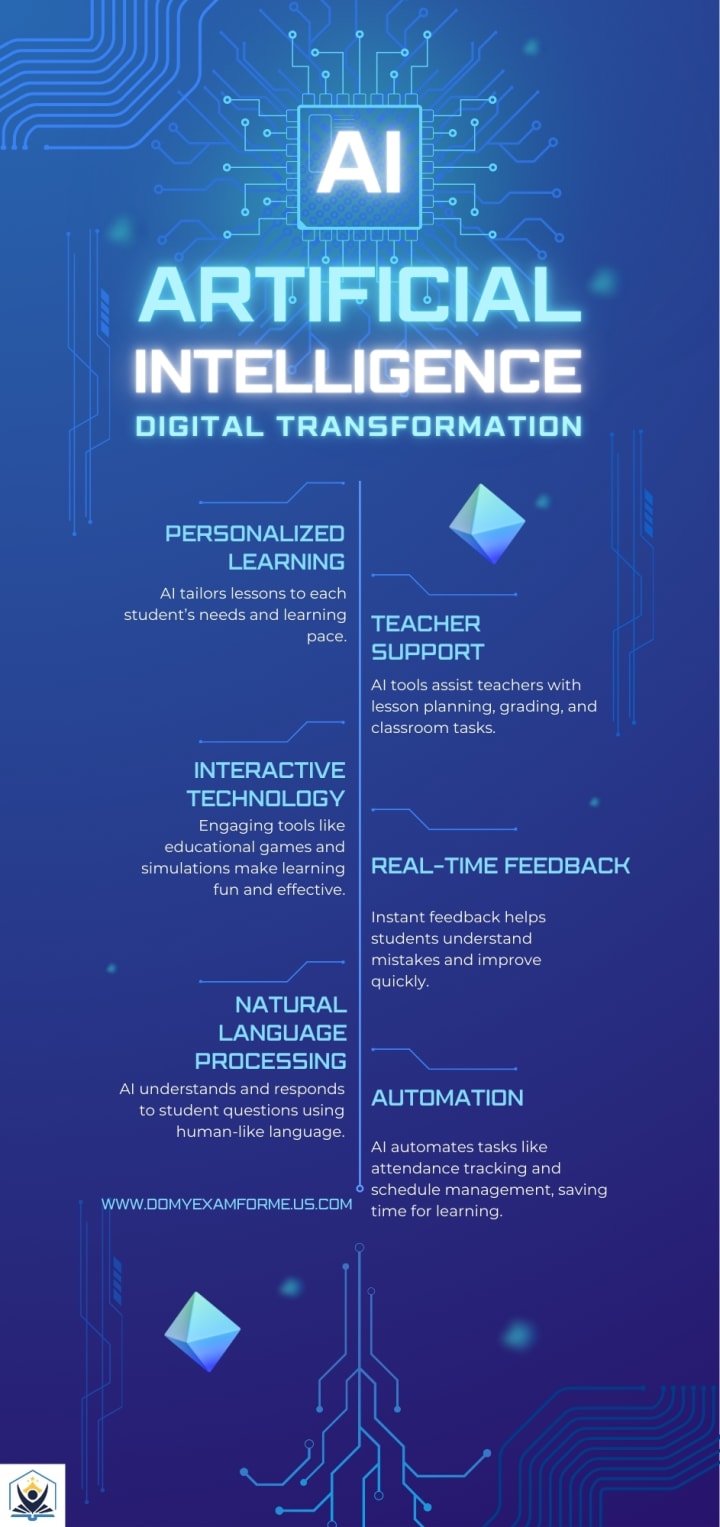
Everyone learns at their own pace. Some kids pick things up quickly; others need more time. Smart classrooms make sure nobody gets left behind. If you're great at math but struggle with writing, AI can give you extra help in writing while challenging you more in math.
This way, learning isn’t one-size-fits-all. It’s just right for you.
Real-Time Feedback That Helps Students Grow Faster
Waiting a week for a test grade can feel like forever. With smart classrooms, you get feedback instantly. Whether it’s a quiz, writing assignment, or math problem, AI tools can tell you right away what you did well and what you need to work on.
That means you can fix mistakes faster and improve quicker.
How AI Supports Teachers, Not Replaces Them
Teachers are still the heart of the classroom. AI just helps take care of the boring stuff—like grading papers or tracking attendance—so teachers can focus more on helping students.
AI also gives teachers better insights. It can show which topics the whole class struggles with, so they can spend more time explaining those areas.
Increased Student Engagement Through Interactive Tech
Let’s be honest—learning from a textbook can sometimes be boring. Smart classrooms make learning interactive. You might play educational games, take part in live polls, or even explore a science lab in virtual reality.
It’s hard to be bored when the lesson feels like a game or adventure.
Reducing Administrative Burden with Automation
Teachers and school staff spend a lot of time filling out forms, making schedules, and planning lessons. Smart classrooms can automate many of those tasks. That means teachers can spend more time teaching and connecting with students.
Boosting Learning Outcomes with Data-Driven Insights
Every time you take a quiz or complete an assignment, AI tools collect data. Don’t worry—it’s not spying on you! It’s used to understand what’s working and what’s not. Teachers can use that data to make better lesson plans and help every student do their best.
Challenges and Concerns of AI in K-12 Education
Data Privacy and Security in AI-Driven Classrooms
Smart classrooms collect a lot of information. That’s why it’s super important to keep that data safe. Schools and tech companies need strong rules to protect your privacy, so your information doesn’t end up where it shouldn’t.
The Digital Divide: Unequal Access to Smart Technology
Not all schools have the same resources. Some have high-tech classrooms, while others still use old computers. This creates a gap between students who have access to smart tech and those who don’t. Closing this digital divide is one of the biggest challenges.
Over-Reliance on AI: Are We Losing the Human Touch?
AI is smart—but it doesn’t have feelings. Teachers can understand emotions, build relationships, and inspire students in ways machines can’t. If we rely too much on AI, we risk losing that important human connection.
Teacher Training and Resistance to New Tech
Not all teachers are comfortable using new technology. Some feel overwhelmed or worry they won’t do it right. That’s why schools need to provide training and support. Everyone—teachers included—should feel confident in a smart classroom.
Cost Barriers and Funding Issues for Public Schools
Smart technology can be expensive. Public schools, especially in low-income areas, may not have the money to buy the newest gadgets. To make smart classrooms fair for all, governments and communities need to invest in schools equally.
Impact on Students and Teachers
How Smart Classrooms Are Changing the Student Mindset
When students see learning as something fun and interactive, they become more curious and confident. They’re more likely to ask questions, try new things, and take charge of their own learning. Smart classrooms help build that positive mindset.
Teacher Perspectives: Stress or Support?
Some teachers feel stressed by all the new technology. But many are also excited by the possibilities. When used right, smart tools can make teaching easier and more creative. It’s all about balance and proper training.
Adapting Teaching Methods to AI Integration
Teaching isn’t just about standing in front of the class and talking anymore. With smart classrooms, teachers use videos, quizzes, games, and group projects. They also use AI tools to check progress and adjust lessons. It’s a new way of teaching—and learning.
Case Studies and Real-World Examples
Successful Implementation of AI in K-12 Schools
Schools in California and New York are already using AI-powered tools to help students learn languages, improve math scores, and even get emotional support through AI chatbots. These success stories show what’s possible when technology and teaching come together.
Lessons Learned from Early Adopters
The schools that started using AI early have learned a lot. They’ve seen how important it is to include teachers, students, and parents in the process. They’ve also learned that tech works best when it’s used to support not replace traditional teaching.
The Future of Smart Classrooms
Emerging AI Trends in Education to Watch
Here’s what’s coming next:
- AI tutors that talk like real people
- Learning programs that adjust every day to your progress
- Virtual classrooms where students from around the world learn together
The future is not just exciting—it’s already on its way.
What Classrooms Might Look Like in the Next 10 Years
In ten years, classrooms may look like science labs or gaming studios. Students might use AR glasses, learn from AI mentors, and create projects in 3D environments. School will be more flexible, creative, and connected to real-world skills.
How Policymakers Are Shaping the Future of AI in Schools
Lawmakers and education leaders are now writing the rules for AI in schools. They’re making sure it’s used safely, fairly, and effectively. This means setting limits, protecting privacy, and making sure all students benefit equally.
Ethical Considerations and Safeguards
Balancing Innovation with Responsibility
Just because we can use AI doesn’t mean we always should. Schools need to think carefully about when and how to use smart tools. The goal is to help—not to control.
Creating Ethical Guidelines for AI in Classrooms
Experts are working on ethical rules for AI in schools. These include protecting student privacy, preventing bias, and making sure AI is used to support—not harm—young learners.
Parental and Community Involvement
Helping Parents Understand Smart Classroom Technology
Parents need to know what’s happening in their child’s classroom. Schools should offer workshops, videos, or newsletters to explain how smart technology works—and how it helps students succeed.
Building Trust and Transparency Around AI in Schools
The more people understand AI, the more they trust it. Schools should be open about how they use AI and what data they collect. That builds confidence and community support.
Conclusion
Smart classrooms are changing the way we learn—and for the better. They make lessons more exciting, help students grow faster, and give teachers the tools to do amazing things. But it’s also important to be careful and thoughtful. We must make sure all students have access to these tools, that teachers get support, and that families stay informed.
And remember, no piece of technology can replace hard work, curiosity, and a love for learning. AI can guide you, support you, and even say, “Do my Exam For Me,” but real success still comes from within.
The classroom of tomorrow is already here. The question is—are we ready for it?
About the Creator
James Anderson
I am from london an expert content writer. I wrote content on several different topics for example nursing, business study, traveling and on other topics too.
Keep reading
More stories from James Anderson and writers in Education and other communities.
Online Class Burnout and How to Fix It
Introduction Online classes can be fun and flexible—but they can also be tiring. You’re learning from home, looking at a screen all day, and sometimes it feels like there's never a break. That feeling is called burnout, and it’s real. You might feel tired, bored, or stuck. Sometimes you want to shut your laptop and not come back for days. You’re not alone.
By James Anderson5 months ago in Education
Sulfonic Acid: Uses, Structure & Synthesis
Sulfonic Acid: Uses, Structure & Synthesis Sulfonic acid is one of the most important classes of organic acids in industrial and applied chemistry. From detergents and dyes to pharmaceuticals and catalysts, sulfonic acid derivatives play a critical role in modern chemical manufacturing. This article explains what sulfonic acid is, its chemical structure, methods of synthesis, and its real-world applications, using only validated and authoritative sources.
By Shraddha Mahajan7 days ago in Education
Why the Industrial Cybersecurity Market Is Redefining the Protection of Critical Infrastructure?
As industries become more digital and interconnected, cybersecurity has become important beyond corporate IT environments. Manufacturing plants, power grids, transportation systems, and water treatment plants are increasingly dependent on digital and automated technologies. Among these is the industrial cybersecurity market, which has become paramount in protecting the operational technology and critical infrastructure.
By Akshay Kumar3 days ago in Education
Part 2 Interview With Joe Patterson, Author Of Melanin Memoirs
This is my second interview with Joe Patterson. His 4th anniversary writing on Vocal will be in March 2026. He has one achievement on Vocal, The Other Foot. He has over 17,000 reads on Vocal since he started on Vocal in 2022. Joe Patterson is very creative poet and rapper. Joe is deep thinker and I feel it is reflected in his latest published book, Melanin Memoirs.
By Mariann Carrollabout 22 hours ago in Interview




Comments