
The Frozen Frontier: Discovering Antarctica's Hidden Secrets
Unveiling the Mysteries of Earth's Last Great Wilderness

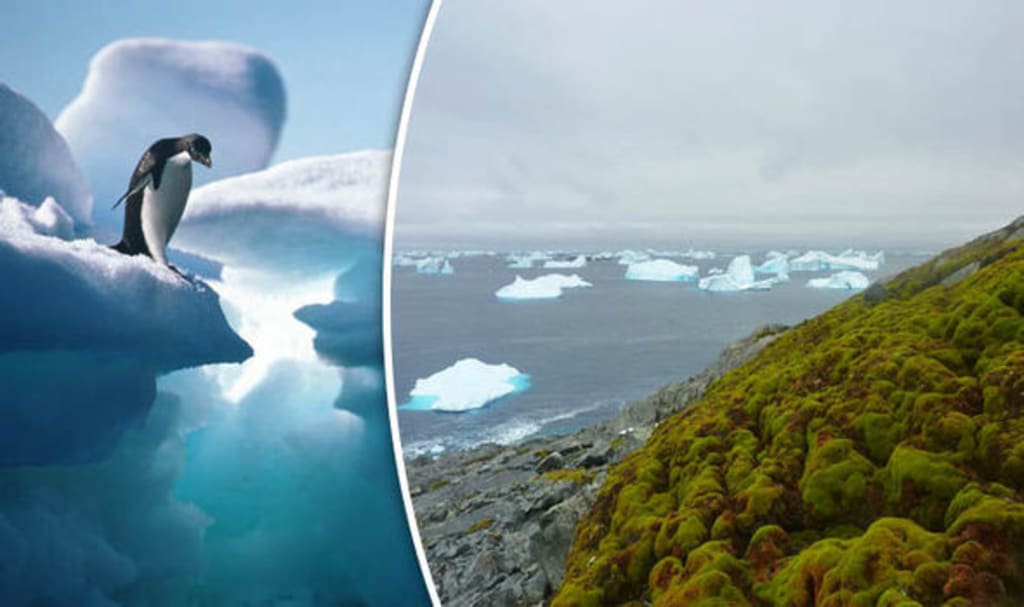
Antarctica, once a lush green land teeming with dinosaurs, is now a vast frozen continent larger than the United States and Europe combined. Located at the South Pole within the Antarctic Circle, it's the largest ice mass on Earth. Despite its size, Antarctica was only officially discovered in 1820, with confirmation as a continent and naming following decades later. The name Antarctica, meaning "opposite of the Arctic," reflects its position on the globe.
Ancient Theories and Modern Discoveries
Long before its official discovery, ancient Greek philosophers and geographers theorized the existence of a southern landmass. They believed that a large continent must exist in the south to balance the known lands of the northern hemisphere, which included Europe, Asia, and North Africa. This hypothetical land was referred to as Terra Australis Incognita, or the "Unknown Southern Land." Some researchers also believe that Polynesians, renowned for their impressive navigation skills, may have reached the continent over a thousand years before Europeans.
Modern discoveries have only increased the fascination with Antarctica. It is recognized for its unique climate, featuring only two seasons: a bright, six-month summer and a dark, six-month winter. Despite being covered in ice, it is technically the world's largest desert due to its sparse precipitation and limited vegetation. The continent's extreme conditions and remote location make it a prime site for scientific research and discovery.
The Icy Landscape and Its Mysteries
Ninety-eight percent of Antarctica is covered in ice, holding about 60% of the planet's fresh water. The ice sheet averages about 1.9 kilometers (1.2 miles) thick but can be as thick as 4.8 kilometers (3 miles) in some areas. Despite its icy facade, Antarctica is also the windiest continent, with gusts reaching up to 320 kilometers per hour (200 mph). The snow that falls here never melts, accumulating over millennia to form a thick ice sheet that hides many geographical secrets.
Beneath the ice lie mountains taller than three stacked Burj Khalifas and lakes such as Lake Vostok, which exists under 11,000 feet of ice. Scientists hypothesized its existence over a century ago, and modern research has confirmed it. Lake Vostok is one of the largest subglacial lakes in the world, and its isolation from the surface for millions of years makes it a unique environment for studying extremophiles—organisms that live in extreme conditions.
Hidden Geographical Features
Antarctica also conceals a canyon deeper than the Grand Canyon and a mountain range dividing the continent into East and West Antarctica. The Gamburtsev Mountain Range, discovered in 1958, is buried beneath more than 600 meters (2,000 feet) of ice and extends over 1,200 kilometers (750 miles). This hidden range is as large as the European Alps, and its existence under such a thick ice sheet remains one of the greatest mysteries in geology.
The western part of the continent is experiencing significant melting, which poses a grave threat to global sea levels. If the West Antarctic Ice Sheet were to melt completely, it could raise global sea levels by about 5 meters (16 feet), endangering coastal cities like Bangkok, Amsterdam, Ho Chi Minh City, Cardiff, and New Orleans. This potential for dramatic change makes Antarctica a focal point in studies of climate change and sea-level rise.
Life and Research on the Continent
Today, around 5,000 researchers from around the world live in Antarctica during the summer, with about 1,000 staying through the harsh winter. Governed by the Antarctic Treaty System, which promotes peaceful research and suspends territorial claims, the continent is a hub for scientific exploration. The Antarctic Treaty, signed in 1959 and entered into force in 1961, ensures that Antarctica is used for peaceful purposes and scientific research. It prohibits military activity, mineral mining, and nuclear testing, making it a unique region dedicated to scientific endeavors.
Despite its harsh conditions, Antarctica has never had an indigenous population. However, it is home to various wildlife, including several species of penguins, seals, and a few other bird species. These animals have adapted to survive in one of the most extreme environments on Earth.
The Unique Wildlife
Antarctica's wildlife is remarkably adapted to extreme cold. Penguins, especially, are well-known inhabitants. The continent hosts about 20 million penguins, including species such as the Emperor, Adelie, Chinstrap, and Gentoo penguins. While most penguins leave during the winter, male Emperor penguins stay behind to protect their eggs, enduring temperatures that can drop below -60 degrees Celsius (-76 degrees Fahrenheit). Researchers have tracked these penguins' winter migrations to the southern oceans, where they spend the dark months before returning to their breeding grounds.
Seals, numbering around a million, also thrive in Antarctica. Species such as the Weddell seal, the Ross seal, the Leopard seal, and the Crabeater seal are adapted to the cold waters. Weddell seals can hold their breath for up to two hours, diving to depths of over 600 meters (2,000 feet) in search of food. They use their whiskers to detect prey in the icy waters, navigating through the dark, freezing environment with remarkable skill.
Bird species such as the Antarctic petrel, the South Polar skua, and the Snow petrel also make their home in this frigid land. These birds are adept at surviving in the harsh conditions, often feeding on the abundant marine life found in the Southern Ocean.
Antarctica, with its extreme conditions and unique ecosystem, remains a land of scientific intrigue and discovery. Though few can endure its freezing temperatures, it continues to reveal its hidden secrets to the dedicated researchers who brave its icy expanse.
About the Creator
Nathan Talek
Welcome to a world where the cosmos meets curiosity! I’m Nathan, an avid explorer of the universe's wonders and a passionate storyteller who makes the mysteries of space accessible and exciting.
Reader insights
Nice work
Very well written. Keep up the good work!
Top insight
Excellent storytelling
Original narrative & well developed characters
Keep reading
More stories from Nathan Talek and writers in Education and other communities.
The Hidden Continent: Unveiling Earth's Lost Landmass and Its Mysteries
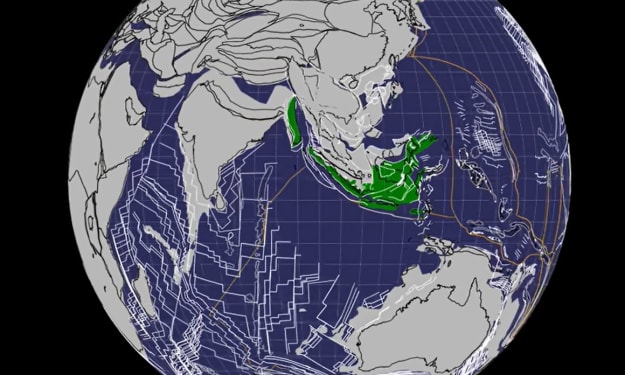
Surprisingly, there are more than seven continents on our planet. Argo Land, a hidden continent, could help us understand the future of our Earth. To uncover how it remained hidden and the secrets it holds, you'll need to stay tuned. Scientists have been on the hunt for a piece of land that vanished over 100 million years ago. While this might seem unremarkable given the constant search for Earth's historical secrets, this case stands out. One might think it was a tiny island lost in the ocean, but you’d be mistaken. This continent was as large as the entire United States.
By Nathan Talek2 years ago in Proof
Real Time Success: Simple Time Management Methods That Deliver Real Results
Time can feel hard to control, but simple time management methods can make each day easier and more productive. Many people think they need complex systems or expensive tools to stay organized. The truth is that small changes often bring the most significant results. When you use simple time management methods that fit your daily life, you build habits that last and help you get more done with less stress. This article shows how to use these methods clearly and practically so you can see real results fast.
By Norman Badger5 days ago in Education
Can Stars Collapse Without Exploding? The Silent Death of Massive Stars
How Stars Normally Die Stars are powered by nuclear fusion. For most of their lives, they fuse hydrogen into helium, releasing energy that pushes outward against gravity. This balance between outward pressure and inward gravitational pull keeps a star stable.
By shahkar jalal3 days ago in Education



Comments (1)
Excellent piece