
The Neural Network: China’s Automotive Wiring Harness Revolution in 2026
Demand, Investment, and Strategic Opportunities in 2026
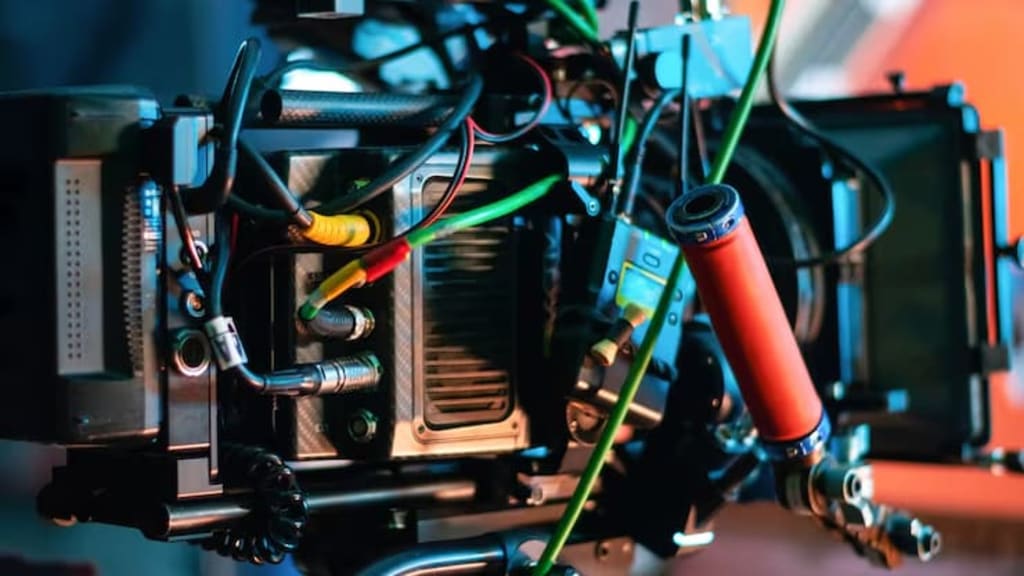
The automotive industry is often judged by its exterior design or engine horsepower, but in 2026, the real battle for dominance is happening under the chassis. As China solidifies its position as the world’s leading Electric Vehicle (EV) powerhouse, the Automotive Wiring Harness the literal nervous system of the vehicle has undergone a radical transformation. What was once a bundle of simple copper wires has evolved into a high-tech, high-voltage network capable of supporting rapid charging and autonomous driving. Driven by the 15th Five-Year Plan and the "Smart Mobility" mandate, the China automotive wiring harness market is currently valued at over $18.4 Billion in 2026. This "Neural Revolution" is not just about connectivity; it is about the survival of the fittest in an era where vehicles are becoming "computers on wheels."
The Economic Surge: The EV Multiplier and Market Dominance
The primary engine behind the 2026 wiring harness boom is the unprecedented penetration of New Energy Vehicles (NEVs) in the Chinese market. Growing at a steady CAGR of 7.2%, the sector is benefiting from the fact that an average EV requires significantly more complex wiring than a traditional internal combustion engine (ICE) vehicle. By early 2026, NEVs account for nearly 50% of new car sales in China, creating a massive demand for high-voltage harnesses that can handle 800V architectures. This surge has moved the industry from a low-margin commodity business to a high-value technology sector, where specialized components for battery management systems (BMS) and ADAS sensors command premium pricing.
This economic expansion has led to a major realignment of the supply chain. While global giants like Yazaki and Sumitomo still hold a presence, domestic champions such as Luxshare Precision, THB Group, and Kunshan Huguang have aggressively captured market share. These local players have leveraged their proximity to EV giants like BYD and NIO to co-develop specialized harnesses that are lighter, more heat-resistant, and cost-effective. For the Chinese economy, this means a more professionalized sector that creates high-value jobs in electrical engineering and material science, ensuring that China remains the "central nervous system" of the global automotive supply chain.
The Great Technical Realignment: High Voltage and Light Weighting
Perhaps the most visible change for the industry in 2026 is the shift toward High-Voltage (HV) Harnesses. As Chinese automakers move toward ultra-fast charging (10-minute full charge), the wiring must handle massive currents without overheating. In early 2026, the 800V platform has become the standard for mid-to-high-end EVs, requiring specialized orange-coded cables with advanced shielding to prevent electromagnetic interference (EMI). This realignment is not just about power; it is about efficiency.
This technical shift is also driving a massive "Light-Weighting" trend. To extend the range of EVs, every gram counts. In 2026, copper is increasingly being replaced by aluminum alloy wiring in certain non-critical sections of the harness, reducing the weight of the electrical system by up to 20%. Furthermore, we are seeing the rise of "Busbar" technology solid strips of copper or aluminum to replace traditional thick cables in battery packs. This supply chain efficiency has allowed Chinese operators to maintain a competitive edge, turning the act of wiring a car into a sophisticated exercise in weight management and thermal engineering.
How AI is Reshaping the Future: The Intelligence Factory
In 2026, the narrative of technology in wiring harness production has moved from manual assembly to the creation of "AI-Driven Intelligence Factories." Historically, wiring harnesses were the most labor-intensive part of a car to build, but AI is changing the rules of the game.
AI-Powered Automated Assembly: Advanced robotics equipped with "Computer Vision" can now handle the intricate task of routing wires and inserting terminals with 99.9% accuracy. In 2026, Chinese factories have reduced manual labor dependencies by 40%, significantly lowering the risk of human error in safety-critical systems.
Digital Twin Production: Factories in Kunshan and Ningbo use Digital Twins to simulate the assembly process before a single wire is cut. This allows for real-time optimization of the manufacturing line, reducing material waste and energy consumption.
Generative Design for Circuitry: AI algorithms are now used to design the optimal pathing for wires within the car’s body. By simulating millions of permutations, AI can find the shortest, lightest, and most EMI-shielded route, a task that would take human engineers weeks to calculate.
Infrastructure and the Road Ahead: The Autonomous Challenge
While the industry is booming, the road to 2027 is paved with the challenges of Autonomous Driving. As Level 3 and Level 4 autonomous features become common in 2026, the wiring harness must support massive data transmission speeds. This has led to the integration of Automotive Ethernet and high-speed coax cables within the standard harness bundle. The "Neural Network" of the car must now be capable of transferring gigabits of data per second from LiDAR, Radar, and Camera sensors to the central processing unit without a millisecond of lag.
Despite these hurdles, the outlook for the Chinese automotive wiring harness sector is overwhelmingly positive. The government’s continued support for the "New Infrastructure" initiative, combined with the technological agility of local players, ensures that the market will remain a cornerstone of the national economy. We are seeing the first signs of "Module-Based" wiring, where the car is divided into zones, each with its own localized controller and harness, further simplifying the assembly and improving the reliability of the vehicle’s "brain."
Conclusion: A New Era of Connectivity
As we look at the state of automotive wiring harnesses in China in 2026, the picture is one of a sector that has not only survived the transition to green energy but has thrived by embracing it. By pivoting toward high-voltage systems, integrating AI into the factory floor, and leading the world in light-weight material science, China has built a wiring ecosystem that is resilient, affordable, and incredibly advanced. The "Neural Network" of 2026 is one where the wire is no longer a passive component but an active enabler of the smart, autonomous future. Whether it is a luxury sedan in Shanghai or a mass-market SUV in Chongqing, the message is clear: the road to the future is paved with Chinese innovation, and the wires that power it are smarter than ever before.
About the Creator
Keep reading
More stories from Neeraj kumar and writers in Education and other communities.
China Online Education Market Analysis Industry Overview, Key Players & Future Outlook
According to IMARC Group's latest research publication, the China online education market size reached USD 14,585.92 Million in 2024. The market is projected to reach USD 105,126.83 Million by 2033, exhibiting a growth rate (CAGR) of 24.54% during 2025-2033.
By Neeraj kumar3 days ago in Education
Best Laptop for Adobe Illustrator
If you’ve ever opened Adobe Illustrator and felt your laptop slow you down, lag on big files, or struggle with smooth zooming, this blogpost is for you. The right laptop can make designing feel fast, smooth, and honestly enjoyable.
By Projectorsea4 days ago in Education
The Role of Clear Communication in Strengthening Financial Client Relationships
In the world of finance, clear communication is not just helpful; it is essential. Whether discussing investment options, setting future goals, or explaining financial risks, professionals must convey information in a way that clients understand and trust. The strength of any long-term financial relationship depends heavily on how well both parties can communicate expectations, progress, and concerns.
By Michael Christopher Venturinoabout 14 hours ago in Education



Comments
There are no comments for this story
Be the first to respond and start the conversation.