
The STEAM Movement: Merging Science, Technology, and Art
Redefining Education Through the Power of Creativity and Innovation
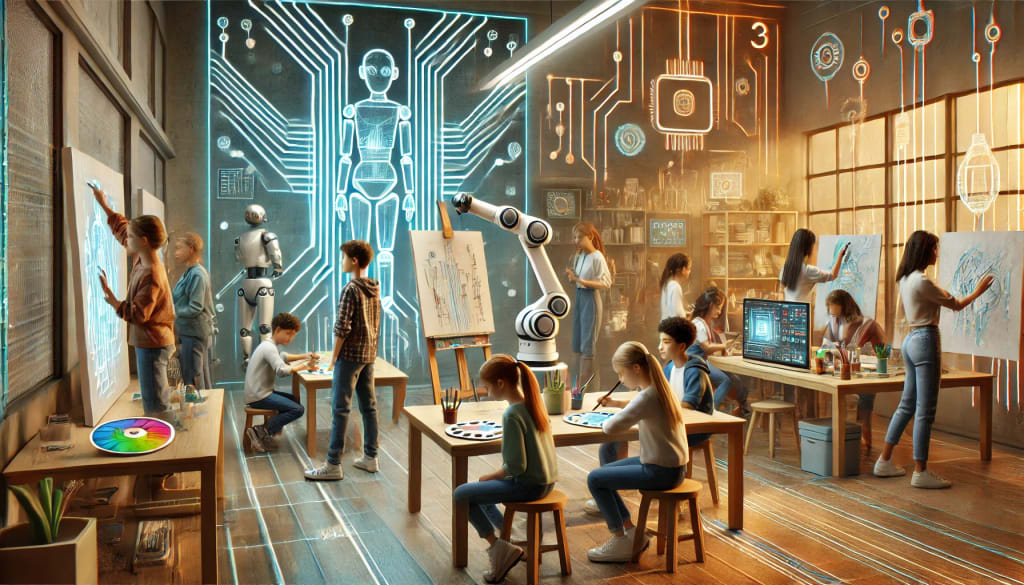
In a world that grows increasingly complex, the traditional boundaries between disciplines are fading. The modern classroom is no longer just a place for rote learning in science, technology, engineering, and mathematics (STEM); it is rapidly evolving into a vibrant space where the arts infuse these subjects with creativity, critical thinking, and innovative problem-solving. This integrated approach—commonly known as STEAM—challenges the notion that science and art are mutually exclusive. Instead, it posits that the fusion of creative arts with technical subjects can lead to transformative educational experiences, better preparing students for the complexities of the modern world.
The genesis of the STEAM movement lies in the realization that creativity is not the exclusive province of artists. Engineers, programmers, and scientists alike depend on creative problem-solving to innovate and improve their work. Traditional STEM education has produced brilliant minds capable of rigorous analysis, yet often falls short in nurturing the imagination required to apply scientific knowledge in novel ways. By integrating the arts, educators are creating a more holistic learning environment—one where students learn to think outside the box, communicate their ideas visually and verbally, and tackle challenges with both logic and intuition.
Across the globe, inspiring projects and programs are emerging that embody the essence of STEAM. In one notable initiative, a school in a bustling urban center transformed its science lab into a collaborative art and technology studio. Students, instead of simply learning about robotics in isolation, were encouraged to design and build robotic sculptures. These projects not only taught technical skills such as coding and mechanics but also pushed students to explore aesthetics, form, and function. By merging artistic design with mechanical engineering, these young innovators discovered that a beautifully designed robot was as much a work of art as it was a piece of technology. The result was a series of creative installations that went on to win awards in both art and science competitions, proving that interdisciplinary learning can lead to extraordinary outcomes.
Another transformative program can be found in a rural community where access to technology is limited. Recognizing that every student deserves the chance to innovate, educators partnered with local artists to integrate storytelling and creative writing into a curriculum focused on renewable energy. Students were tasked with designing models of sustainable communities powered by wind, solar, or bioenergy. But here’s the twist: they had to present their projects through multimedia art projects—combining digital animations, murals, and even short films. This approach allowed students to express the technical details of energy production in a way that was engaging and accessible. The project not only deepened their understanding of environmental science but also ignited a passion for local history and community storytelling, reminding everyone that innovation is often rooted in the unique culture and heritage of a place.
The STEAM approach also addresses one of the most pressing challenges in education today: the need for adaptable, creative minds capable of facing unforeseen problems. In industries ranging from healthcare to environmental science, the most effective solutions often come from those who can combine data-driven analysis with creative insights. For example, medical schools are increasingly incorporating visual arts and design into their curricula to help future doctors better understand human anatomy and communicate complex information to patients. By using 3D modeling and digital illustration, students can visualize the inner workings of the human body in new ways, leading to improved diagnostic skills and more empathetic patient care. This marriage of art and science not only enriches their educational experience but also fosters a mindset of lifelong learning and adaptability.
At the heart of the STEAM movement is the belief that learning is most effective when it is active, collaborative, and reflective of the real world. Many schools now embrace project-based learning, where students work in interdisciplinary teams to tackle community challenges. In one innovative project, a group of high school students collaborated with local government officials, architects, and environmental scientists to reimagine a derelict urban space. The students began by conducting field research and gathering data on environmental impact, then used that information to create detailed blueprints and digital renderings of a revitalized community park. Their proposals incorporated artistic elements such as community murals and interactive installations, alongside sustainable design features like rainwater harvesting and solar-powered lighting. This project not only enhanced the students’ technical skills but also instilled a deep sense of civic responsibility, illustrating that when science and art merge, education transcends the classroom and touches every aspect of society.
The benefits of the STEAM approach extend beyond the acquisition of hard skills. Integrating arts into STEM subjects also enhances soft skills such as communication, empathy, and teamwork. When students are encouraged to present their technical projects through art, they learn to convey complex ideas in accessible ways. This ability to communicate is invaluable in today’s interconnected world, where collaboration across disciplines is often the key to solving global challenges. Furthermore, the creative process in art nurtures emotional intelligence and resilience. Art allows students to express their frustrations and celebrate their successes in tangible forms, fostering an environment where failure is seen not as a setback, but as a vital step in the creative process.
Critics of the STEAM model sometimes argue that adding art to an already packed STEM curriculum could dilute the focus on essential technical skills. However, numerous studies suggest that integrating creative thinking into science and technology education actually enhances students’ problem-solving abilities. A study conducted in several schools showed that students exposed to STEAM projects outperformed their peers in both creative thinking and technical proficiency. The ability to approach a problem from multiple perspectives—logical, creative, and emotional—ultimately leads to more robust and innovative solutions.
One of the most exciting aspects of the STEAM movement is its potential to bridge the gap between traditionally underrepresented groups and STEM fields. Historically, many minority and low-income students have had limited access to high-quality STEM education. By incorporating art—a subject that resonates with a diverse array of cultural backgrounds and personal experiences—educators can create more inclusive learning environments. Programs that use music, visual arts, or drama to teach complex scientific concepts have proven particularly effective in engaging students who might otherwise feel alienated by conventional teaching methods. This inclusive approach not only enriches the learning experience for all students but also helps cultivate a future workforce that reflects the rich diversity of our global society.
Moreover, the rapid pace of technological advancement means that the skills needed for tomorrow’s jobs are constantly evolving. Educators who embrace STEAM are not merely teaching students to solve the problems of today; they are equipping them with the adaptability and creative mindset necessary for future challenges. As automation and artificial intelligence continue to reshape the workforce, the ability to think creatively, collaborate across disciplines, and innovate will become increasingly valuable. STEAM education lays the groundwork for this future by fostering an educational culture that prizes curiosity, interdisciplinary learning, and resilience.
The success of the STEAM movement can be seen in the growing number of STEAM labs, maker spaces, and innovation centers that are popping up in schools, universities, and communities worldwide. These hubs serve as creative sanctuaries where students can experiment, collaborate, and transform their ideas into reality. Whether it’s building a drone to monitor air quality, designing an app to help manage community resources, or creating a digital art installation that responds to real-time environmental data, STEAM projects empower students to turn theoretical knowledge into practical, impactful solutions.
In conclusion, the STEAM movement is reshaping the educational landscape by merging the analytical power of science and technology with the boundless creativity of the arts. It redefines what it means to be educated in the 21st century by fostering a learning environment where creativity and innovation are not optional extras but integral components of the curriculum. As educators and policymakers continue to explore and implement STEAM initiatives, students around the globe are gaining the skills and mindsets necessary to navigate and shape the future.
This new educational paradigm is more than just a trend—it is a transformative approach that addresses the multifaceted challenges of our time. By nurturing a generation of creative problem-solvers, STEAM education is not only preparing students for the careers of tomorrow but also empowering them to make meaningful contributions to society today. In a world where innovation is key to progress, the merger of science, technology, and art stands as a powerful testament to the limitless potential of human creativity.
About the Creator
OWOYELE JEREMIAH
I am passionate about writing stories and information that will enhance vast enlightenment and literal entertainment. Please subscribe to my page. GOD BLESS YOU AND I LOVE YOU ALL
Keep reading
More stories from OWOYELE JEREMIAH and writers in Education and other communities.
Future-Ready: Equipping Students for a Digital Economy
In today’s rapidly evolving world, education is undergoing a profound transformation. No longer confined to traditional textbooks and lectures, modern learning environments are integrating digital literacy, coding, and critical thinking into their core curricula. This evolution is essential for preparing students to thrive in a digital economy—a realm defined by rapid technological advancements, data-driven decision-making, and ever-changing career landscapes. As schools, educators, and policymakers embrace this new paradigm, they are laying the foundation for a generation of future-ready learners equipped with the skills and mindsets necessary for success in the 21st century.
By OWOYELE JEREMIAH11 months ago in Education
Engineering and Construction Expertise in Oil and Gas EPC Projects
Oil and gas engineering, procurement, and construction (EPC) services play a vital role in developing energy infrastructure across the world. These services cover the complete lifecycle of large-scale energy projects, from initial design and engineering to material sourcing, construction, and final commissioning. As global energy needs continue to evolve, oil and gas EPC activities remain essential for ensuring reliable energy production, transportation, and processing.
By Bobby Yadav4 days ago in Education
Cultivating Resilient and Adaptable Mindsets for Entrepreneurial Success
Entrepreneurship is often portrayed as a path defined by innovation and independence, yet the reality is far more demanding. Entrepreneurs must navigate uncertainty, withstand repeated setbacks, and make decisions in rapidly changing environments. Success rarely follows a straight line, and challenges can arise without warning. In such conditions, resilience and adaptability become essential, not optional, competencies.
By Greg Warnock4 days ago in Education



Comments (2)
Students, instead of simply learning about robotics in isolation, were encouraged to design and build robotic sculptures. Lol
Nice work. Question what was the trigger for this story? You peaked my interests. :)