
When Money Rained from the Sky
A Cautionary Tale of Wealth, Chaos, and the True Value of Value


Money Raining
It started on a Wednesday. Not that Wednesdays were significant in any way, but this one would become known across the globe as the day the sky started raining money.
At exactly 7:17 AM, just as sunlight began to stretch across the streets of New York City, crisp $100 bills floated down from the sky. Not one or two, not a few torn scraps like flyers from a rooftop party — but thousands. Tens of thousands. Billions, maybe. They came drifting down slowly at first, like leaves in autumn, except instead of gold and red, they were green and covered in Benjamin Franklin's indifferent gaze.
People didn’t believe it at first. A man on Fifth Avenue paused to sip his coffee, only to blink in disbelief as a hundred-dollar bill landed neatly in his cup. He sniffed it. Held it to the light. His friend, trying to joke, said, “Monopoly?” But the serial number, the watermark — all real. No counterfeit ink, no giveaways. Just pure, legitimate cash.
Then all hell broke loose.

Across the city, people poured into the streets. Phones flew out of pockets to film the spectacle. Twitter exploded. News anchors couldn’t contain their shock. Banks tried to respond, but the Federal Reserve’s system crashed by 9:03 AM. By noon, the entire Eastern Seaboard was coated in currency. Trees were wrapped in bills, buses wore cloaks of money, children built castles from stacks of green.
Soon, the rain spread westward — Philadelphia, Chicago, Denver, and then Los Angeles. But it wasn’t limited to America. By the next day, Paris was buried ankle-deep in euros. Tokyo had yen fluttering through cherry blossoms. Even remote villages in Mongolia reported “paper snow.” The world was caught in a global storm of wealth.
At first, people celebrated. Billionaires wept as beggars handed out twenties. Homeless shelters closed because no one was homeless anymore. Debt vanished. College students torched their loan statements in bonfires. One woman in Brazil filmed herself stuffing a suitcase full of money, screaming, "I’m rich!" before quitting her job live on Instagram.
But euphoria doesn't last forever.

By the fourth day, problems began to surface. With everyone rich, who would work? Farmers abandoned their crops. Delivery drivers didn’t show up. Trash piled up in the streets. Grocery stores ran out of food. Gas stations dried up. You could buy a Ferrari, sure — but good luck finding someone to fuel it.
Then came inflation — hyperinflation. A loaf of bread was no longer $3. It was $3,000. A bottle of water? $900. Economies began to collapse. Banks went silent. Stock markets shut down, the screens frozen in red. Governments scrambled to regain control, but how do you regulate something falling from the sky?
On day six, the money changed.
It began to rain coins. First dimes, then quarters, then gold bars the size of bricks. The light, fluttery rain had turned into a lethal storm. Windows shattered. Roofs caved in. Several people were hospitalized after being struck by a barrage of nickels. Wealth had turned violent.
Religious leaders declared it divine punishment for greed. Scientists couldn’t find a source in the atmosphere. There were no planes, no satellites, no holes in space. It simply... came. As if the Earth itself had decided to vomit wealth upon its people — an overdose of prosperity.
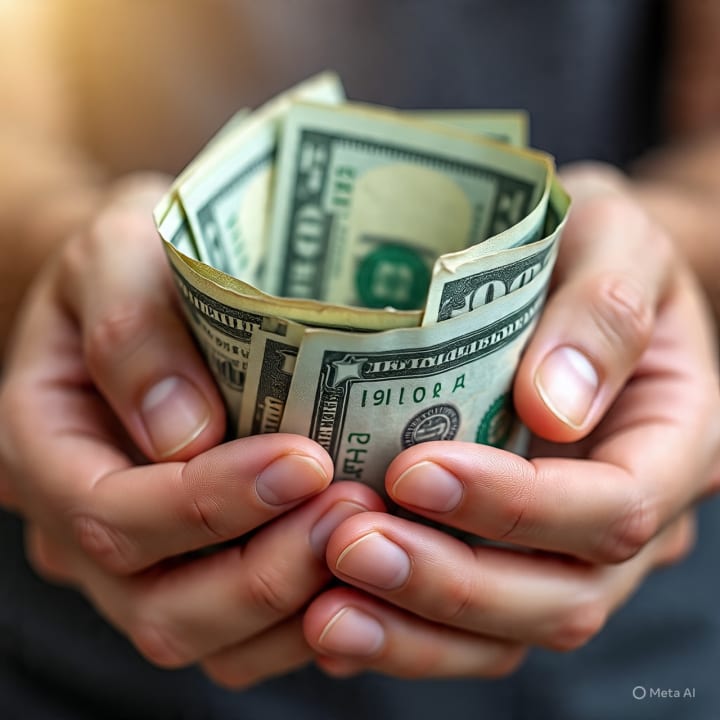
By day ten, no one wanted money anymore. People fled indoors at the first flutter of paper. Parents taught children to run, not cheer, when the sky turned green. Abandoned cash blanketed the planet, clogging oceans, forests, and city gutters. It began to rot, soaked by rain and urine, gnawed by rats and birds.
Eventually, it stopped. Just like it started — without warning. One morning, the skies were clear. No bills, no coins, no gold. Just silence.
In the aftermath, the world slowly began to rebuild. Barter systems returned. Communities formed co-ops. Gardens replaced lawns. Labor regained value. A plumber was worth more than a millionaire. A teacher was more respected than a hedge fund manager.
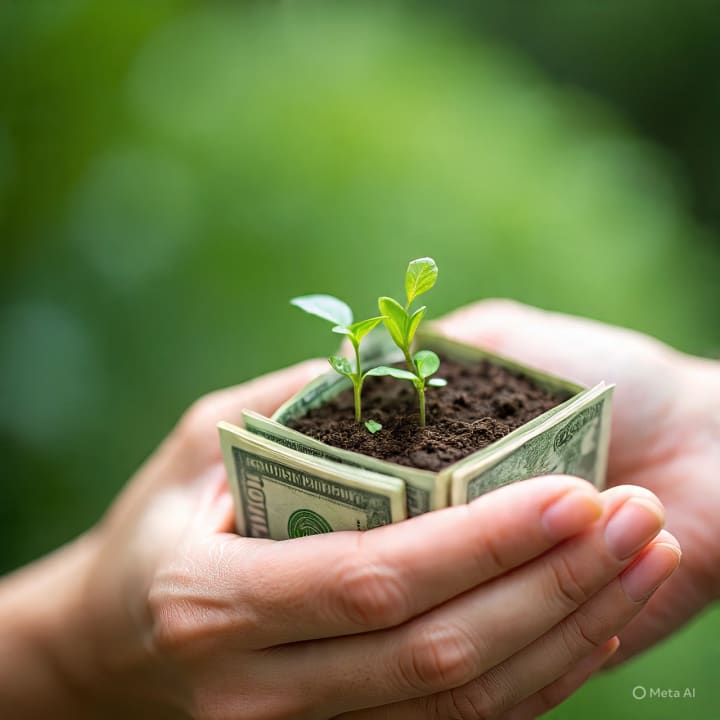
Years later, no one spoke of the event with nostalgia. They called it “The Fall.” Museums displayed decayed bills behind glass, as warnings. Children learned about it in school — how money, when removed from value, becomes trash.
No one knew where it came from. Some said it was a glitch in reality. Others claimed it was a test, or a curse. But the lesson was clear:
When money rains from the sky, the world doesn’t become richer — it drowns.
About the Creator
Keep reading
More stories from MoneyOrbit and writers in Education and other communities.
Unlocking Start up Growth: How to Build a Brand that Leads the Market
Every start up begins with a vision, but turning that vision into a market-leading brand requires strategic planning and focused execution. As start ups grow, their brands must evolve to create a lasting connection with their audience, build trust, and position them as industry leaders. Building a brand that stands out in a crowded market takes more than just offering a great product; it’s about crafting a narrative that resonates with customers and sets the company apart from competitors.
By Nathalie Kyriakouabout 23 hours ago in Education
E-Bikes as a Sustainable Solution for Urban and Suburban Mobility
Electric bicycles, commonly known as e-bikes, have rapidly emerged as one of the most influential innovations in personal transportation. Blending traditional cycling with electric power assistance, the e-bike market offers an efficient, sustainable, and accessible mobility solution for people of all ages. As cities face challenges such as traffic congestion, air pollution, and rising fuel costs, e-bikes are increasingly viewed as a practical alternative to conventional vehicles.
By Bobby Yadav5 days ago in Education



Comments
There are no comments for this story
Be the first to respond and start the conversation.