
Why Agricultural Harvesters Are Transforming Modern Farming?
The Shift Toward Efficiency, Precision, and Mechanized Productivity

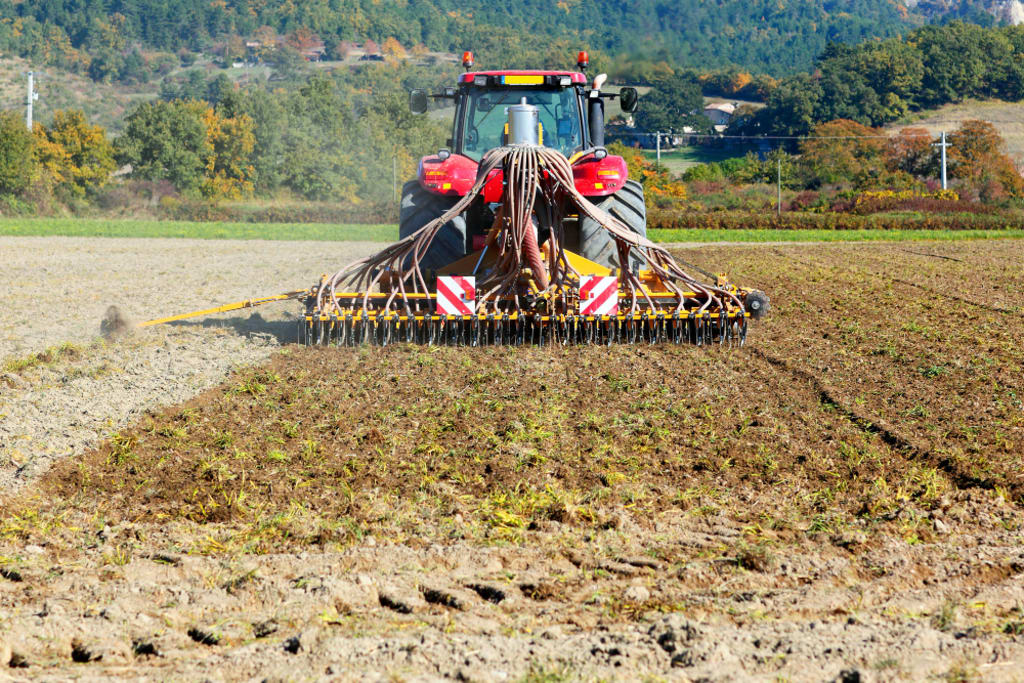
To make farms more efficient and sustainable, agriculture has continued to evolve. Agricultural harvesters are one of the most important inventions in agriculture, as they allow for the harvesting of the crop in a field rapidly and accurately, considerably reducing the need for human labor to perform this task.
Harvesters are agricultural vehicles for gathering plant-based products, including grains and vegetables. Their use has grown with the development of mechanization and smart farming. Producers are using farm equipment to increase food production in light of high demand and labour shortages rather than using customary harvesting procedures.
Understanding What Agricultural Harvesters Really Involve
Machines to harvest crops are termed agricultural harvesters, and can be combine harvesters, forage harvesters, sugarcane harvesters, or cotton harvesters, depending on what is harvested.
Combine harvesters are so named because they perform the tasks of cutting, threshing, and cleaning, thus combining a number of operations into a single process, which increases productivity and saves time. Modern combines often use a number of digital controls and monitoring systems to improve efficiency.
Key Factors Driving Demand for Agricultural Harvesters
The most obvious factor in the mechanization of agriculture is the increased need to produce more food for a greater population. Mechanized harvesting speeds up the harvest.
Labor availability is another factor, and the seasonal shortage of labor in many area has encouraged farmers to mechanize the harvesting of crops.
Technology is a factor. Producers value equipment that consumes less fuel, results in less crop loss, and makes their job easier.
The Role of Innovation and Smart Farming
GPS on harvesting equipment allows less overlap in subsequent passes, while maximizing yield. Onboard sensors and analytics can assess crop condition and machine performance in real time, and keep the operator informed.
Automation controls enable consistent, high quality operation and reduce operator fatigue. Some systems automatically integrate with farm management software to allow for more data based decision making.
This is part of a larger movement towards precision agriculture.
Changing Farmer Practices and Operational Models
Farmers are adopting more controlled practices, including mechanized harvesting, which allows them to better plan planting and harvesting seasons.
Cooperative ownership is also emerging, where groups of farmers operate high-value equipment to reduce individual costs. Renting or leasing is also being developed as a way to make high-value equipment more broadly accessible.
Purchasing decisions are increasingly efficiency-driven.
Benefits and Strategic Advantages
Benefits of agricultural harvesters include:
• Higher Productivity: time required to collect crops.
• Labor Efficiency: Reduces reliance on manual labor.
• Precision Harvesting: Reduces crop loss and improves crop quality.
• Operational Consistency: Consistent performance over large operational areas.
• Scalability: Can be applied to small or large farms.
These characteristics helped ensure stable agricultural practices throughout.
Regional Expansion and Agricultural Integration
Mechanized harvesting is growing, both in developed and new agricultural areas. Advanced large-scale harvesters are available for commercial farms, while smallholders and cooperatives in developing regions mostly use smaller or shared harvesters.
Furthermore, the manufacturer is to partner with agricultural cooperatives and distributors to provide localized service and maintenance as well as financing.
Click here if you want to know more about agricultural harvester market
Challenges Facing Agricultural Harvesters
Though their advantages are clear, these technologies come with high initial costs that many smallholders cannot afford. Maintenance and fuel costs must be considered in relation to long-term value.
The performance of some machines may be affected by weather and terrain, and proper training of machine operators is essential.
Sustainable fuels and their environmental impact are considered by both manufacturers and consumers of aircraft.
Future Outlook of Agricultural Harvesters
Future agricultural harvesters will be electric or hybrid and connected. They will be more automated, and better able to meet sustainability goals, as farm automation advances.
The use of artificial intelligence and data management systems in conjunction with harvesting equipment could improve the efficiency and precision of modern farm equipment. Agriculture worldwide continues to modernize and evolve.
Conclusion
Agricultural harvesters play a key role in modern farm efficiency, harvesting crops quickly, accurately, and productively. Their continuous improvements to productivity are vital to the industry as it strives to produce more food at lower cost with greater resilience.
As technology continues to improve and prices fall, agricultural harvesters are expected to remain a vital aspect of mechanized agriculture in coming years.
About the Creator
deepanshu Thakur
A dedicated Market Research Professional specializing in in-depth analysis, industry forecasting, and strategic insights. Known for precision, reliability, and delivering research that adds real business value.
Keep reading
More stories from deepanshu Thakur and writers in Education and other communities.
Why Regenerative Agriculture Is Redefining the Future of Farming
Regenerative Agriculture and Its Growing Importance Agricultural systems around the world are under increasing pressure to produce food while protecting natural resources. Among the most influential developments in recent years is the rise of regenerative agriculture. This approach focuses on restoring ecosystems, improving soil vitality, and strengthening long-term sustainability rather than maximizing short-term output alone.
By deepanshu Thakura day ago in Education
The Backbone of Infrastructure: Inside France’s USD 3.12 Billion Steel Tube Transformation (2025–2033)
In the industrial landscape of 2026, the humble steel tube has become a high-tech symbol of France’s commitment to "Green Sovereignty." No longer just a commodity for construction, steel tubes are now the vital arteries of the hydrogen economy, the skeletal frame of the electric vehicle (EV) revolution, and the foundation of a modernized nuclear fleet.
By Neeraj kumar6 days ago in Education
Is Someone Tracking You? How a GPS Tracker Detector Can Help
In a world where information reaches all corners of the globe, the issue of privacy is getting all the more serious. Phones, applications, and cars are transmitting information, not always with explicit permission. Creepy tracking devices are now more widespread, sneaking into cars or personal journeys to track movement without any notice.
By Arfa Gravity4 days ago in Education




Comments
There are no comments for this story
Be the first to respond and start the conversation.