
Why Does the Night Sky Look Different in Each Season?
Have you ever stepped outside on a clear winter night and noticed bright constellations you don’t remember seeing in summer? Or looked up during autumn and realized the familiar patterns of spring have vanished? If so, you’re not imagining things. The night sky truly does change with the seasons — and the reasons behind it are both fascinating and surprisingly simple. In this in-depth guide, we’ll explore why the night sky looks different in each season, how Earth’s motion affects what we see, and which constellations dominate the sky throughout the year. Whether you’re a beginner stargazer or an experienced skywatcher, understanding seasonal changes in the night sky will completely transform the way you observe the universe.

The Main Reason: Earth’s Orbit Around the Sun
The primary reason the night sky changes throughout the year is because Earth revolves around the Sun.
Our planet takes about 365 days to complete one full orbit around the Sun. As Earth moves along this path, the direction we face at night changes. When it’s nighttime, we are looking away from the Sun into deep space. But since our position in space shifts gradually over the year, the part of the universe we face at night also shifts.
Think of it this way:
• In winter, Earth is on one side of the Sun.
• Six months later, in summer, Earth is on the opposite side.
Because of this change in position, we see entirely different stars and constellations at night during different seasons.
________________________________________
Understanding Earth’s Tilt
Another important factor is Earth’s axial tilt. Our planet is tilted at about 23.5 degrees. This tilt is what gives us seasons — but it also slightly affects how the night sky appears from different locations on Earth.
When your hemisphere is tilted toward the Sun (summer), you experience longer daylight hours and shorter nights. When tilted away (winter), nights are longer, giving you more time to observe stars.
This is why winter often provides the best stargazing conditions:
• Nights are longer
• Air is often clearer and less humid
• Some of the brightest constellations are visible
________________________________________
Why We Don’t See the Same Stars All Year
If Earth rotates every 24 hours, you might wonder why we can’t simply see all the stars at different times of night throughout the year.
Here’s the key: during the daytime, the Sun’s brightness overwhelms the stars behind it. So while stars are technically still there, we can’t see them because sunlight scatters through our atmosphere.
As Earth orbits the Sun, the stars that appear behind the Sun during one season become visible at night about six months later. That’s why constellations seem to “disappear” for part of the year — they are simply in the daytime sky.
________________________________________
Seasonal Constellations: What You See Throughout the Year
Each season has its own signature constellations. Let’s explore the most recognizable ones.
________________________________________
Winter Night Sky
Winter offers some of the most spectacular stargazing of the year.
One of the most famous winter constellations is Orion. Known as “The Hunter,” Orion is easy to identify thanks to the three bright stars forming Orion’s Belt.
Nearby, you’ll also find:
• Taurus
• Gemini
• Canis Major
Within Canis Major lies Sirius, the brightest star in the night sky.
Winter skies are often described as crisp and brilliant because many of the closest and brightest stars are visible during this time.
________________________________________
Spring Night Sky
As Earth continues its orbit, winter constellations slowly set earlier each night and eventually disappear from the evening sky.
In spring, different constellations take center stage:
• Leo
• Virgo
• Bootes
Spring skies are famous for galaxies. When you look toward Virgo, you are actually gazing into a region packed with distant galaxies known as the Virgo Cluster.
Unlike winter’s bright nearby stars, spring offers a deeper look into the distant universe.
________________________________________
Summer Night Sky
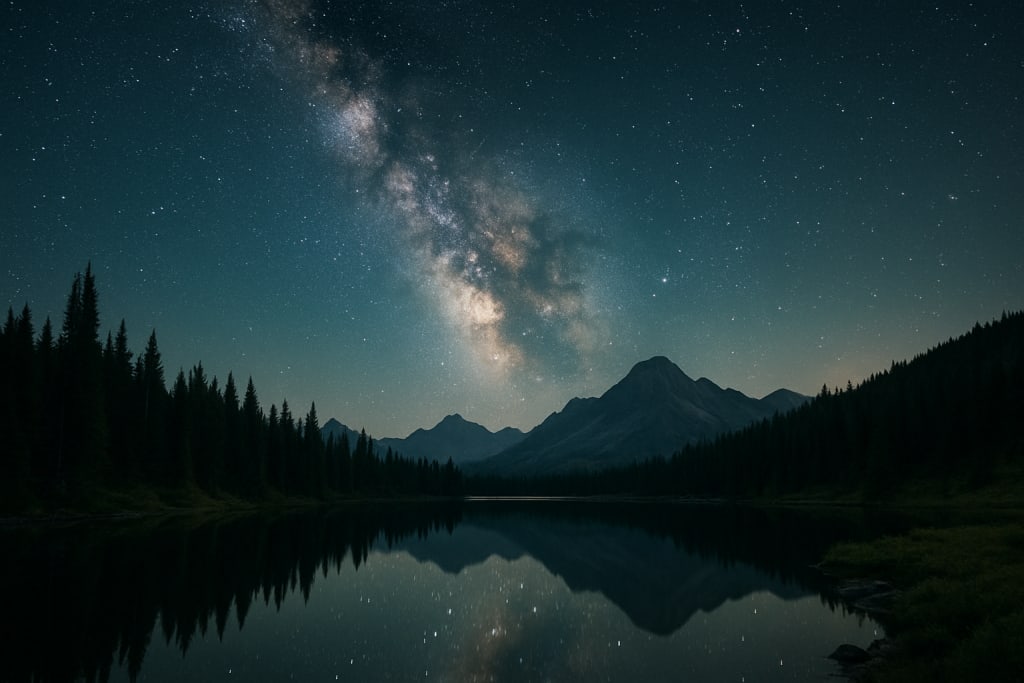
Summer skies are dominated by the Milky Way stretching overhead in many parts of the world.
One of the most recognizable patterns is the Summer Triangle, formed by three bright stars in different constellations:
• Cygnus
• Lyra
• Aquila
Summer is an excellent time to observe star clusters, nebulae, and dense star fields within our own galaxy.
Warm temperatures make summer stargazing comfortable, although shorter nights may limit viewing time.
________________________________________
Autumn Night Sky
Autumn is sometimes considered a quieter season for bright stars, but it has its own treasures.
Key autumn constellations include:
• Pegasus
• Andromeda
• Pisces
Within Andromeda lies the Andromeda Galaxy — the closest major galaxy to our own Milky Way and visible to the naked eye under dark skies.
Autumn nights gradually grow longer, setting the stage for winter’s spectacular return.
________________________________________
The Role of Latitude
Where you live on Earth also plays a major role in what you see.
Observers near the equator can see many constellations from both the northern and southern skies throughout the year. Meanwhile, those closer to the poles experience extreme seasonal changes.
For example:
• In far northern regions, some stars never set. These are called circumpolar stars.
• In polar regions, months of darkness or daylight drastically affect visibility.
Your geographic latitude determines how high constellations appear and whether certain southern or northern stars are visible at all.
________________________________________
Why Stars Rise Earlier Each Night
If you observe the sky carefully, you’ll notice that stars rise about four minutes earlier each night. Over a month, that adds up to roughly two hours.
This happens because Earth must rotate slightly more each day to bring the Sun back to the same position in the sky. Meanwhile, distant stars return to position slightly sooner.
This gradual shift causes seasonal constellations to transition smoothly from one season to the next.
________________________________________
The Difference Between Stars and Planets
While constellations shift predictably with the seasons, planets move differently.
Planets wander through the zodiac constellations because they orbit the Sun at different speeds. Their positions change night by night rather than season by season.
This is why planets don’t belong to a single season the way constellations do.
________________________________________
Light Pollution and Seasonal Visibility
Modern city lights can make seasonal changes harder to notice. Light pollution washes out faint stars and galaxies, leaving only the brightest constellations visible.
Winter’s clearer air can sometimes reduce atmospheric haze, improving visibility even in suburban areas. However, darker skies away from city lights will always provide the best seasonal viewing experience.
________________________________________
How to Observe Seasonal Changes Yourself
If you want to truly understand why the night sky changes with the seasons, try this simple experiment:
1. Choose a clear night once a month.
2. Go outside at the same time each month.
3. Face the same direction.
4. Note which constellations you see.
Within a few months, you’ll notice dramatic differences. Over a full year, the cycle becomes clear.
Stargazing apps and star charts can also help track the changing sky.
________________________________________
The Big Picture: A Moving Planet in a Vast Universe
The seasonal night sky is a reminder that Earth is not stationary. We are constantly:
• Rotating on our axis
• Orbiting the Sun
• Traveling through the Milky Way galaxy
Every time you look up at different constellations in different seasons, you’re witnessing Earth’s motion through space.
The stars themselves are incredibly distant and move very slowly relative to us. It’s our changing perspective that creates the illusion of a shifting sky.
________________________________________
Final Thoughts
The reason the night sky looks different in each season comes down to one beautiful cosmic fact: Earth is always moving.
As our planet orbits the Sun and tilts on its axis, the direction we face at night gradually changes. This reveals different constellations, galaxies, and star patterns throughout the year.
Winter dazzles with bright nearby stars like Orion. Spring opens a window into distant galaxies. Summer showcases the glowing band of the Milky Way. Autumn prepares us for another cycle with subtle but stunning deep-sky objects.
Understanding these seasonal changes transforms casual stargazing into a deeper connection with the universe. Instead of seeing random stars, you begin to recognize patterns, movements, and cycles — a celestial rhythm that has guided humanity for thousands of years.
So the next time you step outside and notice the sky looks unfamiliar, remember: it’s not the universe that has changed.
About the Creator
Keep reading
More stories from shahkar jalal and writers in Education and other communities.
Will Astronomy Guide Future Philosophy?
A Historical Bond Between Stars and Thought Astronomy has always guided philosophy. In ancient Greece, philosophers such as Aristotle and Plato grounded their metaphysical systems in cosmological models. The structure of the heavens influenced theories about perfection, motion, and causation.
By shahkar jalala day ago in Education
Cultivating a Culture of Innovation: A Leadership Blueprint for Change in Health Networks
Cultivating a culture of innovation is one of the most important goals for leaders in health networks today. Hospitals and clinics face constant pressure. Patient needs are rising. Costs are increasing. Regulations continue to shift. In this environment, standing still is not an option. Leaders must guide steady progress. Cultivating a culture of innovation helps health networks respond with confidence and purpose.
By Craig Kentabout 7 hours ago in Education
Spain Beauty Products Market Outlook Clean Beauty Trends and Premium Innovation Driving Steady Growth 2026–2034
The Spain beauty products market was valued at USD 9.7 billion in 2025, reflecting the country’s strong and well-established position within Europe’s personal care and cosmetics industry. Spain has long maintained a vibrant beauty culture influenced by fashion, dermatological awareness, and a growing emphasis on wellness. Despite being considered a mature market, the sector continues to demonstrate resilience and adaptability in response to changing consumer expectations. According to estimates by IMARC Group, the market is projected to reach USD 11.2 billion by 2034, expanding at a compound annual growth rate (CAGR) of 1.55% during 2026–2034. Although this growth rate appears moderate, it highlights the industry’s stability and its ability to sustain consistent revenue generation over the long term.
By Neeraj kumar3 days ago in Education
Draft Deleting? Don't Do It!
Today, I had a little time. I decided that I would have a look at the drafts that I have on Vocal. This is part of a long-term wish to have everything I've written on paper rather than virtually. I've not looked at them for weeks and something drew me to them, just to browse and see what was there.
By Rachel Deeming7 days ago in Writers




Comments
There are no comments for this story
Be the first to respond and start the conversation.