
Why Does the Universe Matter? Exploring Meaning, Science, and Our Cosmic Significance
Why does the universe matter? At first glance, the question may seem poetic or philosophical. The universe simply exists — vast, expanding, filled with galaxies, stars, planets, and mysterious forces. But when we pause and reflect, a deeper question emerges:

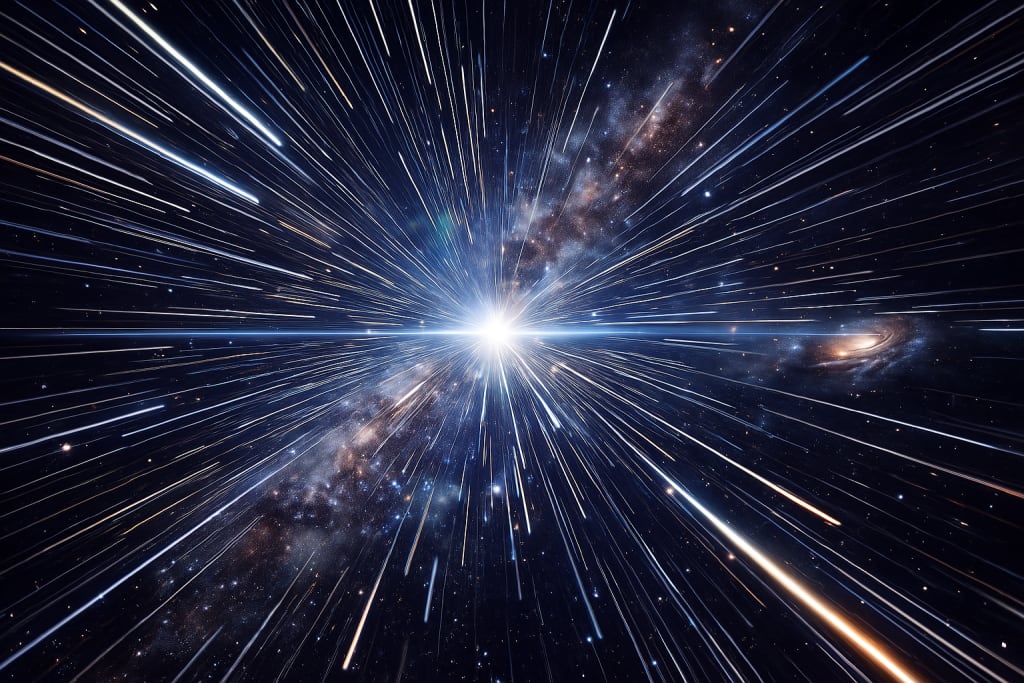
Why does the universe matter at all — scientifically, philosophically, and personally?
In this comprehensive, original, and SEO-optimized article, we explore why the universe matters not only as a physical reality but as the foundation of meaning, existence, knowledge, and human identity.
________________________________________
The Universe as the Foundation of Everything
Before we explore meaning, we must recognize something simple but profound:
The universe matters because it contains everything that exists.
Every atom in your body was forged in stars. Every breath you take depends on cosmic processes billions of years old. Every thought you think arises from particles shaped by the laws of physics.
Without the universe:
• There is no matter.
• There is no energy.
• There is no time.
• There is no life.
• There is no consciousness.
The universe is not just a backdrop. It is the very fabric of reality itself.
________________________________________
Scientific Importance: The Universe as a Laboratory
From a scientific perspective, the universe matters because it is the ultimate laboratory.
By studying the cosmos, we uncover:
• The origins of matter
• The nature of gravity
• The behavior of light
• The structure of space and time
• The evolution of galaxies
Modern cosmology traces the universe back approximately 13.8 billion years to the Big Bang. Since then, it has expanded, cooled, and formed increasingly complex structures.
Understanding the universe has led to revolutionary discoveries:
• The development of relativity
• Quantum mechanics
• Nuclear physics
• Space exploration technology
• Satellite communication systems
Our modern world—GPS systems, medical imaging, electronics—exists because we sought to understand the universe.
In that sense, the universe matters because studying it improves life on Earth.
________________________________________
The Universe and the Origin of Life
The universe matters because it made life possible.
Life depends on very specific physical conditions:
• Stable stars to provide energy
• Chemical elements like carbon, oxygen, and nitrogen
• Long periods of cosmic stability
• Planetary systems with suitable temperatures
If the fundamental constants of physics were slightly different, atoms might not form. Stars might not ignite. Chemistry might not function.
The universe is not random chaos. It operates according to laws that allow complexity to emerge.
Without the universe’s specific structure, life as we know it would not exist.
And without life, there would be no one to ask why the universe matters.
________________________________________
Cosmic Perspective: Humility and Awe
When we look at images from the Hubble Space Telescope or other observatories, we see billions of galaxies—each containing billions of stars.
Our planet is a tiny speck in a vast cosmic ocean.
This perspective reshapes our understanding of ourselves.
It teaches humility.
It reminds us that:
• Human conflicts are small in cosmic scale.
• National borders are invisible from space.
• Our planet is fragile and rare.
The universe matters because it gives us perspective.
By seeing Earth from a cosmic viewpoint, we recognize both our smallness and our uniqueness.
________________________________________
The Universe and Human Curiosity
Human beings are naturally curious. We seek patterns, causes, and explanations.
The universe matters because it challenges us intellectually.
Questions about the universe have driven:
• Mathematics
• Physics
• Philosophy
• Technology
• Space exploration
Curiosity about the stars led to navigation systems.
Curiosity about gravity led to modern engineering.
Curiosity about atoms led to chemistry and medicine.
The universe fuels discovery.
Without it, human curiosity would have no ultimate frontier.
________________________________________
Meaning and the Search for Purpose
Beyond science lies a deeper dimension: meaning.
Some argue that the universe matters because it gives context to our lives.
We are not separate from the cosmos.
We are made of it.
The iron in your blood formed in ancient supernova explosions.
The calcium in your bones was forged in stellar cores.
In a literal sense, we are cosmic matter that has become self-aware.
This idea carries profound philosophical weight.
If the universe can produce conscious beings capable of reflection, then existence has at least the potential for meaning.
Whether that meaning is inherent or constructed remains debated. But the universe provides the stage upon which meaning unfolds.
________________________________________
The Universe and Time
The universe matters because it contains time itself.
Time allows:
• Change
• Growth
• Memory
• Evolution
• Story
Without time, there would be no past, present, or future.
Cosmic time has allowed stars to form, planets to cool, life to evolve, and civilizations to rise.
The universe is not static—it is dynamic and unfolding.
We live within an ongoing cosmic story billions of years in progress.
________________________________________
The Universe and the Laws of Physics
The universe matters because it follows laws.
Gravity shapes galaxies.
Electromagnetism governs light and chemistry.
Quantum mechanics controls the microscopic world.
These laws are consistent and mathematically elegant.
Why the universe follows such laws remains one of the deepest mysteries in science.
Yet their existence allows predictability, stability, and structure.
Without consistent laws:
• Matter would not hold together.
• Stars would not shine.
• Life would not persist.
The universe matters because its structure makes complexity possible.
________________________________________
Environmental Responsibility and Cosmic Awareness
Understanding the universe also changes how we treat our planet.
Earth is not just home—it is a rare oasis in a vast cosmic desert.
As far as we know, life exists nowhere else.
This awareness strengthens environmental responsibility.
When we realize how unique and fragile our world is, we may feel a greater obligation to protect it.
The universe matters because it highlights Earth’s value.
________________________________________
Does the Universe Have Intrinsic Meaning?
Some argue that the universe is indifferent—neither meaningful nor meaningless.
From a purely physical perspective, it operates according to impersonal laws.
But meaning may arise through conscious beings.
Meaning is not necessarily written into the stars. It may emerge from:
• Relationships
• Creativity
• Love
• Knowledge
• Experience
If the universe allows conscious life, then it enables meaning—even if it does not impose it.
In this sense, the universe matters because it makes meaning possible.
________________________________________
Existential Reflection: Why Care About the Universe?
Some may ask: Why should we care about distant galaxies or cosmic expansion?
The answer lies in identity.
We are not separate observers studying an external object.
We are part of the universe studying itself.
When we explore the cosmos, we are exploring our origins.
When we study starlight, we are studying the source of our atoms.
The universe matters because understanding it is a form of self-understanding.
________________________________________
The Universe and Future Possibilities
The universe also matters because of what lies ahead.
Humanity may one day:
• Colonize other planets
• Harness new forms of energy
• Discover extraterrestrial life
• Uncover deeper physical laws
The universe is not just our past—it is our future.
It contains untold possibilities.
Its vastness represents opportunity as much as mystery.
________________________________________
A Deeper Philosophical Question
Perhaps the real question is not whether the universe matters objectively, but why it matters to us.
We care about the universe because:
• We seek knowledge.
• We seek meaning.
• We seek connection.
• We seek perspective.
The universe evokes awe—a feeling that combines wonder, curiosity, and humility.
Awe itself may be part of why the universe matters.
________________________________________
Final Thoughts: The Universe and Us
So why does the universe matter?
It matters because:
• It is the source of everything that exists.
• It makes life possible.
• It inspires curiosity and innovation.
• It provides perspective and humility.
• It allows consciousness to emerge.
• It offers the possibility of meaning.
The universe is not just empty space filled with distant stars.
It is a dynamic, evolving reality that gave rise to minds capable of asking why it matters.
In contemplating the universe, we confront both our smallness and our significance.
We are tiny compared to galaxies.
Yet we are vast in awareness.
The universe matters because without it, there is nothing.
And within it, there is everything—including us.
About the Creator
Keep reading
More stories from shahkar jalal and writers in Education and other communities.
Is Physics Complete or Forever Unfinished? Exploring the Future of Fundamental Science
The Illusion of Completion in the Past This is not the first time scientists have believed physics was nearly complete. At the end of the 19th century, many physicists thought the major discoveries had already been made. Classical mechanics, electromagnetism, and thermodynamics appeared to explain nearly everything.
By shahkar jalal3 days ago in Education
The USD 50.6 Billion Playbook How China is Revolutionizing the Global Toy Industry (2025–2033)
In the bustling manufacturing hubs of Guangdong, a quiet revolution is taking place. The traditional image of China as a mass-producer of simple plastic trinkets is being replaced by a high-tech reality of AI-integrated robots, "smart" educational kits, and sustainable bioplastics.
By Neeraj kumar4 days ago in Education
The Impact of Digital Signage in Pharmacy Operations
When I first walked into a modern pharmacy last year, I was struck by how different it felt from the sterile, quiet spaces I remembered from childhood. Large screens displayed health tips, prescription wait times updated in real-time, and promotional content cycled through seamlessly. It got me thinking: how much has digital signage software really transformed the way pharmacies operate?
By Jerry Kane 5 days ago in Education


Comments
There are no comments for this story
Be the first to respond and start the conversation.