
Why Outdoor Advertising Remains a Powerful Force in Modern Marketing?
The Evolution of Billboards, Digital Displays, and Public Engagement

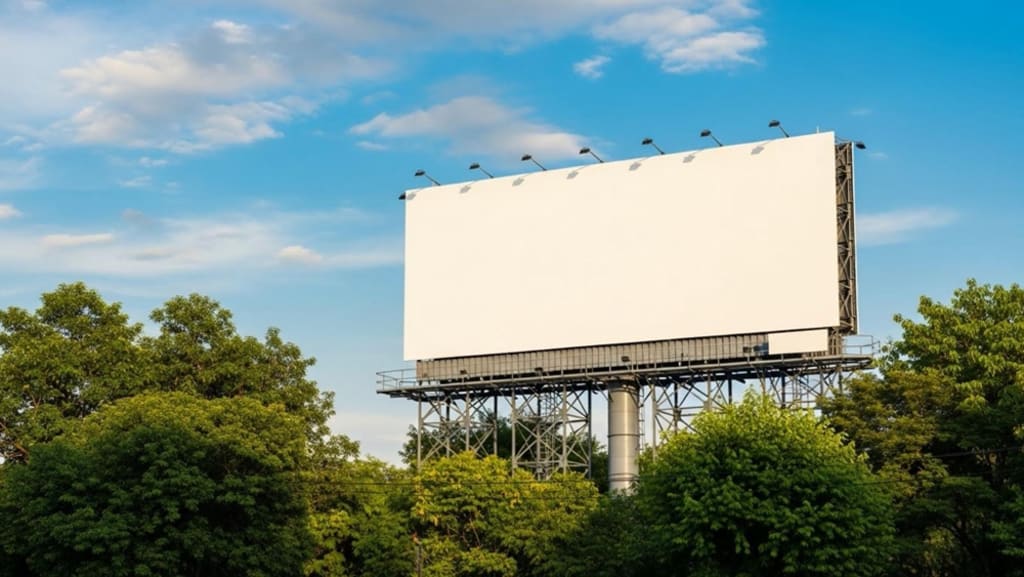
As marketing keeps developing and brands are looking for meaningful ways to reach their audiences, outdoor media remains one of the oldest and most powerful channels. Billboards, transit, and digital screen advertising in urban areas are a staple of modern life and continue to be a powerful medium.
Outdoor advertising gives brands exposure in high-traffic pedestrian areas. Physical advertisements cannot be skipped, blocked, or ignored like digital ads, and consumers encounter them when commuting to work, shopping in stores, attending a sporting event, or socializing with others. Visibility makes outdoor advertising a part of an integrated marketing communications strategy.
Understanding What Outdoor Advertising Really Involves
Outdoor advertising is a variety of advertising formats, both customary and digital, that exist outside of the home including: billboards and posters, transit advertising, airport advertising, and street furniture.
Recent advances in digital out-of-home screens have transformed the format. Electronic screens allow for flexibility and creativity with content that can be updated in real time or be interactive.
The same principle has also defined its goal of reaching broad audiences.
Click here if you want to know more about Outdoor Advertising Market
Key Factors Driving Outdoor Advertising Adoption
Another key advantage is high visibility from outdoor placements in busy urban and transportation locations which help to reinforce brand recall.
Urbanization is another cause of demand, as growing cities and transport networks provide advertisers with concentrated populations who can be exposed to the billboards.
Further technology improvements, such as digital boards, allow the space to be shared by multiple advertisers, or vary messages by time or location.
The Role of Innovation and Digital Integration
Innovation is having a major impact on the outdoor advertising industry, with automated programmatic buying systems allowing advertising to be scheduled. Data analytics can provide understanding into traffic patterns and audiences.
Interactive and digital technologies, such as QR codes and mobile connectivity, alongside engaging elements, such as motion graphics and augmented reality, help to connect the audience with their physical location.
The sustainability movement has also impacted design, with energy-efficient lighting and environmentally-friendly materials becoming commonplace.
Changing Consumer and Brand Behavior
Likewise, brands looking to capture consumers who are outside customary media environments may turn to outdoor advertising as a compliment to online touchpoints.
Large-scale graphics and experiential installations are emerging as a platform for storytelling as brands look to develop advertising deals outside of customary channels that can also be shared socially.
The audience is looking for timely, relevant, and creative content.
Benefits and Strategic Advantages
Outdoor advertising has several benefits:
• Mass Reach: Reaches very large audiences in public venues.
• High Visibility: Ensures repeated exposure.
• Creative Impact: Large formats can ease bold messaging.
• Digital Flexibility: The content can be updated and time-sensitive.
• Cross-Channel Support: Aids integrated marketing campaigns.
These advantages have contributed to its continued use in branding.
Regional Expansion and Urban Development
Outdoor advertising is mainly found in the largest metropolitan areas given the concentrations of people and traffic flows, and its ideal location near transport, commerce and recreation.
Emerging cities are also building new technologies, such as digital networks, for which advertising can create new opportunities. Partnerships between media owners and local authorities can create opportunities to improve urban environments.
Challenges Facing Outdoor Advertising
Outdoor advertising does have drawbacks: such as regulatory or zoning restrictions on where advertising can be located. Environmental and weather conditions can affect maintenance requirements.
Challenges exist in finding a balance between commercial messaging, the needs of the community and producing a compelling, culturally relevant ad.
However, these systems must be modified and carefully managed.
Future Outlook of Outdoor Advertising
The future of out of home advertising is likely to be more digital, data-driven and environmentally sustainable, including smart city technologies which allow digital displays to respond to traffic and weather conditions and other triggers.
There will be increased comfort levels with mobile technology, integration with physical and digital campaigns, and outdoor will be a key media for delivering impactful messages in a technology-driven world.
Conclusion
Outdoor advertising remains a powerful component of contemporary marketing, connecting brands with consumers in public spaces through innovation and creativity, and planned location and visual placement.
As urban areas continue to digitize and agglomerate, outdoor advertising is expected to remain an important element of brand advertising and communication.
About the Creator
deepanshu Thakur
A dedicated Market Research Professional specializing in in-depth analysis, industry forecasting, and strategic insights. Known for precision, reliability, and delivering research that adds real business value.
Keep reading
More stories from deepanshu Thakur and writers in Education and other communities.
Why Bromine Plays a Crucial Role in Modern Industrial Applications?
Bromine is used in a wide variety of chemical processes and is therefore also used as an additive to make many industrial processes safer or more efficient, including the electric power industry and water disinfection. Although not directly visible to consumers, bromine compounds are behind many everyday systems and advanced technologies.
By deepanshu Thakurabout 11 hours ago in Education
Iron Peptides Domain Transition
We are reaching out to our valued customers, research professionals, and the broader scientific community to announce a significant change in our online presence. Our previous domain, ironpeptides.com, has been suspended, and we have successfully transitioned all operations to our new domain:
By Hazel Jackson3 days ago in Education
'Till Death We Do Art
There would be nothing divine in this world without art. Nature may surpass the divine to all intents and purposes, but like everything it absorbs and is absorbed by, it remains here, stuck on the surface of this world, ever-present, physically bound to the universe.
By Avocado Nunzella BSc (Psych) -- M.A.P a day ago in Art



Comments
There are no comments for this story
Be the first to respond and start the conversation.