
Title: The Current State of the Global Economy: A Comprehensive Analysis
Introduction:
Today's world economy is characterized by dynamic changes and interconnectedness, fueled by technological advancements, geopolitical shifts, and evolving consumer behavior. This essay aims to provide an overview of the current state of the global economy, examining key trends, challenges, and opportunities that define our economic landscape.
1. Global Economic Growth:
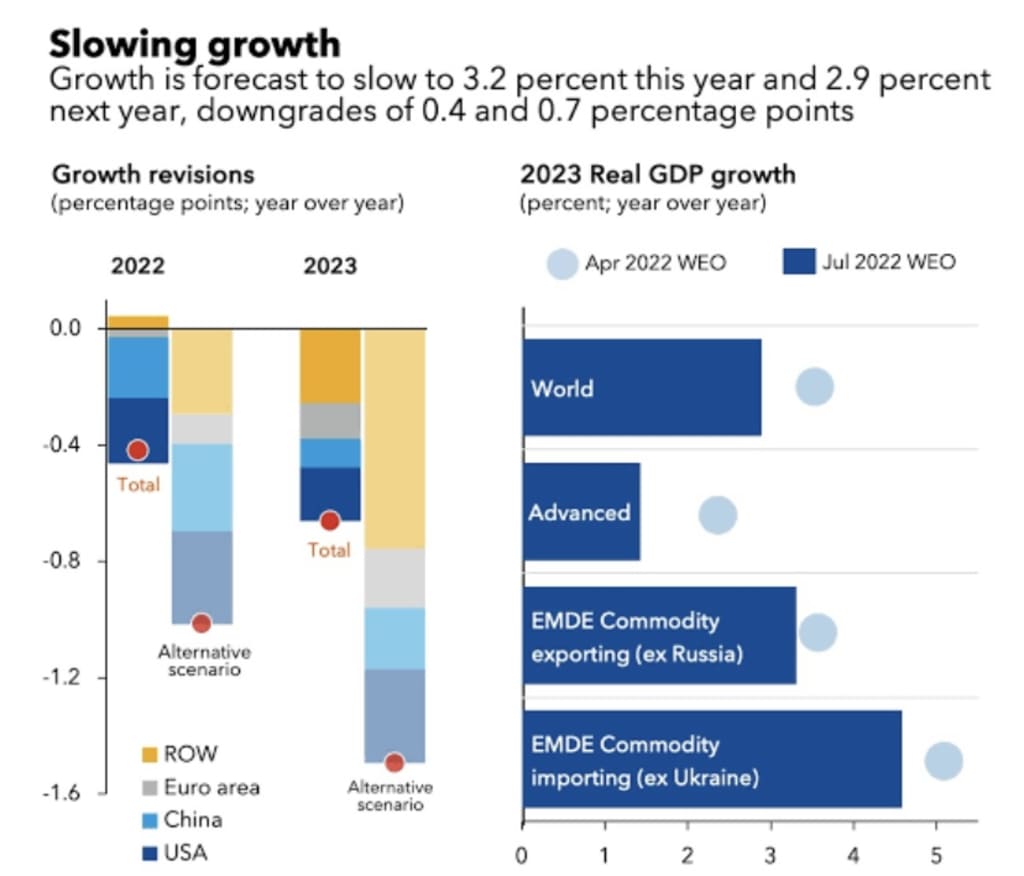
Despite periodic fluctuations and challenges, the global economy has been experiencing steady growth. Emerging economies, such as China and India, continue to play a significant role, contributing to global GDP expansion. However, developed economies, including the United States and European nations, still hold considerable influence over global economic trends.
2. Technological Advancements:
Technological innovation has revolutionized various sectors, reshaping industries, and driving economic growth. The rise of artificial intelligence (AI), automation, blockchain, and the Internet of Things (IoT) has disrupted traditional business models while creating new opportunities for productivity and efficiency. However, the rapid pace of technological advancement also poses challenges such as job displacement and the digital divide.
3. Trade and Protectionism:
Global trade plays a crucial role in today's economy, facilitating the exchange of goods, services, and capital across borders. However, recent years have witnessed a rise in protectionist sentiments, characterized by trade wars, tariff disputes, and regional trade agreements. Such protectionist measures can hinder economic growth, disrupt supply chains, and reduce market access for businesses.
4. Sustainability and Climate Change:
The global economy is increasingly recognizing the urgent need for sustainable practices and addressing climate change. Governments, businesses, and consumers are taking steps to reduce carbon footprints, transition to renewable energy sources, and promote circular economies. Sustainable development and climate action are now integral to economic policies, investments, and corporate strategies.
5. Income Inequality:
Income inequality remains a significant concern in today's world economy. While globalization has lifted millions out of poverty, it has also exacerbated wealth disparities within and between countries. Addressing income inequality requires targeted policies that promote inclusive growth, enhance education and skills training, and ensure equitable access to opportunities.
6. Financial Systems and Stability:
The global financial system plays a critical role in the functioning of the world economy. Effective regulation, risk management, and financial stability are essential for sustainable economic growth. The lessons learned from the 2008 financial crisis have led to reforms aimed at strengthening the resilience of financial institutions and reducing systemic risks.
7. COVID-19 Pandemic Impact:
The COVID-19 pandemic has had a profound impact on the global economy. Lockdowns, travel restrictions, and supply chain disruptions led to a severe contraction in economic activity. Governments and central banks implemented unprecedented stimulus measures to mitigate the impact, including fiscal support packages and monetary easing. The pandemic has also accelerated digital transformation, remote work, and e-commerce adoption.
Conclusion:
Today's world economy is a complex and interconnected system shaped by a multitude of factors. Technological advancements, trade dynamics, sustainability efforts, income inequality, and the aftermath of the COVID-19 pandemic are among the key drivers and challenges that influence global economic trends. Adapting to these changes and pursuing inclusive and sustainable growth will be crucial for a prosperous and resilient global economy in the future.
About the Creator
Keep reading
More stories from mhlanga pg and writers in Education and other communities.
The Power of Social Media:
Title: The Power of Social Media: Balancing Connection and Online Privacy Introduction: Social media has become an integral part of our daily lives, revolutionizing the way we connect, share information, and communicate. However, as social media platforms continue to grow in popularity, the issue of balancing connection and online privacy has come to the forefront. This essay explores the power of social media, the challenges it poses to privacy, and the importance of finding a balance between staying connected and protecting our personal information.
By mhlanga pg3 years ago in Education
Youth Volunteering: A Personal Story of Leadership Growth
Volunteering with youth is often seen as an opportunity to give back, but for me, it became a pivotal experience that completely transformed my understanding of leadership. Before I began volunteering, I had a narrow view of what leadership truly entailed. Leadership was about taking charge, making decisions, and guiding others from the front. However, my experience working with young people opened my eyes to a much broader and deeper definition of leadership. This personal story will share how volunteering with youth not only helped me grow as a leader but also reshaped my perspective on the qualities and responsibilities that make a true leader.
By Jett Harris of Arkansas7 days ago in Education
Real Time Success: Simple Time Management Methods That Deliver Real Results
Time can feel hard to control, but simple time management methods can make each day easier and more productive. Many people think they need complex systems or expensive tools to stay organized. The truth is that small changes often bring the most significant results. When you use simple time management methods that fit your daily life, you build habits that last and help you get more done with less stress. This article shows how to use these methods clearly and practically so you can see real results fast.
By Norman Badger4 days ago in Education
Field of the Fallen
Sunlight danced softly across the frost-crusted fields, making the little blades of grass sparkle like emeralds. The faraway chirrup of a songbird was the only disruption to the quiet of the morning. An icy chill, the last vestige of the dying winter, clung to the air, settling in a thick white mist at the far side of the open field. The heavy stench of decay hung in that mist, punctuation by the sharp tang of freshly spilled blood.
By A. J. Schoenfeld7 days ago in Fiction


Comments (1)
Top 5 Economies in World https://www.digiupdatehub.tech/2023/07/top-5-economies-in-world.html