
Between Silence and Spotlight: The Strange Extremes of Millennial Parenting
From quiet babies to Disney Airlines: parenting has lost the plot.

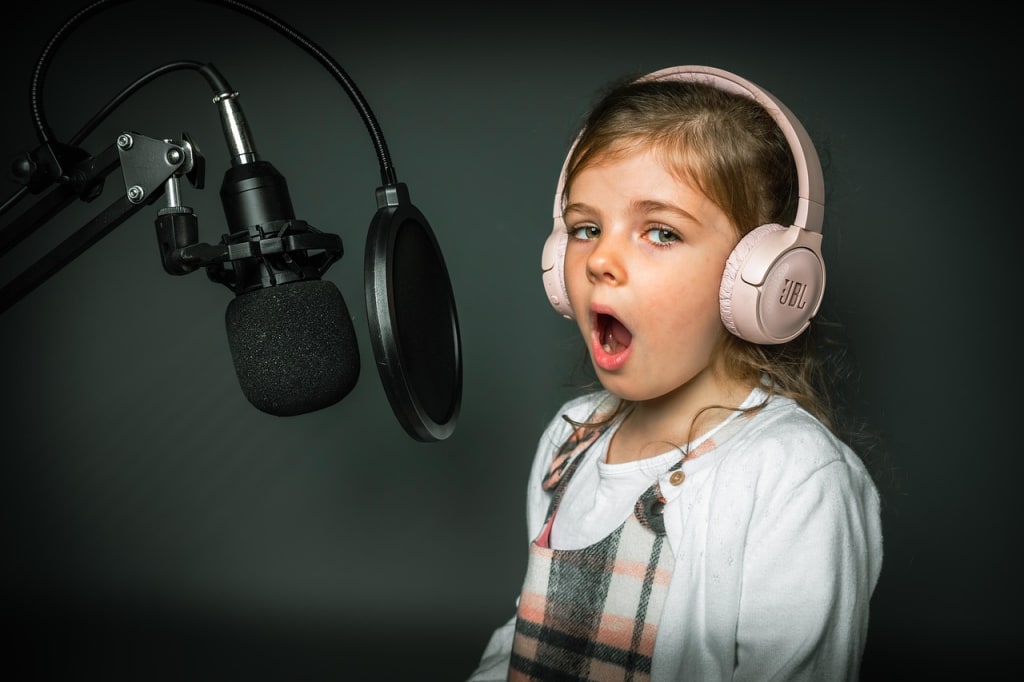
Recently, two TikTok videos went viral for wildly different—but oddly connected—reasons.
In one, a young mother earnestly asks the internet: “Am I supposed to be talking to my 11-month-old? Like, daily?” She looks tired, confused, and genuinely uncertain. It’s the kind of question that makes you do a slow blink while the static of existential dread crackles faintly in the background.
In the other, a different kind of chaos unfolds. A 12-year-old girl commandeers the speaker system on a delayed flight and sings Disney songs for forty-five minutes—much to the frustration of other passengers. The video was shared by annoyed travellers, many of whom just wanted a quiet plane and a timely departure. This wasn’t a spontaneous moment of joyful singing but a public takeover, forcing an unwilling audience to listen to a pre-teen’s performance.
Taken together, these clips feel like opposing poles of a new parenting spectrum: neglectful disengagement on one end, and overexposed performance on the other. And somewhere in the middle are the actual children—either spoken over or not spoken to at all.
Welcome to millennial parenting in 2025.
Silent Houses, Overstimulated Planes
The first video—the “Should I be talking to my baby?” one—struck a chord because of how bleak it is. The mother isn’t trolling. She’s asking sincerely. It’s not that she doesn’t love her child; it’s that she’s uncertain about how to interact with them. She’s been told to narrate her day, to speak in full sentences, to co-regulate, to mirror. But no one told her the why behind any of it. So she did... nothing.
Somewhere, she missed the memo that babies are humans. That communication isn’t just for school readiness or milestone charts, but because her child is a person learning to belong in the world.
Meanwhile, on the other end of the spectrum, a 12-year-old girl commandeered the speaker system on a delayed flight and sang Disney songs for forty-five minutes—much to the frustration of other passengers. The video was shared by annoyed travellers, many of whom just wanted a quiet plane and a timely departure. This wasn’t a spontaneous moment of joyful singing but a public takeover, forcing an unwilling audience to listen to a pre-teen’s performance.
One parent doesn’t speak to their child. The other doesn’t say no to their child.
Neither seems to recognize the child as a person with needs separate from their own.
Parenting Without a Map
It’s easy to criticize from the outside, but let’s be honest: millennial parents are raising kids in an unprecedented mess of conflicting advice, surveillance culture, and crushing economic pressure. We're told to be gentle, but firm. Attentive, but not overbearing. Screen-free, but don’t helicopter. Educate early, but don’t push them. Let them be wild and free—but also well-behaved, precocious, emotionally literate, and able to recite the alphabet by 18 months.
It’s no wonder some parents freeze. Others overcompensate. Some turn their children into little self-regulating productivity projects. Others turn them into tiny stars in a family reality show no one consented to join.
This isn’t about blaming individual parents. It’s about zooming out to look at the broader trend: we seem to have forgotten that children are people. Not projects. Not props. Not proof of our virtue or victimhood or creativity or capacity to hustle.
People. Messy, curious, loud, irrational little people who deserve dignity even before they can talk.
The Cost of the Extremes
Children who grow up without being spoken to don’t just experience language delays. They miss out on connection. On feeling seen. On learning that their thoughts and needs matter.
Children who grow up always performing—especially online—learn to view themselves through the lens of an imaginary audience. Their value gets tied to applause, not authenticity. They learn that being cute, funny, or impressive earns them love. And being quiet, boring, or inconvenient earns them nothing at all.
Both extremes leave lasting marks.
The Middle Way Is Boring—and That’s the Point
The healthy middle of parenting doesn’t go viral. There’s no TikTok fame in gently redirecting your child mid-meltdown or narrating breakfast to your baby while you wipe up spilled Cheerios. No applause for limiting your toddler’s performance to the living room.
But that middle—mundane, imperfect, and deeply present—is where children thrive.
You don’t need to be a parenting expert. You don’t need flashcards or a content calendar. You don’t need to monetize your child’s every moment or stay silent out of fear you’ll say the wrong thing.
You just need to be there. Talk to them. Listen to them. Let them be small, silly, and slow. Let them be children.
Even if no one clicks "like."
About the Creator
No One’s Daughter
Writer. Survivor. Chronic illness overachiever. I write soft things with sharp edges—trauma, tech, recovery, and resilience with a side of dark humour.
Keep reading
More stories from No One’s Daughter and writers in Families and other communities.
The Two Seeds: Why Love Heals and Hate Only Destroys
The Two Seeds: Why Love Heals and Hate Only Destroys By Hazrat Umer The Story We are born with a heart that is empty, like a small piece of land. As we grow up, we start planting seeds in that land. Some people plant seeds of love, kindness, and forgiveness. Others, because of pain or anger, plant seeds of hate, jealousy, and revenge. In 2026, the world is moving so fast that we often forget to check what is growing in our own hearts.
By Hazrat Umer2 days ago in Families




Comments
There are no comments for this story
Be the first to respond and start the conversation.