
Key Technologies in Sand Making Machine
Sand making machines are core comminution equipment used in manufacturing artificial sand for construction purposes. As demand grows globally for substituting limited natural sand reserves, technological advancements continue strengthening sand makers' efficiency, productivity, and material quality.
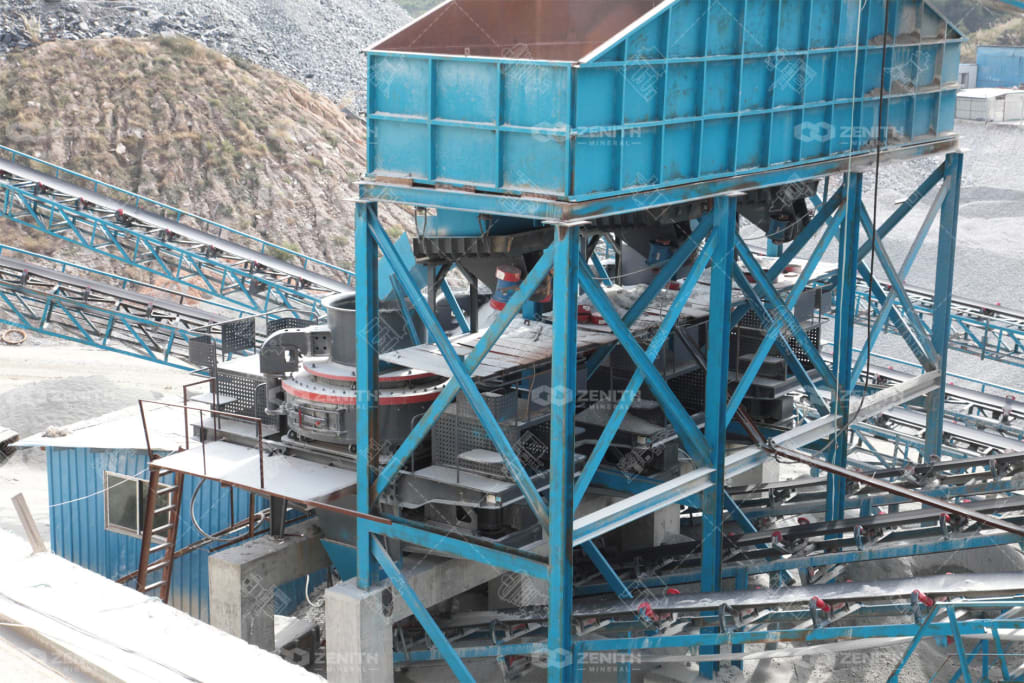
Introduction
Sand making machines are core comminution equipment used in manufacturing artificial sand for construction purposes. As demand grows globally for substituting limited natural sand reserves, technological advancements continue strengthening sand makers' efficiency, productivity, and material quality. This guide examines novel techniques permitting aggregates producers to better serve high-value engineered sand markets profitably and sustainably in the long term.
Key Technologies in Sand Making Machine
Impacting Cavity Design
Impact rotors incorporate advanced cavity geometries that optimize energy utilization while fracturing stone feeds. Some designs feature elliptical impact plate curvatures, graded from thicker front sections that gradually taper to thinner rearward sections. This design counters particles rebounding after initial impacts, enhancing repeated cavity collisions and pulverizing material to finer specifications.
Computer-aided engineering now simulates fluid-structure interactions within cavities, suggesting innovative cavity shapes. Vertical shaft impactor manufacturers are pioneering asymmetrical impact plates that break stones on more angled impact zones as opposed to flat horizontal surfaces. Research by Cummins has focused on the non-uniform distribution of impact bars, making them suitable for diverse industrial sands. Oversized or flat cavities are known to underperform, wasting rotational energy and reducing overall efficiency.
Rotor Dynamics
Rotor balancing and monitoring systems are critical in preventing vibrations from impact imbalances, which can lead to structural fatigue and bearing wear. Finite element analysis has been employed to enhance rotor optimization. Researchers have found that thinner, elongated impact tips can amplify momentum transfer, transferring kinetic energy more effectively than traditional plate-type rotors, thus better crushing difficult rocks.
Modern plants are incorporating hydraulic or electromagnetic couplings, which absorb energy fluctuations and moderate power swings, providing a smoother operation compared to conventional gear drives. For instance, German-made machinery often incorporates modular centrifugal clutch transmissions, which allow for smooth adjustments in rotor tip velocities to match varying stone hardness levels.
Screening Technology
Multilayer vibrating screens with inclined surfaces facilitate step-wise particle classification into narrow gradation fractions. Self-cleaning polyurethane screen panels maintain open mesh sizes during cleaning cycles, ensuring consistent output quality. Companies like Kedu are employing polygonal screen meshes, which maximize the screening area compared to traditional woven alternatives. Remote ultrasonic probes are increasingly being used to check the integrity of wear-resistant panels, allowing for predictive maintenance and timely replacements.
Feeders & Bins
Vibratory feeders are essential for precisely metering varied stone types at set flow rates, which helps maintain sand quality consistency throughout the production process. Electromagnetic feeders are particularly valuable for preventing pipe blockages caused by tramp metal, ensuring smooth operation. Bins are designed with steep wall angles to facilitate full discharge, preventing materials from bridging. Telescopic chutes are a notable innovation that ensures blockages clear rapidly, significantly reducing maintenance downtime.
Process Automation
The integration of PLC (Programmable Logic Controller) and HMI (Human-Machine Interface) systems has revolutionized the management of sand production lines. These systems oversee automated process sequencing, operation mode settings, variable speed drives, and real-time monitoring reports. Cameras are utilized to check for potential faults, and advanced algorithms measure key sand performance parameters, suggesting mix design adjustments to enhance strength and workability properties. The computer controls allow for unmanned night shifts, significantly increasing operational efficiency.
Quality Control
As sand applications transition to high-precision construction, quality control has assumed greater emphasis. On-line particle gradation analyzers are now standard, assessing output conformity to stringent specifications. X-ray fluorescence spectrometers gauge chemical composition variability, ensuring compliance with industry standards. Some facilities have even integrated on-site laboratories that analyze compressive strength and moisture content of final products, certifying compliance before bulk bagging or silo storage. The collection of historical process data facilitates predictive quality maintenance across the entire system.
Installation & Commissioning
The installation of sand plant assemblies is typically managed by experienced EPC (Engineering, Procurement, and Construction) contractors, who ensure that assemblies are built to builders' blueprints for optimal structural integrity. This includes meticulous power routing and ensuring that automation and electrical interfaces function as designed. The commissioning phase validates system configuration and performance against design criteria through trial runs, allowing for fine-tuning of processes. Comprehensive operational and maintenance training is also provided to staff, promoting safety and productivity from day one.
Environmental Considerations
As the industry evolves, there is a growing focus on sustainability within sand making technologies. Innovations in water recycling systems within production plants help minimize water usage, while dust suppression technologies reduce airborne pollutants. The adoption of eco-friendly materials and processes contributes to reducing the ecological footprint of sand production.
Conclusion
Through continuous technological evolution, sand making specialist manufacturers and forward-thinking quarry operators collaborate to produce sustainable artificial sand resources that meet the diverse demands of construction materials into the future. Novel comminution and screening techniques maximize energy efficiency, throughput, control, and quality assurance, propelling sand manufacturing toward an increasingly digitalized industrial landscape. The commitment to innovation and sustainability positions the sand making industry to thrive in a world that increasingly values resource conservation and environmental stewardship.
About the Creator
Self Help: Grifters' Gospel
On Self-Help, Snake Oil, and the Illusion of Change Psychology professionals and students can be imagined on two opposite sides of a line called self-help books: likely a larger group opposes pop-science and step-by-step manuals filled with talk of success, journaling, and not giving a f**k; others love them, but they aren’t many.
By Avocado Nunzella BSc (Psych) -- M.A.P 2 days ago in BookClub




Comments
There are no comments for this story
Be the first to respond and start the conversation.