
I didn’t know how to sweep. I knew I didn’t know how to sweep when Dimitris told me to grab the broom from the basement. He learned I didn’t know how to sweep a few minutes later.
Before that morning, I’d spent nearly two years of university working Friday and Saturday nights washing dishes in the back of his small white and blue restaurant. Throwing my hands into sinks of used cutlery. Running up and down stairs to get tubs of cheese and olives from the cooler. Sitting on a milk crate waiting for the last table to finish their dinner so I could speed to whichever bar my friends were already at. But everything was loud and fast and things would break and the cooks swore and it was better than working at a mall.
Some nights, Dimitris would tell one of the waiters to bring a few beers to the guys in the kitchen after the dinner rush. Most nights, even on the quiet nights, the waiters would bring us beer without telling Dimitris. Napoleon was the best at this aspect of the job. He would wait for the moment he could grab three beers from the bar and hide them in the stack of dirty dishes and glasses he brought back to me. The cooks, drenched in sweat, couldn’t help but shout, “BIRRAS” to celebrate the success of the mission. I’d then hand out Napoleon’s gifts in coffee mugs and we would wait for Dimitris to walk in and offer another round.
Napoleon was tall and slim. He kept his white hair combed to the back of his head, making him seem all that much older than sixty-three. His perfect English was coloured by the roundness his Greek accent lent to longer words. Napoleon didn’t drive. He had no wife and no children. He took the bus home through downtown each night to a rented house.
Each waiter had their own drawer below the thirty-year-old computer where they would enter the customers’ orders. The first drawer belonged to Dimitris’ cousin, and was filled with sanitary wipes, painkillers, vitamins, and whatever else a hypochondriac might need. Napoleon’s drawer held his apron, his corkscrew, and the little black book where he wrote down the tips he had made at the end of each evening. The third drawer, belonging to Dimitris’ cousin’s friend, had prayer beads and a rotating set of car keys. When Dimitris sent me to the dining room after my years in the dish pit, there was no fourth drawer.
My promotion led to other complications too. I had to learn how to properly sweep the dining room, how to flirt with the female customers without angering the men, how to place glasses onto tables without touching the brim, and how to turn the stereo down without making the music quieter.
Dimitris’ wife always wanted the music louder. Helena had left Greece with her father in the early 1960s. She was tough and loud and knew how to get her way. She would stop me as I walked past her seat at the hosts’ counter on my way into the kitchen.
“Peter – did you turn the music down?”
“Yea, table 12 said it was too loud and you know the speaker is right above their heads so…”
“I don’t care what table 12 said. If they want peace and quiet they can go sit in the coffee shop down the street.”
Helena would fire Napoleon at least once a shift. Usually the ceremony would happen when Napoleon walked through the door each afternoon.
“Napoleon – you’re fired.”
“Oh boy! Fired? That’s not good.” Napoleon would then smile, go to his drawer, take out his apron and say something like, “these people are strange.”
Napoleon never got the best tables. And by that, I mean the tables that tipped the best. We all knew this, and spoke about it openly as we organized the reservation book each afternoon. Still, he smiled and laughed and wrote down orders and came back into the kitchen to punch them into the computer.
“Let’s see… Calamari?” He articulated each syllable like a question. I’d try to distract him with something useless.
“Hey, did you ever hear the joke about the Greek guy on the train?”
“What? Just wait a second, let me punch this in… and salad. Hey, guys. No feta on the salad, ok?”
“WRITE IT DOWN!”
“Hand me a pen, will you?”
“Here, now did you ever hear the joke about the Greek guy on the train?”
“No, no I don’t know that one.”
“Ok, so there are four people riding on a train through the Alps - ”
“Hey, do you know the joke about the singing shepherd?”
“No. I don’t.”
“Yea that’s a good one too. You’d like it.”
He would then pick up the first dish he saw, throw a green bean into his mouth for quality control and take three quick steps towards the dining room before the chorus of cooks could return with, “THAT’S NOT FOR YOUR TABLE.”
When we stood behind the bar polishing glasses, or when we would just do nothing until Helena noticed, Napoleon would talk about history and philosophy like a professor. He also talked about Greece. He loved Greece, and he was saddened by the country’s more recent misfortunes and that young people had to leave to find work. He always compared Greece to Canada, and would ask me questions about Canada as if I had some insight from my studies at university that he didn’t, even though he had lived here longer than I had been alive.
Some nights, when my friends weren’t out and the cooks didn’t have money to spend at the bar, I’d drive Napoleon home. The short sightedness of people frustrated him. But when he started talking about his plans, he had the bright eyes of someone who has just passed their final exams. He was going to go back home. There was work to be done, and a whole life to pick up where he had last left it.
“You really like Greece, eh?”
“If it weren’t for my father, I would have never come to Canada. I would rather have stayed there, where I could really do something. Not that I don’t like it here, but I never settled into it.”
“What happened to your father?”
“With – not to.”
“With your father.”
“You know, it’s strange how we wind up somewhere else, doing something else than what we had in mind. Like you go out to buy Coffee and you come home with a lamp. Things are decided much more often than we make decisions, and we can make it a long ways down the road before we realize we’re walking.” He stopped and played with the dials of the air conditioner.
“When I was younger, I dreamed of going to university. I felt like I could learn everything - everything. I bought notebooks with perfect blank pages, waiting to sit in lecture halls where I could write in them. But I had five older brothers and sisters. There was no way we could afford it. In Greece, no one could back then. So, when I finished high school, I went to a small town in the north to make some money working in a hotel for miners.
“The north of Greece is different. It’s not the white houses on the islands. The forests are thick, and there is more wind and rain, and in the winter it’s grey and dogs roam the streets in the evenings. The hotel I worked at was on a small beach, and the mines were in the hills. I would drive up the roads in the hills at night. Sometimes a friend would drive with me. One night, I saw a box in a ditch along a fence. It was small, but it was heavy, and it was full of rough metal bars that had the look of unpolished gold. They started to say that someone had stolen from the mine. People said bars had gone missing. When I went back to Athens, I brought the box with me.
“Anyway, the gold I found was worth about 600,000 Drachmas. That was $20,000 at that time. I mean that was a lot of money. We had some debts to pay, and I wanted to use the money to go to university. My father wanted to use it to buy the house we lived in, but I didn’t see the point. My brothers and sisters had all left and if I went to university I could have bought him a house one day anyways.
“I went to the beach in Piraeus for an afternoon and my father took the box to the bank. I took a train back north, but then the mines closed. The manager of mine number four stayed at the hotel before he went back to Canada. He told me to think about moving there - that there were lots of hotels in lots of mining towns that could use a good waiter.”
One August, I drove Napoleon to the airport. He was going back to Greece for a vacation, but he was also going to arrange his retirement and sort out everything he still had to accomplish. He would be staying in his family’s house in Athens.
That same August, I had been offered a scholarship to do my masters degree at a university out east. They were going to give me $20,000 to read books and write papers for the year. I left the restaurant and Dimitris and Helena and the pieces of Greece they carried with them and shared with everyone.
I stopped by the restaurant on a weekday afternoon while I was visiting home the next summer. Dimitris bought me lunch and insisted on opening a bottle of wine. The new waitress didn’t know where to find the wine he wanted, so I got a good bottle from the basement and went to use the corkscrew in Napoleon’s drawer. The little black notebook that contained the records of his boom and bust evenings was missing.
I asked where Napoleon was as I opened the bottle.
“Oh, I thought you had heard. He stayed in Greece.”
Dimitris spoke like a priest when he was relaxed.
“He said he couldn’t leave again. He said that he had too much to do there, and that things were just starting to happen. Helena and I put together his things from around here and from the little place he rented and shipped them to Greece. I don’t know what an old man has to get started on in Athens. I’ll go see if Helena wants to eat with us.”
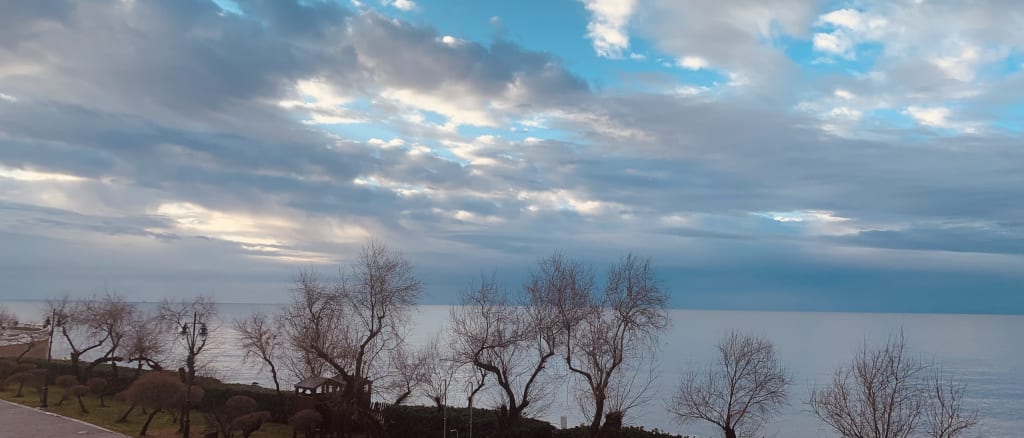
Years later, I was in a village in northern Greece. The edges of the town blurred between the sea and the forest and the hills. I spent the evenings in my room, watching the waves under the clouded sky. Sometimes a dog would walk towards the water – a brown and black dog with a barrel chest and a lowered head. It would walk up and down the empty beach, not looking for anything, just pacing the grey shore. And sometimes I felt like I had to go home too.
About the Creator
S. Parker
Writing, but bad handwriting.
Keep reading
More stories from writers in Families and other communities.
The Last Soldier Standing
The day I had my heart attack, the doctors told me I needed rest. Real rest. The kind where you let other people take care of you for once. I nodded, because that’s what polite patients do, but the truth was already forming in my mind like a command I couldn’t disobey.
By Lizz Chambers2 days ago in Families
He was 3,000 miles away these signs told me he wanted to marry me
He was 3,000 miles away these signs told me he wanted to marry me The video call froze on his face. Not on a grand declaration or a romantic moment just him, mid-sentence, talking about his lease renewal. "I told them I might need a two-bedroom," he said. "You know. For when you visit. Or if you ever..."
By Understandshe.com2 days ago in Families


Comments
There are no comments for this story
Be the first to respond and start the conversation.