
The Last Date on the Plate
A quiet Ramadan evening taught me the true meaning of sacrifice, love, and fasting

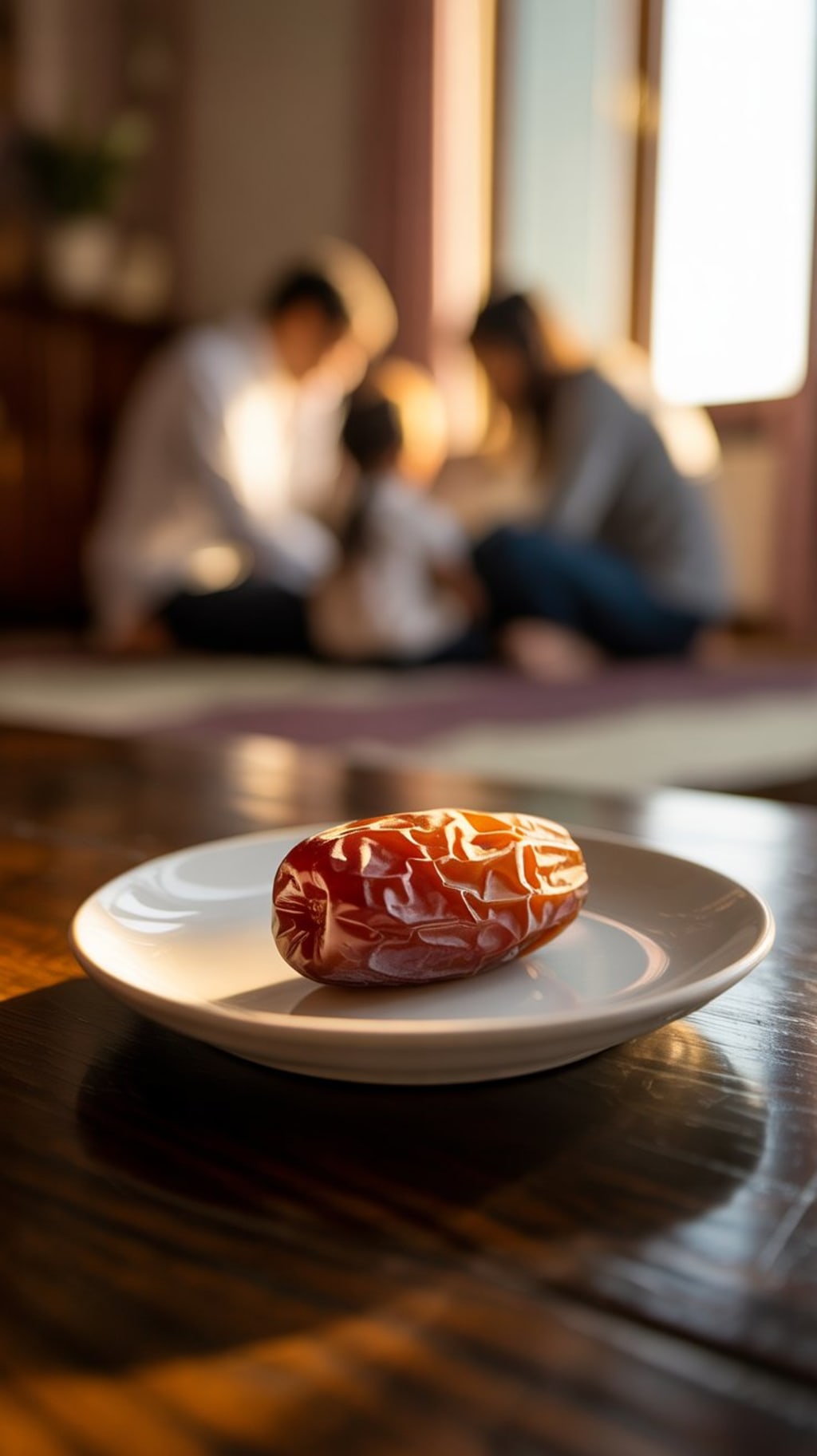
The call to Maghrib echoed softly through the narrow streets of our neighborhood.
“Allahu Akbar… Allahu Akbar”
Inside our small house, the table was already set. If it could even be called a table. It was an old wooden board placed over two plastic crates. On it were three glasses of water, a small bowl of lentil soup, and a steel plate.
On that plate were three dates.
Four people. Three dates.
My father looked at the plate and cleared his throat.
“It’s okay,” he said gently. “I’m not very hungry today.”
My younger sister shook her head quickly. “No, Abba. I ate something at school before coming home.”
I knew that was a lie. She hadn’t gone to school for two days because we couldn’t afford the bus fare.
I stayed silent.
My mother stood near the stove, pretending to adjust the flame under the soup pot. She always stayed busy at iftar time, as if food would magically multiply if she kept moving.
The adhan ended.
We raised our hands for dua.
“Ya Allah, accept our fast…”
When we lowered our hands, the room felt heavier than before.
Father pushed the plate toward me.
“Umar, you take one.”
I shook my head. “No, Abba. You worked all day.”
He had worked all day. Construction work. Under the burning sun. No food. No water.
My sister slowly took one date and split it in half.
“I’ll share with Bhai,” she said, smiling.
That left one whole date and one broken half on the plate.
Mother finally sat down with us. She didn’t go on a date.
“Aren’t you eating?” I asked.
“I tasted the soup while cooking,” she replied softly. “I’m fine.”
We all knew what that meant.
Father broke the remaining full date into two pieces and placed one in front of Mother.
“Please,” he said quietly.
She hesitated… then took it.
We each ate our small pieces.
Sweet.
Too sweet.
It felt heavier than any meal.
After iftar, Father went to the mosque for Taraweeh. My sister fell asleep almost immediately. I stayed awake, pretending to read.
Mother was washing the dishes.
There wasn’t much to wash.
I watched her hands.
They looked thinner than before.
Her wrists seemed fragile.
When she finished, she went into the kitchen again. I heard the cupboard open.
Then silence.
Something made me stand up.
I walked quietly toward the kitchen and stopped at the door.
Mother was sitting on the floor.
In front of her was the empty date plate.
She picked up a tiny crumb probably from the broken half and placed it in her mouth.
Then she drank a full glass of water.
Slowly.
Like someone trying to fill an empty stomach with patience.
My chest tightened.
“Ammi…” I whispered.
She turned quickly, wiping her eyes.
“You’re still awake?”
“Did you eat anything today?” I asked.
She smiled.
Of course she smiled.
“I’m fasting,” she said.
“But we all are,” I replied.
She looked at me really looked at me and then spoke softly.
“I didn’t eat at sehri,” she said.
“Why?”
“There was only enough bread for three people.”
The words hit me harder than hunger ever had.
“You haven’t eaten… since yesterday?” My voice shook.
She shrugged gently.
“A mother’s stomach learns patience before her children do.”
I couldn’t speak.
All day I had been thinking about how hungry I was. How tired I felt. How difficult fasting was.
And she…
She had been carrying an emptiness deeper than mine.
Not just in her stomach.
In her heart.
Because she wanted her children to feel full.
That night, I couldn’t sleep.
For the first time, I understood something.
Fasting was not just about staying hungry from sunrise to sunset.
It was about sacrifice.
It was about putting someone else before yourself.
It was about love that doesn’t announce itself.
The next morning at sehri, I woke up early.
There were two pieces of bread left.
I broke one and placed it quietly on Mother’s plate.
When she noticed, she looked at me.
I didn’t say anything.
Neither did she.
But something had changed between us.
Years later, when life became easier…
When our table became bigger…
When there were more dates than we could count…
I would still remember that Ramzan evening.
The old wooden board.
The three dates.
The silent sacrifices.
And my mother, sitting on the kitchen floor, filling her hunger with water.
That was the night I understood what fasting really meant.
Have you ever realized someone was sacrificing quietly for you?
About the Creator
Syed Umar
"Author | Creative Writer
I craft heartfelt stories and thought-provoking articles from emotional romance and real-life reflections to fiction that lingers in the soul. Writing isn’t just my passion it’s how I connect, heal, and inspire.




Comments
There are no comments for this story
Be the first to respond and start the conversation.