
Seafood Gumbo - A Historic American Classic Recipe With a Backstory
A brief history of seafood gumbo, its classic Louisiana recipe, regional variations, and how it connects to the Southern Low Country boil tradition.

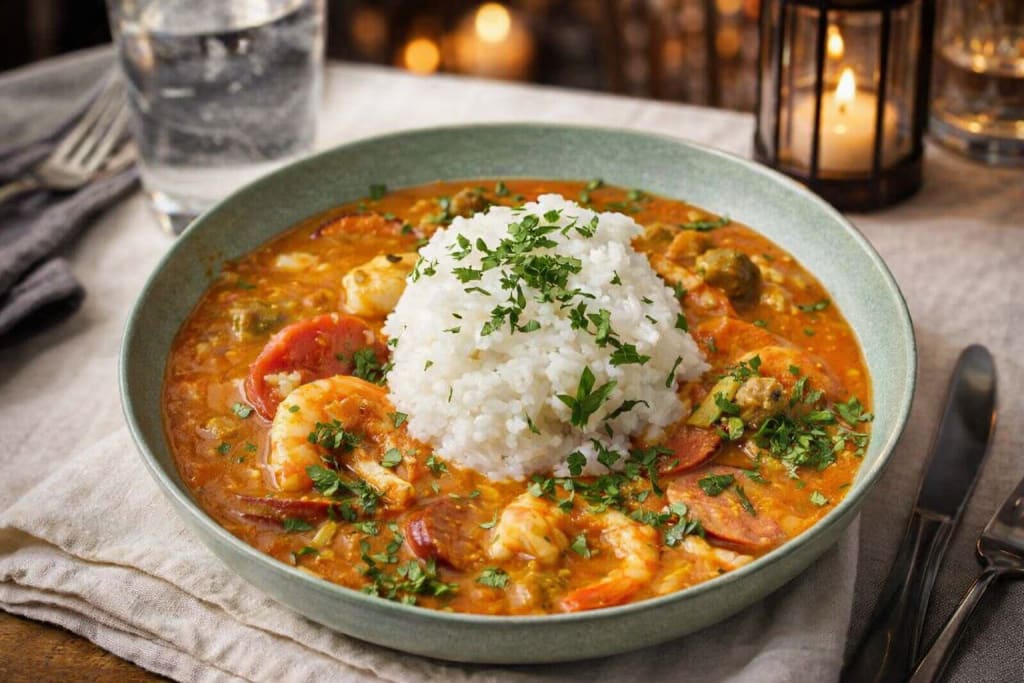
Seafood gumbo isn’t just dinner. It’s a story told in a pot — one that’s been simmering in Louisiana kitchens for more than two centuries. Every spoonful carries a mix of cultures, techniques, and hard-earned kitchen wisdom. Ask ten cooks how to make gumbo and you’ll get ten confident answers. That’s part of the point.
Where Gumbo Comes From
Gumbo took shape in 18th-century Louisiana, where French, Spanish, West African, and Native American foodways crossed paths. The name itself is often linked to a West African word for okra, one of the earliest thickeners used in the dish. French influence shows up in the roux. Native cooks contributed filé powder, made from ground sassafras leaves. Spanish and Caribbean flavors brought spice and seafood into the mix.
Over time, two broad styles emerged:
- Creole gumbo, often tomato-based and common around New Orleans
- Cajun gumbo, darker, richer, and built on a deeply cooked roux
Seafood gumbo can fall into either camp, depending on who’s cooking.
The Classic Seafood Gumbo Recipe
This is the foundation many cooks start with. From here, tweaks are expected.
Ingredients
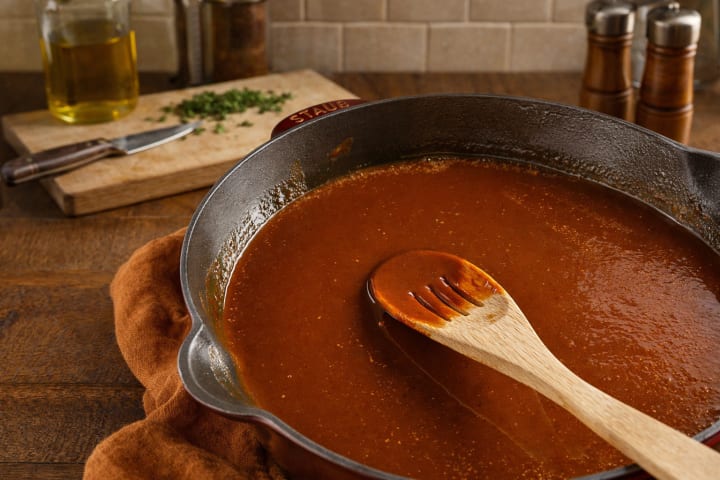
For the roux
- ½ cup vegetable oil
- ½ cup all-purpose flour
For the gumbo
- 1 large onion, diced
- 1 green bell pepper, diced
- 2 celery stalks, diced
- 3–4 cloves garlic, minced
- 6 cups seafood stock or shrimp stock
- 2 bay leaves
- 1 teaspoon dried thyme
- ½ teaspoon cayenne pepper (adjust to taste)
- Salt and black pepper
Seafood
- 1 pound shrimp, peeled and deveined
- ½ pound crabmeat (lump or claw)
- 1 dozen oysters, shucked (optional)
To serve
- Cooked white rice
- Chopped green onions
- Fresh parsley
How It Comes Together
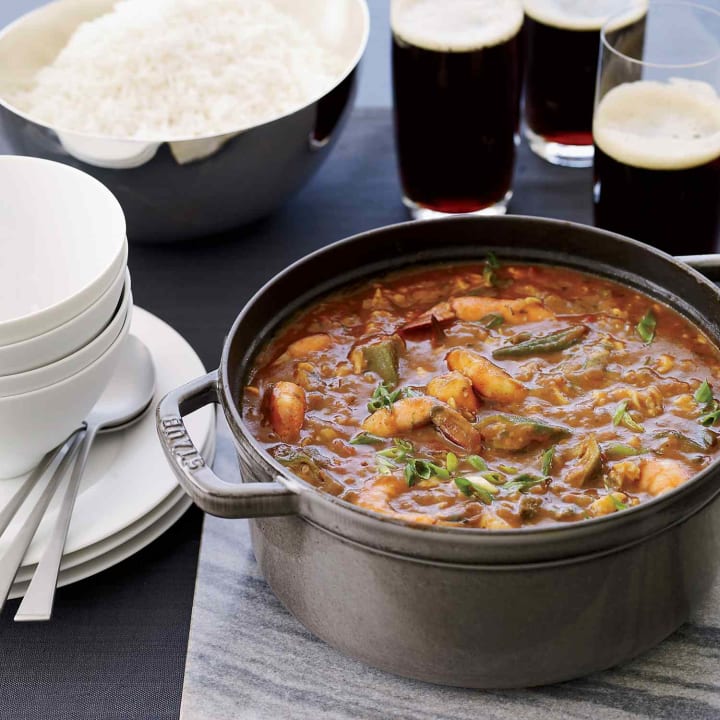
Make the roux. In a heavy pot, cook oil and flour over medium heat, stirring constantly, until it turns deep brown. This can take 20–30 minutes. Don’t rush it.
Add the vegetables. Stir in onion, bell pepper, celery, and garlic. Cook until softened.
Build the broth. Add stock, bay leaves, thyme, cayenne, salt, and pepper. Simmer 30–45 minutes.
Finish with seafood. Add shrimp and crab. Oysters go in last, just a few minutes before serving.
Serve over rice. Top with green onions and parsley.
Popular Gumbo Variations
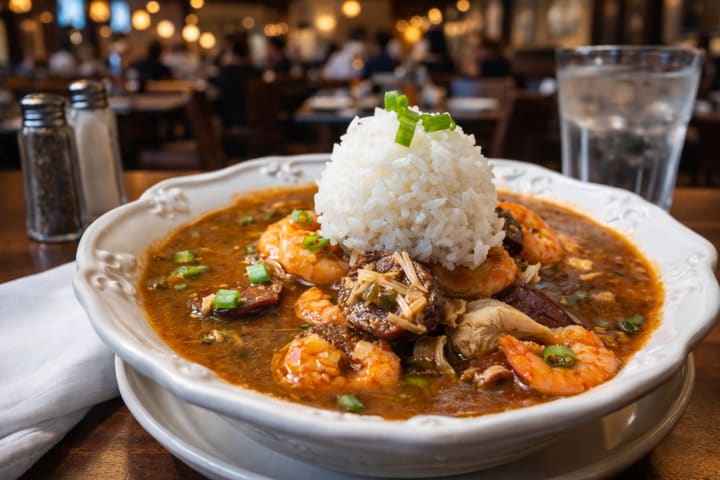
Gumbo invites improvisation. Some common twists include:
- Okra-forward gumbo: Add sliced okra early so it thickens the broth naturally.
- Filé gumbo: Skip okra and stir in filé powder off the heat for a woodsy finish.
- Seafood and sausage: Add andouille sausage for smoke and depth.
- Lighter gumbo: Use a lighter roux and lean more on fish stock than shellfish.
There’s no single “correct” version — just the one that tastes right to you.
Gumbo’s Coastal Cousin: The Low Country Boil
Seafood gumbo shares DNA with another Southern favorite: the Low Country boil. Both dishes celebrate shellfish, spice, and feeding a crowd. The difference is approach. Gumbo simmers into a thick stew, served with rice. A Low Country boil is cooked fast in a seasoned broth, then drained and spread out for everyone to dig in.
If you’re curious about that tradition, this breakdown at Spice2Vice is a good place to start:
👉 https://spice2vice.com/low-country-boil/
Gumbo Factoids Worth Knowing
- Gumbo is often better the next day, once flavors settle.
- The darker the roux, the deeper the flavor — but the less thickening power.
- In Louisiana, arguing about gumbo recipes is considered normal behavior.
- Seafood gumbo is most common during Lent, when meatless meals matter.
Final Spoonful
Seafood gumbo endures because it adapts. It reflects what’s fresh, what’s local, and who’s gathered around the table. Whether you stick close to tradition or put your own stamp on the pot, gumbo rewards patience, confidence, and a willingness to stir — literally and figuratively.
About the Creator
Paul Austin
Paul is a noted freelance writer with hundreds of articles online and in print. Paul is motivated by regional foods. His most recent project is cataloging unique events in Michigan History. You can find more of his work at Michigan4You.com
Keep reading
More stories from Paul Austin and writers in Feast and other communities.
Why Pickle Juice Is All The Rage Right Now.
Pickle juice has been gaining popularity as a unique health elixir, intriguing many with its tangy flavor and purported benefits. In this article, we will uncover the nutritional wonders and potential advantages of this unconventional drink. From athletes seeking relief from muscle cramps to health enthusiasts exploring new wellness trends, pickle juice has piqued the interest of a diverse range of individuals.
By Paul Austin2 years ago in Feast
14 Mind-Blowing Food Hacks You’ve Been Doing Wrong Your Whole Life
We all love food, but what if I told you that some of the foods you eat every day might not be eaten the smartest way possible? From tacos to cake, there are little-known hacks that can make your meals cleaner, faster, and way more enjoyable. Let’s dive into some genius food tricks that will seriously change the way you eat.
By Areeba Umair4 days ago in Feast
The Last Feast
A Dinner That Changed Everything The aroma of roasted meat and spiced vegetables filled the grand dining hall, wrapping everyone inside in a warm, almost dizzying embrace. Candles flickered across the long oak table, casting shadows that danced on the walls like silent spectators. This was the night of the annual family feast, a tradition that had lasted generations. Each year, relatives traveled from distant towns to gather under one roof, sharing stories, laughter, and meals prepared with care. But this year, something felt different.
By Sudais Zakwan6 days ago in Feast
No Other Choice (2025)
It is only February, so other films may well surpass “No Other Choice”, but I think this is the best film I’ve seen so far this year. And that surprises me, because, it is a subtitled film and while I am pretentious enough to choose to watch foreign-language films, I was also very tired and that was an extra commitment from me. But more importantly, let me warn you, this film is gruesome and violent. There were times I had to turn away from the screen to avoid the worst of it (including some self-inflicted dentistry).
By Rachel Robbins7 days ago in Geeks



Comments (1)
I enjoyed reading a little bit about gumbo here today. Thanks for sharing 😀