
Animal Farm (George Orwell) - Chapter- 7 (Novel)
A Fairy Story

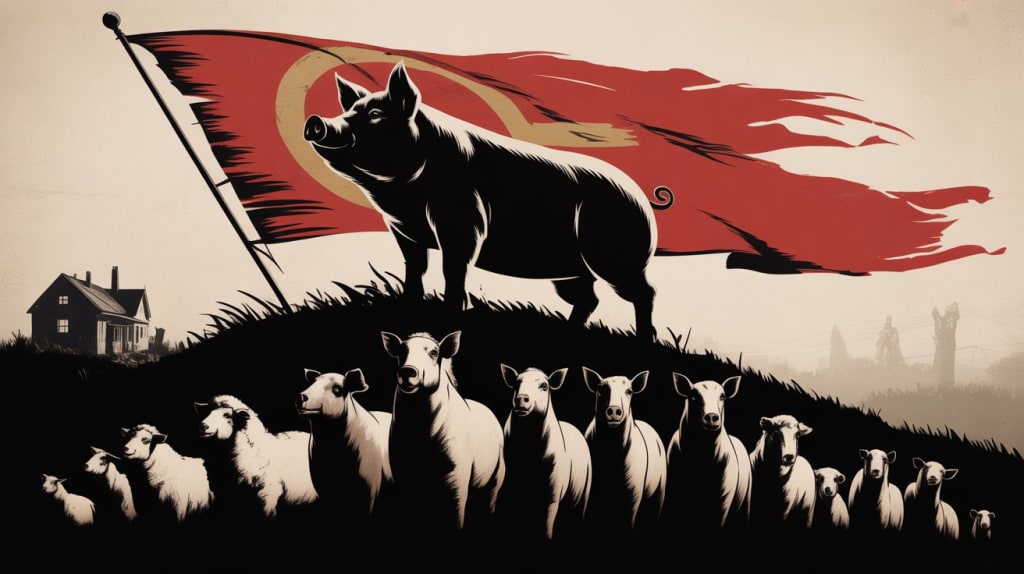
The winter on Animal Farm is harsher than ever, and the animals are suffering greatly. Food is scarce, and the cold cuts deep into their bones, but Napoleon’s regime continues to press on. To maintain appearances and maintain control, Napoleon uses propaganda, deception, and brute force to suppress dissent and silence the truth.
The animals live in constant fear. The farm is covered in snow, but tensions inside the barn grow like an unseen storm. The harsh realities of famine and hardship are painfully at odds with the rhetoric of prosperity and progress that Squealer spreads daily. Squealer, a master of persuasion, lies to hide the truth about the food shortages and the growing inequality among the animals. He convinces them that conditions are better than before and blames any failures on external enemies or traitors.
The animals become weaker and more exhausted, yet they work harder than ever to run the farm. Boxer's dedication remains unwavering, but even his great strength begins to wane under relentless pressure. His famous slogan, "I will work harder," echoes across the fields, a tragic anthem of hope and despair.
As rumors of sabotage and Snowball's plots spread, Napoleon's sense of urgency deepens. He tightens his grip by ordering more executions. The animals accused of collaborating with Snowball are caught and shot by Napoleon's ferocious dogs, their blood staining the snow in the courtyard. These public executions are intended to incite terror and suppress thoughts of rebellion.
The animals are shocked and terrified, but fear keeps them silent. They dare not question the leadership, even as their comrades are taken away. Squealer justifies the purges, claiming that the traitors deserved their fate and warning that any disloyalty will be met with similar punishment.
Meanwhile, the Seven Commandments, once clearly painted on the barn wall, have been changed again - this time more boldly. The commandments change to suit Napoleon's whims and the pigs' growing privileges. For example, the rule "No animal shall kill another animal" is rewritten to "No animal shall kill another animal without cause," giving the pigs a scapegoat to justify their death sentence.
The pigs increasingly enjoy luxuries once reserved for humans. They sleep in beds, drink wine, and even engage in trade with neighboring farms, which was previously forbidden. Squealer manipulates the animals into accepting these deceptions by claiming that these practices are necessary for the farm's survival and that only pigs understand the intricacies of leadership.
The animals struggle to remember the original ideas of animalism. Their memories are clouded by propaganda, exhaustion, and confusion. The song "Beast of England" is banned because Napoleon claims it is no longer needed - the revolution is complete, they say, although the animals do not feel free.
Secretly, Napoleon trades with a neighboring farmer, Mr. Frederick, who is known for his cruelty and cunning. This alliance shocks some of the animals, but Squealer convinces them that it is necessary for the economic survival of the farm.
The chapter ends with a chilling scene: the animals watch as pigs walk on two legs, carry whips, and behave like the humans they once cast aside. The Seven Commandments have completely disappeared from the barn wall, replaced by a single commandment:
"All animals are equal, but some animals are more equal than others."
This bitter irony marks a complete betrayal of the original promises of the revolution. The animals are stunned and disillusioned, unable to resist the new tyranny that has replaced their hopes for freedom.
Continue Reading the most interesting chapters which include something amazing.
About the Creator
Echoes of Life
I’m a storyteller and lifelong learner who writes about history, human experiences, animals, and motivational lessons that spark change. Through true stories, thoughtful advice, and reflections on life.
Keep reading
More stories from Echoes of Life and writers in Fiction and other communities.
Animal Farm (George Orwell) - Chapter- 6 (Novel)
As Animal Farm's second year of freedom begins, the animals face new hardships and challenges. The winter is harsh, and food supplies are dangerously low. Nevertheless, Napoleon insists that work on the windmill must continue without a break, promising to lighten their burden once it is completed. The animals work harder than ever, often toiling from dawn to dusk, but their rations are reduced and the cold bites harder. Boxer, the hardworking carthorse, adopts his new maxims with even greater dedication: "I will work harder," and "Napoleon is always right." His strength and passion become the backbone of the farm's efforts, but even Boxer begins to tire.
By Echoes of Life7 months ago in Fiction
The Missing Ingredient
The first time I saw her, she was wearing a velvety, red ribbon in her hair. She carried a small leather backpack everywhere. She searched the forest by turning stones, checking beneath shrubs, listening to the wind as if it might carry an answer.
By Imola Tóth4 days ago in Fiction
Diaries to Nietzsche
Quotation from Friedrich Nietzsche "He who wrestles long with monsters should beware lest he himself become a monster. And if you gaze long into an abyss, the abyss also gazes into you. Man is not destroyed by suffering, but by the meaning he makes of it."
By LUCCIAN LAYTH3 days ago in Critique


Comments
There are no comments for this story
Be the first to respond and start the conversation.