
Cahya and Gemi
A Novel Excerpt

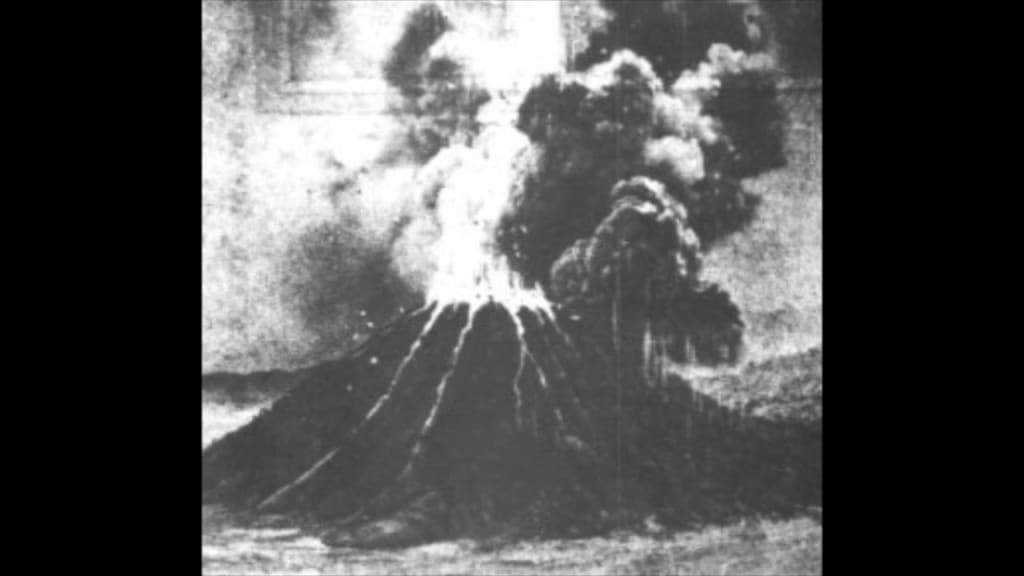
Cahya and Gemi
This is an earlier and longer draft of "After the Apocalypse" which I serialized here at Vocal as well in shorter, easier to bite chunks. Just letting you know.
Raging heat, equatorial heat pressing from all sides and down on the green giant ferns in the green, green forest, silent with stuporous heat. A very small boy, wary with being so small and having few resources on which to depend. He licked his stubby fingers furtively though he looked temporarily satisfied, having found ripe vanilla fruit up a deer path he’d only just discovered. He looked perhaps five, though he was in fact older, malnutrition and the inevitable shyness of the little-cared-for having done their part in the stunting of yet another child.
But Gemi was still a special, a unique child not of this place, out of joint with his locality. His tattered sarong might have been yet more flimsy and worn had he not been shifted to this place by events massive and consequential. Sunsets over Lake Champlain in North America, half a world away, had been impacted by Gemi’s story and his sarong was newer than he otherwise would have had the right to expect.
He had no thought for these matters, not at the moment. His traps; set up to catch the small birds, the leaf lorikeets and paradise flycatchers of the woods, had failed him again. The bitter sweetness of the vanilla flesh soothed his inner churning but it would not give any lasting comfort for his hunger. Still, he could hope that his sister- who was not a sister- had found better pickings thieving at the market. Gemi burped an oddly full burp. He began to walk back downhill toward the village, careful to remember the important way signs so that he could find his way back to the grove, trees laden and full of ripe vanilla fruit.
Sometimes he wished he was one of the People of the Woods, the Orang Utan with their long, hairy orange arms who could swing among the treetops and had much easier access to the ripe and ready fruit up among the flying foxes and the gibbons. Though they lived not far from where he had been born he’d never seen one, or at least he didn’t recall seeing one. Maybe before memories grew he’d spied one from his swaddle, swinging her way along behind the deep brown, luminescent and thoughtful eyes Cahya had described to him when he’d asked her what the Orang Utan were like. She’d seen them a few times back home in Sumatra, but those ones had been almost super-pets, extended members attached to human families. The true wild people of the woods were long wiped out in south Sumatra even in 1885. One would have to journey far to the north away from the crowds of the Sunda Strait, to Jambi and beyond before one could hope to see the Orang Utan in their natural world.
Still, these creatures from another place now far to his west held a strong grip on both Gemi and Cahya as talismans of a lost life, as much a part of their past as the scent of coffee and the sound of gamelin. These other things could still be found in Nusa Tenggara, here on Flores Island, but for the transplanted children the local versions held an artificial taint, like the haphazard public performances of the wayang kulit under the ancient banyan tree that ruled the village square. It was all someone else’s world.
Gemi trumped down a muddy path, the monsoons trickling to an end in the kind of torrential trickle reserved only for monsoons. Humidity blanketed and clung to everything. Even little Gemi had managed to grow a very thin layer of perspiration. Rounding a corner by an old hovel just above the village, he came across his sister- who was not a sister- on her way uphill through the filtering fronds to find him. Cahya said nothing but thrust her small hand under his nose, offering him a jambos fruit she had pilfered from the one-eyed stupid lady. He took it greedily but remembered to thank her. Her welcome was a playful cuff to the ear. “Did you get any birds, Little Monster?” she asked affectionately, hopefully.
“Nothing again, my love, but they are there. I can hear them calling in the bushes,” Gemi hid his shame for not mentioning to her his discovery of the apparently wild, unknown vanilla vines.
“The Crone needs us to help her shut up the stall soon; did you forget it’s her stock-up day tomorrow, Dum-dum?” Once a month the ancient woman who took them in travelled to the nearby coastal town to restock her market stall with bangles, beads, feathers and cloths from all over Asia. She’d previously paid a surly man to watch over her stall on the one day a month she couldn’t be there herself, but four months ago she had decided that Cahya was old enough to begin earning her keep watching over the shop on stock day. Home was a tarp of old sailcloth strung up behind the little stall; bed, a rattan mat on the ground and toilet was made in the cool, flowing river.
Gemi flushed again, he’d forgotten that he and Cahya had important duties this evening and all day tomorrow. The Crone had no expectations of him, partially because he was so small yet and partially because he was just a boy; a subspecies with which she seemed to have no idea what to do, but he felt a heavy responsibility, an attachment to his big sister- who was not a sister. While the Crone allowed him a place to rest, it was gangly, brown-armed Cahya who made sure he always got food. She had saved his life and she kept him alive now that they were safely ashore in Flores. Occasionally, Gemi and Cahya went hungry, the Crone was poor; however, the children usually managed to unearth, or steal, something to eat every day.
Once, in his hunger and childish ignorance, Gemi had snatched a deadly Green Tree snake from an overhanging branch and snapped its neck, swinging the long, narrow body as he brought it home for supper. They lived dangerously on the western edge of a small island among the teeming Indonesian Archipelago under the presumptive governance of Dutch masters- white people, of all things- whom they never saw and who might just as well be the mythical Prince Arjuna and his Princess Srikandi as far as they were concerned …or at least the Prince’s wise servant Semar, beloved of Gemi for his darker skin and small stature.
“Dunderhead, beware the root you’re about to trip over,” and like a golem attending its Rabbi, Gemi abided Cahya in tripping over the root. This was a routine they had played often. The distraction caused by the little boy falling over the banyan root allowed Cahya the chance to nab another two jambos from the one-eyed stupid lady’s fruit stall.
“Ah, Cahya, I wouldn’t have tripped if you hadn’t talked to me just then, I looked back at you and didn’t see the root.” As they returned to the Crone’s stall they kept up a banter around mouthfuls of fruit. Normally, the village’s loosely organized gang of bully-children would have swooped on such a chance to mock the clumsy ‘Rock-Boy’ and harass his sister ‘The Ghost’ but they had already scattered to their various roosts for the day and were unavailable to play the vultures to Cahya and Gemi’s ‘carrion’.
“Doesn’t One-Eye keep account of her fruit?” Gemi asked Cahya.
“I don’t know. What can she do even if she knows some are missing?” whispered Cahya back, they were near the Crone now and wished to avoid agitating her. The one-eyed stupid lady was a friend of the Crone’s.
The Crone smiled down at Gemi in her tooth-challenged manner as she handed him one of the lock-boxes in which she stored her merchandise at night. “Hold this please, Tuan, while I fill it with the ribbons. You are strong enough now to hold up a box of ribbons I hope. I have a treat for you tonight; I bought some pes from Dilap!” Gemi was delighted and deeply surprised. The Crone did try to feed the children to the best of her ability, but as a long-time infrequent eater herself, growing into a nascent senility, she often forgot. The children thought of this as indifference. That she had recalled Gemi’s lust for the sticky, thick coconut paste from Lombok was a surprise. That she had bought him some of the expensive stuff to put on his bread was a mild but delightful shock!
“Thank you, grandmother!” he managed to blurt out.
“You are welcome. Little Tuan,” the old woman smiled down at him. Though Cahya couldn’t stomach the stuff, the Crone loved it almost as much as Gemi and she would help him deal with the rich concoction. It would also give her energy for tomorrow’s travels.
Cahya watched this exchange while she efficiently bundled up the stall, securing the front shutters with timbers from some long forgotten shipwreck. Once again, she pondered over what motive had encouraged this wizened old woman to accept them; so much smaller, so much skinnier and fragile, frightened and still in shock. They were two ragged coastal town children from far away, cast ashore in the market town by the merchant crew who had found them adrift. What did she see in them that Cahya and Gemi couldn’t see?
Without word and after long practice, they turned in the brief dusk to setting up their home for the night beneath the old sailcloth and making preparations for their simple meal. The Crone knew that it was the routine, the regularity of the activity, which had really rescued these two little drifters, these small ejecta from a nearby but distant catastrophe. Soon enough, gorged on the rich paste, they fell asleep.
The old lady left before dawn, working her way down toward the shore of the strait between Flores and Komodo in the company of several others of the village’s small merchants. She had squeezed a tiny living out of life this way for some forty years, ever since her young husband had disappeared at sea.
Cahya knew the routine of the market well. She had the shop set up long before any potential customers wandered by. As Gemi stepped into the stall from his morning visit to the river she reminded him, superfluously really, to keep a close eye on the gang of children of which they were themselves a sometimes-part, hanging around the market. “Kemuning will try to distract you again, Little Toad, don’t be fooled by her eyes this time.”
“I’m not fooled by her anything, Cahya. The last time it was the farting buffalo that made me look away for just a moment. I won’t let a stupid farting buffalo make me stop watching the goods this month!” Thievery was mostly a game around the Crone’s stall and only on the day she was away. The baubles and talismans, mostly Animistic, a few Islamic and a very few even Christian, which the old lady dealt in were of little value or use to the market urchins, they couldn’t easily be resold without the precious ribbons which marked the Crone’s specialty. The ribbons were held in a particular sealed box and only attached at time of sale- a kind of premium and receipt.
It was the food merchants like the one-eyed stupid lady who had the most to worry about from the local children; always hungry, always watching, but bullying the two Sumatran orphans was an amusing side-hobby for some of the gang. The Crone’s monthly business trips to the coast offered them a bright opportunity to harass Cahya and Gemi, getting away from ‘The Ghost’ and ‘Rock Boy’ with some ridiculous trinket was a topic for honourable bragging for at least a week after it was accomplished. The orphans were good at watching over the stall and both armed themselves with stout bamboo sticks with which to swat viciously at questing illicit fingers. As well, Cahya’s sort of friend Wein, who appeared to have some form of vested interest in her, also watched carefully from his usual position at the bird cages. Wein was wiry, fast and tall for his age. His light ‘Chinese’ skin tone made him the target of occasional bullying too, causing him to harbour even greater sympathy for Cahya and Gemi.
The morning rain ended and the sun found its way through the banyan limbs, drying the musty, dank ground where it could reach. Marshanda, the littlest tormentor, stepped out from behind a passing cart and began to tastelessly mime a kind of wayang interpretation of various people being swept away by a great wave. As disgusted as he was, Gemi ignored her until Kemuning walked up to Marshanda shouting, “Imbecile!” pushing the little girl into a steaming puddle. In the moment Gemi blinked to laugh at the tumbler, Susswan; one of the bigger boys and Cahya’s true nemesis, snatched a particular icon from the stall which could be said to only have significance in its utter worthlessness, even to the old lady. The icon was a wooden ora figure in the bizarre shape of a cross, which had proved to be too Animist for the Christian customers and too Christian for the Animists. It was particularly unlovely and absolutely no one would buy it. It had languished on the second shelf for seven years as the Crone had no love, no regard whatsoever, for the ugly thing. But Susswan had pilfered it and Cahya was profoundly tired of Susswan’s brand of foolishness.
“Watch the stall, Gemi,” she ordered as she raced down the road after the gangly thief.
“It’s only that ugly ora-cross thing,” called back Gemi as the remaining children followed Cahya under a low lying liana stretching across a gap between shacks under the massive old banyan. Aside from Gemi not a child was left in the market, the fun was in the chase.
Cahya raced into a gap in the jungle wall which marked the start of a steep trail downhill toward the closest beach to the village. A flash of beige shirt in the distant dusky murk of the forest told her Susswan had waited for her to catch sight of him so she would be sure of the chase. She was fast, but of all the village children Susswan was fastest, she would need to be smartest to catch him. As she jumped over roots and through ferns whose lush green might hide holes or other obstacles she clenched the smoothness of her bamboo swatch. When she caught the thief a weapon would be useful. As she ducked beneath the limb of a young sandalwood tree she heard a chittering like a monkey from ahead and below. She recognized Susswan’s monkey imitation and changed direction without losing her headstrong momentum by whiplashing herself around an almost vertical liana limb.
Just as she released her hold on the vine she heard its brittleness shatter from the force of her little body twisting it. She had no time to be surprised at the explosion of the otherwise solid appearing liana as a series of thumps and flashes of beige and flesh downhill showed that the thief had missed his footing and tripped over a root.
All around her in the still, torpid jungle heat Cahya could hear the crashing and delighted hooting of the other children as they tried to keep up with the new adventure. They were absorbed in their childish play while she was immersed in the deadly serious business of keeping the old lady’s trust, of being worthy of Flores after being flushed out of Sumatra so casually.
Ahead, Susswan came to rest against a moss covered boulder just before one of the many small creeks burbling toward the sea. He was temporarily stunned, shaking his head before leaping up to recover his sense of direction. He saw Cahya bearing down on him with her stick already raised, a vicious anger clouding her brown eyes. He ran his fastest over the first little clearing down the hillside, dust rising behind him from the closely cropped, brown-dry grass. Cahya paused by the mossy boulder, panting and planning ahead as she watched Susswan disappear again into the undergrowth. A parcel of children emerged from the darkness of the ferns behind her, a few batting in irritation or disgust at the tree leeches they’d picked up on their wild chase. Cahya ignored her own collection of leeches, dashing through the same gap between trees which Susswan had used. From above, a thump and a snap signaled another accident as one of the slower children came to a private grief. A laugh from close by suggested that no serious injury resulted.
Not long after re-entering the jungle, Cahya needed to pause again. While downhill toward the beach was Susswan’s obvious direction -he lacked sufficient imagination to create a ruse- his exact destination was unclear. Cahya mentally listed his likely routes and realized she knew a potential short-cut that just might allow her to get in front of him before he made it to the wide open sands of the beach. With his lanky legs she’d never be able to catch him there. To her right an ancient creek had cut a furrow down the mountainside through the fragile pumice; her old ally, and vegetation had been suppressed by the raging flows, almost waterfalls, of the monsoons. It was terribly steep and she’d never tried to descend by that route at a run. A fall could be catastrophic, the sharp pumice and the precipitous descent made the gully a better place to climb than to go downward, but it would get her to the beach ahead of Susswan if she was careful…, and lucky.
Below to the left she caught a flash of Susswan’s light earth-coloured shirt flitting frantically between the undergrowth of the forest. For the shortest moment Cahya was confused by his haste; surely he must know she wasn’t on his tail, and then she spied a quick flash of something brick red and moving fast along the same path as the thief. Puzzled, she looked harder and now heard the crash of a body moving recklessly through the jungle growth, dodging and weaving at a breakneck pace.
With a start she recognized Wein, but who was watching over his birds? The rush of sweaty pleasure over the discovery of an ally with her in the jungle raced back to oppressive frustration as she watched him perform an unintended somersault on a hump in his path. From a tree above the spot where Wein thumped hard onto his back a great hornbill honked its eerie echoing note in agitation and flapped its vast wings into the air. Silence where her friend had tripped, then a quick rustle as he shot back onto his feet and tore off in headlong pursuit of Susswan.
From her vantage point Cahya could interpret the hard determination which flashed across Wein’s face; this was about more than the stolen icon. Cahya thought of the day three weeks earlier when a stone thrown hard at him by Susswan’s older brother missed Wein but killed a parakeet in one of his cages. She nodded knowingly to herself, reached down to twist away and pluck an engorged leech from her calf and began a semi-controlled tumble down the dangerous gully.
Perhaps sixty yards behind Susswan, Wein arrived at the base of a steep climb over a prehistoric lava flow which had long been subdued by the life growing all over it. Still, it was this barrier which most often convinced villagers to leave off any thought of going all the way to the beach to escape the thick air of the forest surrounding the village. The discouraging trudge up the hill after the strain of the downhill mile-and-a-half hike left distaste for the walk to the beach in almost everyone. The potential danger on the beach didn’t help either.
Wein glanced up to see Susswan near the top of the ridge. At the same time a second squawk from the hornbill caused Susswan to pause in his upward thrust and glance over his shoulder. The out-of-place colour of Wein’s red shirt drew his eye downward. He saw Wein begin his determined push up the ridge and it startled Susswan after Wein’s hard tumble. Of all the other boys in the village, he personally felt his only true rival was Wein. About the same size and almost as quick, it was Wein with whom Susswan had long worked to cultivate a separate peace; an entente of equality at a sort of apex of boyhood power.
But then Susswan had laughed when his brother stoned the bird in Wein’s cage. Watching Wein’s angered fortitude; Susswan realized he felt fear of the other boy. His breath; having been caught up during his pause, clenched in his suddenly constricted throat; however, Susswan was all in by now. He gripped the stupid, ugly icon, a wooden lizard with a hole in its snout where a thin wisp of a forked tongue of straw had once protruded, and cursed the ora for the monster of his nightmares that it represented. Another glance at his pursuer and Susswan turned in his costume of sweat and dirt and leeches and twigs to plow ahead through the undergrowth to the top of the ridgeline.
From below, Wein saw his quarry turn and reach the blue space between trees at the top of the climb. He was surprised at how winded he already felt and brushed irritably at the sweat on his forehead. He was surprised again by the thin, watery blood on his palm as he looked at it. Right, he’d hit his head a sharp blow on a banyan root in his somersault. There was more damage than he’d expected but it was not worth the worry as he shoved his path up the jungle scree, even more determined now than he’d been earlier.
Just before Wein reached the height, a troop of white-handed gibbons whooped down near him from the higher branches and tried to pelt him with ripe mangoes and even a few hard seeds. They too were enjoying the spirit of the chase. Luckily for Wein, the gibbons were moving to keep up with his race through the trees effectively disrupting their aim. Behind and around him Wein could hear the laughter of the human children who could see how he was under attack from the branches above.
His feet did not even touch the peak of the climb as he hurtled over the familiar rise and let gravity help him to gain momentum on the steep plunge down the beachward side. Ahead he saw Susswan just emerging from the woods into the gentle sloping field of sun-parched yellow grass leading to the beach, three hundred yards further downhill. With only a few desiccated camphor trees among the well-cropped yellow grass, almost no obstacles lay between Susswan and the beach. Wein needed to catch him before he made it to the sand. After that he didn’t think he could keep up with the thief in the thick, loose going. Recklessly, he increased his stride.
Susswan was very tired and, having raced over a third of the meadow before the beach, he slowed to catch his breath. Once on the sand a little more energy for a dash would be helpful in escaping Wein. He decided he would put on the dash just before he reached the sand’s frontier, just past the last spindly camphor tree.
Behind him Wein had reached the open grass faster than anyone could have imagined using a sort of run-jumping downhill lope that the children following him considered virtually suicidal. He burst onto the yellow, brittle field much closer to Susswan than expected. Susswan more heard than saw his pursuer. The nearness both startled and horrified him. A quick peek over his shoulder at Wein’s blood streaked face, teeth clenched and red, and Susswan switched his careful jog to a panicked sprint for the beach.
Wein had never been able to catch up with Susswan before, yet here he was making ground quickly. Lungs bursting, bones aching, muscles screaming for respite, Susswan made his last desperate bid for the open beach and relative safety. He was just sweeping past the last emaciated tree when a little brown emaciated leg whipped out into his path from behind its trunk. He was too late to avoid the obstacle. With a lurch, Susswan’s right shin connected with Cahya’s calf and he found himself making it to the beach at last, face first and spread-eagled in the soft sand. A sharp, “Ha!” escaped Cahya as she rose and came to the edge of the turf to confront him.
Winded by the chase and his fall, Susswan rolled onto his back, looking up at Cahya with her small fists planted on her hips, a look of satisfied and righteous anger causing her lips to pout and her eyes to squint. Wein arrived beside her, panting and wiping his bloody forehead with his shirt. To Cahya’s right the steep gully from which she’d emerged well ahead of Susswan slipped from the shadow of the one full and proper cloud in the entire sky. The gully and the cloud seemed to be laughing at the prostrate boy in the golden sand, panting for air.
As the village children began to gather round Cahya and Wein, smaller and slower ones still emerging from the forest’s edge, Cahya raised her bamboo cane menacingly and took two steps toward Susswan. He raised an arm to block the coming blow, holding it there as she paused and looked beyond him with her eyes widening and her mouth falling open in a surprised, “Oh.” Stopping, she pointed past him and yelled, “Ora!” in an almost-scream.
The children of west Flores are, for the most part, fearless little creatures; cobras, sharks and cyclones seldom faze them, but all who have wits hold a special horror for the ora, the gigantic lizards from across the strait on the island of Komodo which often swim over to Flores to hunt. Susswan catapulted from the ground in terror, twisting in the air like an upright cat and landing on his feet facing down the empty beach with his arms raised and his fingers splayed.
Contemptuously, Cahya stepped past him. Not even bothering to honour him with a whack from her switch, she leant down and snatched the little icon; the little ora icon, from the sand where it had landed after being cast from Susswan’s grip after she’d tripped him. She brandished the tiny wooden effigy of a lizard of Komodo threateningly at Susswan and the gathered crowd burst into derisive laughter, for the first time ever laughing with ‘The Ghost’ girl and not at her. To his credit, even Susswan broke into a sheepish grin as he realized the trick; the clever trick, this girl from somewhere else had played on him. She had been planning to hit him with the cane but in gratitude for his honourable acceptance of defeat she merely tapped Susswan ever so lightly on his nose twice with the ora and said, “Don’t ever try to steal from the Crone again, got it?”
Susswan’s grin grew bigger. “I never will, Cahya,” he nodded, making the children’s’ traditional promise sign with his pinky finger. This was the first time he’d ever called her by her real name. Cahya did not miss the significance of this moment.
As will happen, some teasing of the two refugees from Sumatra still took place from time-to-time, but it took on a good-natured reciprocal quality and Cahya and Gemi’s replies were accepted as fair points rather than whinging weakness. Cahya took their new status in stride but Gemi was mesmerized for days by the unexpected full membership within the village ‘club’. He had done essentially nothing in order to earn this new respect so he continued to be haunted by a sense that this; like everything else in his life, could be whisked away from him at a moment’s notice. Cahya did what she could to overwhelm her little brother’s - who was not her little brother- sense of paranoia.
The Crone, their grandmother- who was not their grandmother- was a supportive ally for Cahya. She had been strict and harsh with them at first, especially with Cahya, the girl and older, but she’d begun to soften over the past two months and was becoming particularly prone to spoiling Gemi, for whom she was starting to become aware of a genuine sympathetic affection. Business had improved with the much healthier crops after last year’s world-wide agricultural disaster, providing some essence of disposable income for the farmers and foragers who provided the life-blood of the village community. The Crone had even been able to add new products to her shelves after this latest trip to the harbour town.
When she got there on her travel day she was pleased to see that not only was the monthly cargo/mail packet in the harbour but there was also an enormous (at least to her) steel ship. It was the first true steamship she’d ever seen, with its funnel spewing black coal-fired smoke into the tradewind bottled up within the confines of the steep hills around the harbour. It was a trade ship from far off Macao, full of never-before-seen treasures and trinkets and cheap costume jewelry all the way from Portugal. The steamship provided a new economy of scale never before seen on Flores in 1885. She’d been able to purchase an astonishing supply of stock for an astonishingly small investment. The Portuguese sailors had taken kindly to her as well, and some of the young, pretty European men even flirted with her to the point of a startling reminder of her long dormant libido.
Nevertheless, and in spite of her inevitable romantic frustration, the Crone was left in such a positive state of mind from her expedition that when Cahya shyly asked her for the ugly old ora icon after the Crone finished paying off the three porters she’d hired to help her get her product to the market, she’d merely laughed and picked up the little wooden lizard effigy, handing it to Cahya without hesitation. No one told the old lady of the children’s battle earlier in the day and she was unaware of the new relevance of the old, shelf-worn thing. “Thank you for taking this away, Little Burden, though I’d prefer it to leave the household altogether so I would never have to look at it again!”
“I can grant you that wish, mam. I owe a debt of thanks to the boy at the bird stall and I think he will appreciate this trinket. He seems to have a strange liking for the buaya darat from Komodo.” Cahya’s almost leering grin left the Crone off guard and she briefly considered taking back the icon before remembering her own feelings around the Portuguese boys earlier. Cahya might just be starting to develop some interest in boys beyond making them victims of her pent up anger. The Crone said nothing as she watched the young girl put the ora away among her meagre bag of personal possessions. In any case, the old merchant liked the bird-boy, even though he looked vaguely pale and Chinese to her ancient eyes.
Cahya gave Wein the little wooden ora. He was more than surprised by the unlooked for gift. The latent friendship between the two merchant children was fostered and flourished in their growing mutual respect. For his part, Wein’s motivation in chasing Susswan so passionately and tenaciously continued to puzzle him just as much as it puzzled the other children. He’d begun to lose the sting of watching Susswan’s brother kill his parakeet, which had after all been an unintended, accidental outcome of much older arguments over a prime toiletry spot at the riverside. He liked Cahya well enough, but he didn’t think he had a crush on her; in fact, he thought she was just a little bit ugly and her spindly limbs gave her an unbecoming spidery essence which left him admiring her unexpected physical strength, but nothing more.
He thought maybe the mercantile link, the protection of salable property, may have motivated him in the pursuit, but now he was a little uncomfortable with that notion too. He had frightened Susswan, the other children and himself with his zeal; his apparent bloodlust. For the moment, and with the exception of Cahya, he found himself even more apart from the village gang. If he was a pariah though, Wein was a respected and feared pariah. His caregiver Aunt had bandaged and tended his forehead but he would always carry a scar of the chase, a life-long badge of honour.
Some weeks later, and after numerous private trips to the lost vanilla grove in the hills, Gemi’s guilt finally overwhelmed his greed. He explained to Cahya the real reason his bird-catching expeditions were proving so futile lately. She laughed at the rueful expression on his tiny face. “Dunderhead, you can get permanent skin damage from those vines if you don’t know how to properly pluck the fruit!” She grabbed his forearm and examined its underside. “Look here,” she pointed at a parallel pair of skin lesions, “the sap has got you. Isn’t it itchy?”
Gemi looked shy. “Is that why I’m so itchy there? I thought it was mosquitoes getting me at night.”
Cahya laughed once more. “I think the Crone might have some lotion for that. If not, I know for sure that Susswan’s mother has some she will let you use if you ask her while flashing your big eyes and those ridiculous eyelashes at her, she’s a fool for all boys your size!” Gemi’s mouth formed a silent ‘Oh’, marveling at this new found alliance with the other village children; and by proxy their mothers.
“Show me your vanilla grove,” Cahya ordered her little brother- who was not her little brother. It was a rare sparkling day, the high clear blue of the sky unimpeded by the usual fug of humidity. All day felt almost as fresh as dawn so that the climb uphill to the hidden grove was easier than usual. Still, the jungle was curiously quiet for such a brilliant day. For a brief while Gemi and Cahya pretended to be the Orang Utan swinging through the low branches, but the quiet oppressed them, or at least subdued them. They soon fell silent as they trudged the old deer path upward to an open blue patch where the grove sat.
The grove had been an experimental station planted by a failed Dutch farmer a decade ago, so the vanilla vines were suspended from a variety of different and sometimes odd types of trees strewn about a clearing in the jungle. The early difficulties in pollinating vanilla flowers had defeated the European family so that they had long ago moved onto coffee farming on Java. The village had forgotten the vanilla grove as well. It hadn’t quite flourished but somehow it had survived and Gemi had reaped some reward from the long-gone farmers’ efforts. However, he was not the only one who’d profited.
Gemi had plucked most of the low-lying fruit from the path side of the orchard so that he’d begun to climb the trees to get at fruit higher up. As it turned out however, the higher fruit was much sparser and nowhere near as tasty. The rest of the grove grew on the other side of a weathered knob of land which had probably once been a rise of land between hillsides. Gemi was afraid of the far side. He couldn’t exactly explain why he was afraid, though he knew it had something to do with the rise’s resemblance to the place where the inundation had caught him in the before time. He’d been little more than a toddler at the time and his words still failed him in any effort to describe his first home.
He would have nothing to do with the other side of the grove so he contented himself with the fast dwindling pickings where he felt relatively safe. His feeling was so strong that Gemi made Cahya promise to not walk up and over the rise either. He hadn’t noticed the questionable veracity of her promise amid her fulsome praise for his discovery of the vanilla bonanza.
Cahya knew that the other side of the field would offer much better picking. She gradually worked her way to a position behind Gemi out of his immediate line-of-sight and a little further up the slope than his location. She waited for Gemi to lapse into the practically complete absorption in his task she knew from familiarity with him. In time his sense of purpose and his dominating, demanding stomach fully distracted the little boy. Cahya began to work her way to the top of the knobble of land.
The bump was actually so slight that she didn’t even realize when she passed over it; it only appeared imposing from below and to smaller children. The original farmer himself must have barely noticed the thing. On the other side was an impressive crop of very low hanging ripe fruit and vanilla orchids blossoming in scattered places among the host pole trees. Cahya harvested some of the slimy fruit, licking her thin fingers clean, but then she realized that the grove on this side of the orchard led into a declivity which hid all but the tops of the various host trees on which the vanilla vines were growing. Shooting a quick glance toward Gemi to be sure he was adequately distracted, she allowed her curiosity to lead her toward the lower ground on the far side of the clearing.
The air held the peculiar pungent smell of ripe vanilla seed and there was a musky something else which seemed familiar and yet unfamiliar. A quick burst of adrenaline swept through Cahya’s limbs as she felt both a fear and an excitement rush over her. What was this? A few more steps and she found herself unsure what to feel; what to think.
In front of Cahya were tiny people, miniature women to be precise. There were two of them and one was on her knees poking at an orchid with a stem of razor grass, lost deep in concentration. The other stood beside her with her back to Cahya, seemingly intent on whatever operation the kneeling woman was performing. After an apparently satisfying moment, the standing woman reached up and used a piece of bamboo string to tie the orchid’s vine to a slim branch of its pole tree. What startled Cahya most was that the totally naked woman; pendulous breasts elongated and swaying, had to stand tip-toe and reach up to secure the vine to the branch. When she lowered herself to her heels again the orchid hung at Cahya’s eye level.
An in-rush of sudden breath from Cahya made the standing woman start and the kneeling woman hop to her feet. Both brown figures turned to look up at the skinny little girl, dressed in rags. Their mouths hung open for just long enough for Cahya to be shocked by their features. They both released a guttural, elemental yell before high-stepping quickly and silently into the forest, as if melting into the fronds and undergrowth.
Cahya blinked. She already doubted the wonder of what she had seen. What she’d seen was frighteningly, weirdly familiar yet alien. The two miniature women were totally naked with strangely lengthy forearms which appeared to hold their palms decidedly forward in odd supplication. Their feet were absurdly large for their height; bringing to mind ducks’ feet to the flabbergasted Cahya. However, the truly startling aspect which shook Cahya and burned into her consciousness was the women’s faces.
The little people’s mouths gave an impression of protruding like; yet not like, the lady Orang Utan she had once been lucky enough to see up close. If one were to cut an eighth of the sphere of a small coconut and place it over a toddler’s mouth she just might create a similar profile. This mouth protrusion gave their lips an illusion of thinness that was after all false in that, on a flattened ‘normal’ face the lips would have been full and lush. The alien quality of the convex mouth was enhanced by the apparent absence on both tiny women of any notion of a chin. Their lower jaws receded back toward their throats with a few even less expected lengthy black chin hairs scattered along the recession. Between two bright and incongruously pale eyes extremely broad, unnaturally flat noses bore nostrils which imitated a permanent threatening rage. Yet Cahya sensed no threat from the poor creatures. In this they reminded her of nothing more than the terrified and falsely aggressive expression Gemi would affect when he felt threatened by something bigger than him.
The two women’s heads were miniature enough to begin with, but the exaggerated slope with which their foreheads receded over their skulls called to mind the monkeys which harassed the fruit stalls in the market. Something in the structure of the little people’s arms and shoulders made them look like they were performing a permanent noncommittal shrug at the universe even as they’d been absorbed in their task among the vanilla orchids. When they’d rushed off their thick legs and fantastically long feet had required them to lift their knees drastically high, yet for all that, they had swiftly and silently melted into the forest. They had also permanently burned their essence, their existence, into Cahya’s awareness, underlined by the eerie tingle of out of place otherness which remained with Cahya for the rest of her life.
She stood enraptured, frightened, charmed and bewildered. A hoot from the other side of the orchard recalled her to this world and the brother- who was not a brother. What would she tell Gemi of all this? She found him a little disappointed in his meager harvest of fruit. Instantly, she decided to not tell him; at least not yet, about her strange encounter. Cahya reasoned, rightly, that Gemi would want to chase after the miniature adults so that he could see them for himself. This idea looked both fruitless and wrong to her. She almost instinctively felt a desire to leave the tiny sprites to their mysterious, maybe impossible, forest world. She might tell Gemi someday then again she might not; however, she did know someone she felt she could talk to about the little people.
Cahya shrugged off Gemi’s disappointment over his poor pilfering; he didn’t know that he was pilfering anyway. She reminded him of the glorious rendang they would get to eat on Thursday; a village feast day. Taking the little boy’s -the after all not so little boy’s- shoulder, she guided him back toward the path to the village. On the way down there was no talk, or even thought, of the vacant bird traps. Gemi felt it would be a while before he would return to the secret grove after this latest poor reckoning. He’d long since lost interest in trying to catch the tiny songbirds.
Cahya finally found a chance to talk with Wein on the night of the village feast. Several of the wealthier merchants had combined resources and put on a display of whizz-bangs and colourful rockets which had scattered the feeding fruit bats and roused the diurnal birds. It was the most beautiful thing Cahya had ever witnessed; in keeping with the meaning of her name, ‘one who is the light in darkness’. The beautiful magic of the rockets’ chemistry so soon after the eerie magic of the little woodland folk filled her heart and she simply couldn’t retain her secret any longer. She grabbed Wein by the hand, not even pausing to reflect that it was the first time she’d ever touched him. His palm was softer, suppler, than she would have expected. Amazed, he followed her to a pair of seats on the quiet side of the ancient central village banyan.
“Is everything okay with you, Light?” Wein had tentatively begun to use this derivation of the meaning of her name as a familiarative after she’d given him the little ora lizard icon.
“No, all is fine, Wein. Wasn’t the skyfire display a wonder?!” He nodded his agreement. He found he perceived her as less ugly lately. She dashed right into her story, not wanting to be sidetracked by these uncomfortable new feelings around Wein. “I saw something the other day, I saw something very strange up the mountain.” He listened more attentively than she knew she had any right to expect, considering the bizarre nature of her tale. When she was finished with her careful description of the strangeness of the people, the experience of them, he sat for long seconds staring in the firelight at a gnarly root of the great tree pushing through the ground near his foot.
Cahya held her breath, fearing reproach, mockery, ridicule. Instead, Wein raised his head suddenly though without looking at her. He looked off into the darkness of the village. “Light in the Darkness, before we talk more about these… these little ones, I need to ask you something. I don’t know that you’ll care to answer me.” His careful wording hinted at many rehearsals and abundant practice.
“Maybe I need to talk with someone about it anyway,” Cahya prompted the boy.
He gulped, “What really happened to you that day?” There was no need for him to elaborate.
Shyly this time, she touched his hand again. “Yes, I need to talk with you about it my best friend, but it isn’t a story I can make pleasant in any way.” She lifted her feet to her seat and continued, “First, what do you know about it?”
“All that I know of it is that you lived nearby to Krakatoa and you are the only survivor from your village.” Wein looked almost ashamed of the boldness of his statement. He added quickly, “That’s all I know…, except Gemi of course. I would like to know who he really is too, if I could. I don’t disbelieve that you found him afloat on the surface of the sea on top of floating rocks, though I can’t understand it; only, start from the beginning please, Light. Did you have a family in Sumatra?”
“Of course I did, silly! How could I not have a family?” She took her hand from his and playfully cuffed at the long bangs he was growing over his head wound. She paused and a brief pinched expression crossed her face before she pressed on. “I had two younger sisters and an older brother. My father was a fisher but he was in town that morning. No one was away. The volcano had been shaking us and burping ash for days. Fearful signs were everywhere. People didn’t know what to do. My town was much bigger than this village; many thousands of people lived there. You didn’t get to know everyone there like you do here.”
An unrelated memory drew a smile across her face. To Wein’s relief it remained in her eyes for a few moments without fading as she described the provincial fishing town on the Sunda Strait where she used to live. It was a great way up a narrow inlet off Lampong Bay between high hills. The town had several markets and an old section which always smelled of incense and Cahya’s mother. That’s the area where Cahya had lived. It was a useful and storm-protected location for the fishery so the Dutch had built a concrete processing plant at the harbourside. The hills above the town often bore berries and that’s where Cahya had gone with her brother Sartono very early that morning, a breakfast of hill berries would give them a good start toward collecting more berries to bring home.
They climbed into the hills on the north shore of the inlet as that’s where the ripest harvest would be. From up there you could see the pointy main peak of Krakatoa to the south beyond low islands, away in its corner of the Sunda Strait. Beyond Krakatoa you could see other high conical peaks in the distance, some also smoking though not as boldly.
Before Cahya and Sartono had left at dawn earthquakes shook the town, but there had been many of those recently. In the regular business of work and gathering food people had become accustomed to carrying on despite their fear. Cahya and her brother climbed the hill paths looking for the juiciest berries. They were just finishing their breakfast, about to start gathering in earnest, when a very different sound, which Cahya described as a mighty ‘pop’ by putting her index finger inside her cheek and rapidly pushing it out of her mouth, caused the two of them to simultaneously look up and south at the peak of Krakatoa. At that instant the mountain vanished in a flash of something very much like lightning followed by black billowing clouds racing toward the sky. Cahya and Sartono were terrified. Dropping their baskets they fled down the path back to town. Beyond the southern islands Krakatoa seemed to be going completely mad. Through the teeming thick black clouds flashes of red pulsed like angry sword wounds. The pyroclastic flow spewed outwards.
It was some twenty minutes down the hill before they broke into the first clearing opening out toward the town. They raced across the field, if anything even more panicked than before. From sea-level they could no longer see Krakatoa amid its ash cloud, but they could feel its shaking, they could hear a constant roar and they could see the southern sky so quickly filling with the dread blackness. Strangely, they could smell ash mingled with the tangy, salty mud of a low tide.
Sartono stopped suddenly and Cahya collided with his back. He turned very quickly and began to push her forcefully back in the direction from which they’d only just raced. He yelled to Cahya to run- the water- but that was all he had time to call. It was the last she saw of him. A surging wall of brown and white much taller than the biggest buildings was moving impossibly fast up the inlet toward the town, toward them. There was only time to panic and run a frantic, pell-mell, desperate run against all hope. As she turned, out of the corner of her eye she saw the gunboat Berouw fly past her toward the Brazilian rubber trees planted at the edge of the forest. The Dutch warship slammed its keel down hard from an impossible height and Cahya remembered no more as black roiling water hurled her into the treetops along the Koeripan River.
When she awoke from her stupor, Cahya found she was bruised but unbroken at the base of a rubber tree. Puddles filled with all manner of debris surrounded her. Many of the smaller trees had been smashed to smithereens by the giant wave. There were bodies too, though she didn’t recognize anyone familiar. In any event, smashed faces frequently negated any hope of recognition.
Cahya could tell Wein very little about the next few hours as she stumbled, stunned back through the tangled wreckage of the wasteland that had been her hometown. A few others, a pitifully few survivors, wandered with her. No one would have claimed to know what she or he searched for as no one wished to find smashed loved ones or friends. Hope for survivors in the rubble and waste-water seemed beyond foolish. In her daze she stumbled through the already reeking humidity, moving in a shade cast by her own mind. The sky itself remained black with the effulgence of the angry volcano, raging and fuming far down near the bottom of Lampong Bay, yet nowhere near far enough away from the devastated town.
A fresh layer of grey, glassy ash began to cover everything around Cahya. Fireballs burst skyward from Krakatoa intermittently, flashing through the unnatural daytime darkness. Flaming pumice fell, setting fire to any exposed wood or thatch it found. Great globs of burning rock plummeted from the boiling ash clouds above.
Yet Cahya wandered the town wanting and not wanting to find someone, her mother?, Sartono?; a familiar face among the wreckage of her life. As she stumbled along another, even louder explosion shattered its way through the constant din. Thicker red fire and black ash filled the sky where the volcano stood. Something, some guiding instinct, told Cahya to run once again for higher ground as the earth beneath her feet shook and the water in Lampong Bay again seemed to race away from the shore. This time the sea-wave slammed her much further along into the trees. She was dashed against the top of a tall coconut tree and managed to tie herself in among the palm fronds while the sea receded, pulling away the remains of her town which it had only just thrust into the forest.
Too stunned, too undone to do anything else, Cahya remained in her treetop nest nursing the bruises and contusions from her many collisions during the latest tsunami. She found she hadn’t the energy to climb down the long curving trunk of her tree, jutting from a sandy bank out over the Koeripan River. She told Wein about how she’d felt blasted; emotionless after the deluge, only an otherworldly cold settling over her and suffusing the sunless atmosphere.
She stared shivering atop her tree at the distant peak of Krakatoa, once again visible in the light of its own hellfire amid the gloom of its halo of ash. A shocked tree rat joined her, unafraid of Cahya, a kindred spirit watching the apocalypse unveil. She couldn’t tell how long they sat there peering south at the unleashed god, but it felt like hours in which they were the last two souls alive. The rat was gravid with the next generation and Cahya felt a sudden urgency to keep the expectant mother from harm. Just then the air seemed to slap her and her lungs felt squeezed. The entire horizon to the south appeared to be obliterated by a monumental red flash followed by a vast explosion so much louder than the ones before it. She thought she felt the roar more than heard it. That same roar would eventually travel far enough to be heard on the other side of the Indian Ocean 3,000 miles away on the island of Rodriguez south east of Madagascar, Africa. In the dense pyroclastic wall of its own substance blasted thirty miles high into the very stratosphere, Krakatoa disappeared. The mountain; the island itself, was literally gone.
Cahya didn’t know this, but she did know what to expect from the sea. She renewed her frond bonds to the tree and without asking permission reached over to clutch the stuporous little rat to her breast. After the blast she was able to hear nothing. The last she could remember of that horrid tumult was the feel of the rampart of air pushed forward by the onrushing mountain of water, the smell of the sea infused into the sky and the briefest sight of the great steam-gunboat Berouw once again in flight high above her head.
Her next memory was of waking still tied into the fronds of the palm tree, afloat in a netherworld of debris from her old life and out of sight of any land. The sky was still black with low ash clouds, as was the surface of the sea. Clumps of rock, the aerated and suddenly water-cooled pumice which had fallen from the sky, floated incongruously among the flotsam of her town; stools and planks, baskets and linen, thatch-work and parts of the people she had lived among. A withered forearm protruded from a pumice raft with which it had been fused. A headless torso floated chest up amid the wreckage of the police station.
Frantically, Cahya looked about her for her rat friend. Pointlessly she squeaked a call from her rasped and burnt throat which she herself couldn’t even hear, still deafened by the volcano’s final signature roar at the world. Finally she saw the tree rat alive at the other end of the palm trunk, sitting on the carcass of a dog. The dead dog was entangled in the twisted roots which were still encrusted with the dirt of the tree’s riverside perch, now joined by masonry like pieces of the pumice which seemed to be everywhere, the new world made from the old.
In time Cahya gathered in food from the detritus. Carcasses were everywhere but she ignored the dead land animals except for occasionally pulling one alongside for the voracious pregnant rat. Dead fish were abundant and she ate a few but largely she survived on the grey-ash covered fruit which drifted among the pumice fields. An entire crate of durian was within easy reach on her very first morning. The endless pumice provided an unending supply of brittle but sharp tools for defeating the rind of any fruit and a particularly resilient pointy piece allowed her to hollow out holes in her coconuts in order to get at the water within. Her new world was an overcast expanse of grey floating rock punctuated by the smell of corrupting flesh and brimstone. She wondered over the stories she’d heard of the Christians’ version of hell.
On Cahya’s fourth morning on her tree she was admiring the rat’s newborns in a thatch nest she’d fashioned for them when a distant squeak came to her attention. Her hearing was only just returning to her but the overall lack of sound in the flat wasteland meant that this was the first real noise she’d heard since Krakatoa had proclaimed its decision to wipe itself off of the Earth. She looked up to see, not a hundred yards away as she expected but perhaps a dozen feet away, a tiny grey figure standing on the pumice and waving to her. She was amazed. The pumice had proved unable to support her negligible weight so the person standing on it must have been light indeed! She gestured and the child, for child it was, began to hop precariously from large chunk of buoyant rock to large chunk of buoyant rock. Finally the little boy; she could now see he was a boy, little more than a toddler, made a stomach-turning leap over open water and caught a trailing frond of Cahya’s tree. She pulled on the frond until she could reach his free hand. The touch of another living human nearly unraveled her will to live as it shattered the rhythm of those mesmeric days at sea, but the little boy climbed close to her, clinging desperately. He curled up and thrust a clean thumb into his mouth, falling immediately into a deep, abiding sleep in her lap, his trust and company tapping a well of love she hadn’t known was within her.
The tiny boy remembered nothing. He didn’t know where he was from. He didn’t know who his people were or even his own name. He spoke a fluent if childish Bahasa with a slight Javanese twang that suggested Anjer to Cahya, he did know that he’d lived in a bigger town, not a village, but that was all. He had awoken on the moving mattress of frail stone and was pitifully thirsty and hungry by the time he’d found Cahya on her floating oasis. Though he seemed frightened by it, he made a quick and respectful alliance with the tree rat and her miniscule family.
Though she called him ‘boy’ for the first few days, her affection for him and dependence on his company caused Cahya to eventually label the small creature ‘Gemi’ , the androgynous name given to newborns of challenging birth which means ‘uncertainty’ or ‘towards an unknown future’. She’d always liked the sound and meaning of that gender-fluid name. For his part, and out of lack of alternative, Gemi accepted his name as an honorific even though he had a vague idea that ‘Gemi’ was a girl’s name. He knew that the name was an honour as the rat was still ‘rat’ in spite of all she had come through at Cahya’s side, and her hairless offspring had not graduated beyond being ‘the babies’.
Very little of note happened on the nameless days afloat amid the putrescence and decay of the old life. Once, a large shark split the surface and fed off of a dead mule floating nearby. It tugged at the rotting flesh almost laconically, apparently bored by the superabundance of food available in this new life under the ceiling of pumice. Then it practically wallowed away, if something as lithe as a shark could be said to wallow. Another time, a tern lighted not far off and began to peck at something which looked too much like human flesh. Cahya had to distract Gemi with the project of opening one of their last coconuts wide enough to get at the now precious white flesh within.
Edible, potable resources dwindled. Somehow the sun contrived to burn through the pall of high ejecta floating in the stratosphere and the air finally returned to being warmer than the sea around them. Cahya began to worry for their prospects and regretted the name she had given to Gemi. She need not have fretted.
After weeks without sight of another living soul, the curious and novel chug of a labouring steam engine came huffing over the mattress of pumice. Gradually a perahu hove into view from the direction of the setting sun. The astonished crew, traders from Aceh in the far north of Sumatra, pulled the emaciated living skeletons from their log perch among the endless discard of bleached skeletons afloat and sometimes fused with the eerie floating rock material. Their wonder that two small children could have survived amid such universal death left them shy and brittle with Cahya and Gemi. No one protested when Cahya returned to her log briefly to gather the mother tree rat and her brood, bringing them to join the unwelcoming company of the boat’s own resident harbour rats.
The traders’ first landfall was in Java but they could find no suitable place to leave the children; none these fathers would have cared to inflict on their own children let alone these starvlings, so the children remained with the perahu for a while longer. Realizing the sea life wasn’t really calling to her tree rat, Cahya found the time to carry her old friend and her family into the woods beyond the harbour town and place them at the base of a hopeful looking ancient banyan. A simple “Thank you,” was her parting word to the tree rat, already busy carrying her young into a crack in a magnificent root of the great tree. After seeing the last baby safely away, Cahya didn’t look back while returning to Gemi and the trade-boat.
The town where they landed on Lombok was much the same, if not worse, than their Java stop, but the captain had high hopes for Flores and it was specifically the Crone with her trinket-trade which he had in mind as a safe new home for the children. He recognized the signs of silent trauma in them and felt that a quiet, sensible household might be on offer from the old lady, who he knew had suffered from too many traumas of her own. He also hoped her gentle sense of humour would act as a salve for their burnt spirits. That there was no point returning the children to the devastated shores of the Sunda Strait was a given for which no argument had been forwarded, even from the few government officials he’d been able to locate and corner on the subject.
The Crone had been hesitant at first. Looking at the ragamuffins, she’d felt that she lacked the resources and remaining energy to give them a good home. The way in which they silently watched her ponder them combined with a subscription donated by the kindly crew finally convinced her to try, provided the captain looked in on his return visit the next year. Though by the following year she’d long since settled on raising Cahya and Gemi herself; the captain and crew failed to return to Flores. It was not unusual and no great surprise as the perahu had been heading east into the dangerous world of Timor and the New Guinea coast. The Crone and the children couldn’t help being saddened over the crew's loss, however.
“You know everything else,” Cahya shrugged at Wein. “If you don’t believe that I found Gemi floating on rocks you’ll just have to not believe I saw these tiny grown-ups growing vanilla.” She raised both hands palm out toward Wein and lowered them to her knees in a gesture of defiance and certitude.
He’d sat watching her throughout her story, occasionally quietly encouraging her to continue with his nods and sympathetic facial expressions. Wein had already asked some of the coastal trade sailors he met in the town about these improbable floating rocks. Most had seen them with their own eyes and a few could explain the unlikely mechanics with which they had been forged. Inclined to believe the very business-like, practical Cahya, he’d only waited for a suitable moment in which to press her for her story. He’d wished to hear the details of the Sumatran children’s harrowing experience first-hand, to eliminate the chaff of innuendo and lurid invention. He was satisfied.
In being satisfied with Cahya’s Krakatoa story he found he had to be satisfied with Cahya’s little people story as well, though the notion of fairies flitting about Floresian forests repelled his practical nature. Out of respect, he told her so. “I believe you saw these ‘little humans’ in the jungle, but I hope you don’t expect me to believe they’re magical or something. I love the wayang, but only as a story, I can’t accept that Semar’s cousins are wandering around back there waiting for Arjuna’s return!”
Cahya chortled, “Oh, these weren’t heroes or gods, Wein; they were just small…, very small and strange looking human beings. They were people.”
“But why has no one else ever seen them? Are you cursed to keep having wild adventures all of your life, Light?”
Cahya blanched at this thought. “Praise be to Allah, I hope not!” She wasn’t a devout Muslim by any degree so the force of the prayer hit Wein double-fold. “The little people only frightened me a bit, though I admit they gave me an eerie feeling when I was looking at them. It was almost like they knew they were out of place…, or maybe time… I don’t know. I should have called Gemi over to see them, but then, the two of us don’t carry much sympathy among the villagers. I hope you get to see the small women someday, Wein.”
He never did. In fact, it was only a fluke of timing which had allowed Cahya her brief glimpse and no one else among the villagers ever saw the Homo floresiensis people either. The protection left for the little people held strong.
Cahya lost the sense of eeriness they had given her but kept the wonder and hope which seeing the Floresiensis women had provided. For one hundred years she was, and would remain, the only modern human to know from personal experience that another human species still shared the world with Homo sapiens. Over her long and relatively peaceful life she never learned how the events of that precious day came about.
Yet, from the teeming hordes of the reigning champion species among all types of humans, Cahya alone would know and come to fully understand the ultimate truth that, in a vast and now utterly barren universe, Homo sapiens- the lonely ape- was truly not alone.
About the Creator
Roy Stevens
Just one bad apple can spoil a beautiful basket. The toxins seep throughout and...
Keep reading
More stories from Roy Stevens and writers in Fiction and other communities.
A Love Forboding
The chipped stone slope caused unbearable footing. I slid, skirting on my heels. I cast my shield, relinquishing my guard to stay upright. Left with my double-edge and a prayer to the maker, I skated toward my objective. The earthly stubble gave way to solid ground. I found myself restored, a trail of dust in my wake.
By James U. Rizzi3 days ago in Fiction


Comments
There are no comments for this story
Be the first to respond and start the conversation.