

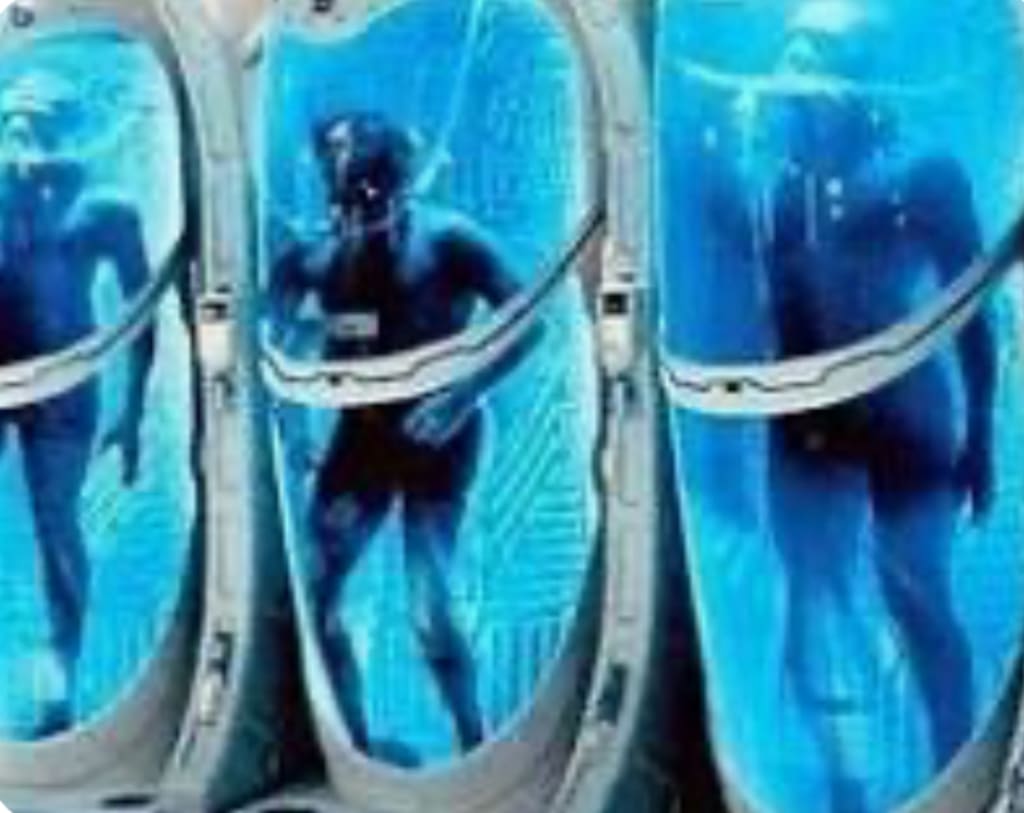
One day out of the blue my father sprung a total mind bender of an idea he had that he wanted to be frozen after his death so that he could come back when they discovered a cure for the disease he was dying from. He wasn’t ready to give up on life yet, and just wanted to hang around for science to catch up with medical discoveries so that he could live longer than early 21st century technologies allowed humans to live. One day, he said, humans will be immortal, we just have to figure out how. And cryogenics is the way to wait until we invent medical technologies to do that.
so obviously my dad was off his rocker, but I let him talk, and he had done his research.
Scientists haven't figured out how to reverse the process, but the milestone has sparked a lot of questions about how reanimation would work if it ever does — and how you would make your way in the world for a second time.
Cryopreservation is quite the process, beginning with a legally dead patient's body being cooled in an ice bath.
Then, a perfusion pump is used to "vitrify" the body, filling it with an anti-freeze solution to protect the cells from damage during the freezing process.
After being slowly cooled to -200°C, the patient's body is then placed into a liquid-nitrogen-filled freezer, called a cryostat.
of course, dad had the name and address of the leading cryogenic lab in the country ( Michigan, by the way), if not the world, and had been talking to them.
For providers, putting a human body into the cryostat is the easier part of the puzzle — but bringing them back out of the deep freeze is something science hasn't figured out.It probably won’t be possible for at least a hundred years with today’s knowledge, but one day it will.
preserving a body is possible, as is freezing and defrosting a single type of cell, like an embryo.
But reanimating a human body, which is made up of hundreds of different kinds of cells, would be far more complicated,like the process of freezing a bag of fresh vegetables And then thawing them.We know when we try to freeze lettuce and we try to unfreeze it, it's a big goopy mess, but some other vegetables [like carrots] come up reasonably well.Mind you, they don't taste the same — there are actually changes that are made.
If humans were successfully brought back to life, scientists would need to figure out how to repair tissue damage, reverse ageing, and cure any terminal illnesses present upon death, like what my dad had. Obstacles beyond reanimation are the next question to address.
If scientists do figure out how to reverse the cryopreservation process, a lot more questions remain.
When someone is born, their parents receive a birth certificate with the date and location of birth, and their full legal name.
When they die, their death certificate contains the same sort of detail, but it doesn't leave room for reanimation.
"cease to exist prior to undergoing cryopreservation".
So if science does manage to bring a person back — what happens?
"Does law treat you as a new legal person, or are you the same person who's come back to life? As a lawyer, these questions came to mind.
What are the consequences that flow from that?Financial, emotional costs
My dad had done his research on the financial costs of course, that’s his forte, money. He has lots of it. The initial cryopreservation process and storage costs will set you back anywhere upwards of US$28,000.
Life insurance and savings can cover that cost, but what about when you re-enter the world?
When you wake up, you're going to need funds. Dad wasn’t worried about that, he had enough, and certainly wasn’t going to burden us with that.
But hard cash might not even exist a hundred years from now. Dad of course had that angle covered, he had mega millions in digital cryptocurrency sqirreled away. I guess he had really thought this through.
Psychologically, returning to the world decades — or even centuries — after death could have unintended consequences for those coming back, if science could ever reanimate cryopreserved patients, it could create thousands of "cryonic refugees".The time zone that you move to is going to be so foreign to you, such a cultural and societal break from what you knew in your past life, that it's going to cause some potentially significant psychological issues and psychological traumas. I don’t think dad thought of that. How would he cope? Who would he lean on, turn to for help? His family won’t be alive to be there for him when he comes back. He will be alone amongst strangers, in a strange world. Of course, that prospect doesn’t faze him. He is up to the challenge. By the gleam in his eye, he’s looking forward to it.
About the Creator
Guy lynn
born and raised in Southern Rhodesia, a British colony in Southern CentralAfrica.I lived in South Africa during the 1970’s, on the south coast,Natal .Emigrated to the U.S.A. In 1980, specifically The San Francisco Bay Area, California.
A Love Forboding
The chipped stone slope caused unbearable footing. I slid, skirting on my heels. I cast my shield, relinquishing my guard to stay upright. Left with my double-edge and a prayer to the maker, I skated toward my objective. The earthly stubble gave way to solid ground. I found myself restored, a trail of dust in my wake.
By James U. Rizzi4 days ago in Fiction
A Nameless Person in an Empty Place
She felt nameless. It was an easy enough situation to slip into, watching the city slip by during her morning commute. She was as faceless, nameless, and insignificant as every other person on the hover bus. She was just another person dressed up in professional clothes, getting ready to step into her quiet, albeit stressful job, where she sat at a computer for most of the day.
By Leigh Victoria Phan, MS, MFA6 days ago in Fiction


Comments
There are no comments for this story
Be the first to respond and start the conversation.