
Miracle In The Andes Survivors
Story of the Survivors

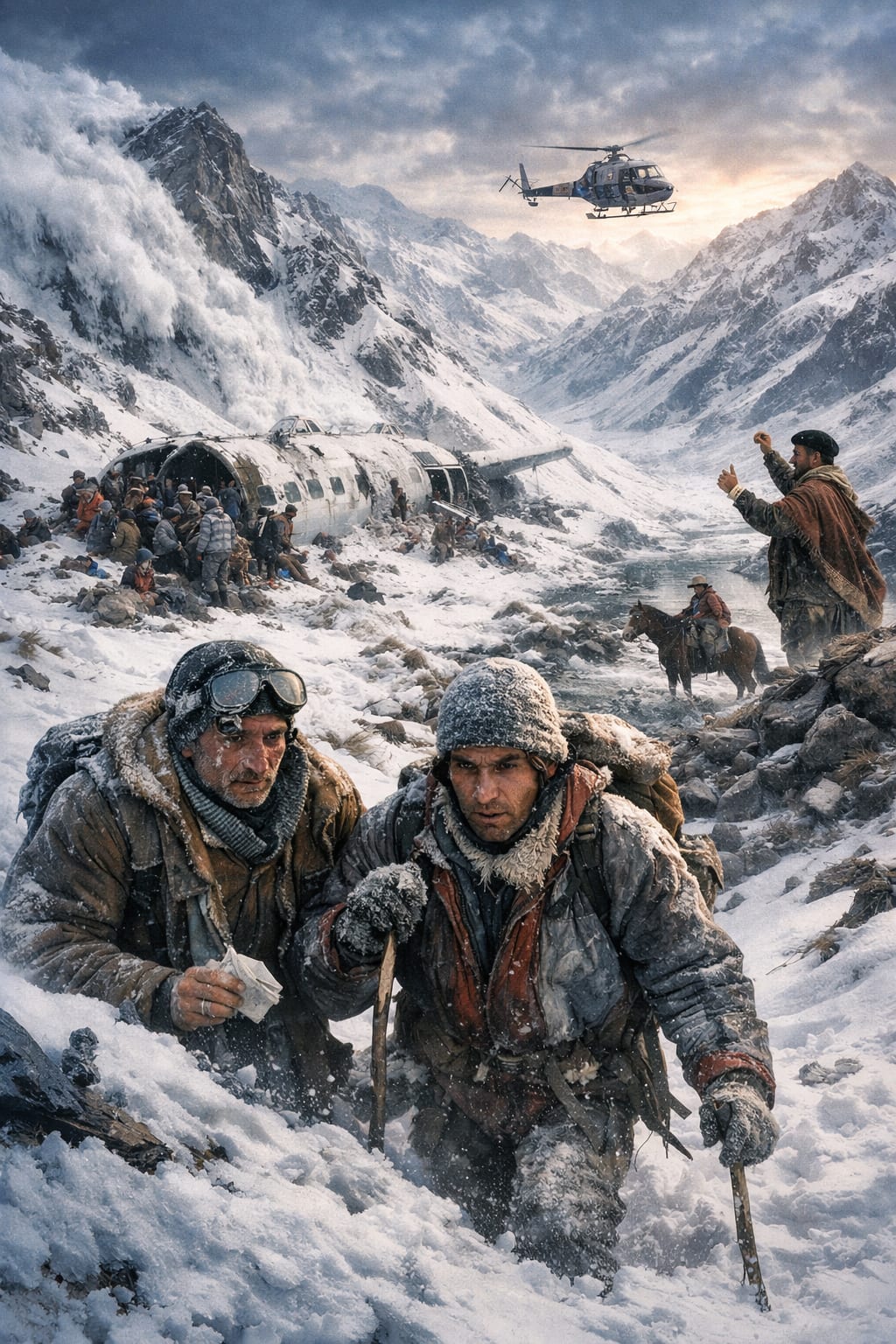
On October 13, 1972, a chartered plane carrying a Uruguayan rugby team known around the world as the Miracle in the Andes.
The aircraft, operated by the Uruguayan Air Force, was transporting members of the Old Christians Club rugby team from Montevideo to Santiago. On board were 45 people, including players, friends, and family members. As the plane crossed the Andes, turbulent weather and navigational errors led the pilot to misjudge his position. Believing he had cleared the mountains, he began descending—directly into the snow-covered peaks.
The plane struck a mountain ridge, tearing off its wings and tail before skidding violently across a glacier. Twelve passengers died instantly. Others were severely injured. The survivors, stunned and freezing, crawled from the wreckage into a world of endless white. They were stranded at over 12,000 feet, surrounded by towering peaks and subzero temperatures.
Among the survivors was a young medical student named Roberto Canessa and another rugby player, Nando Parrado. Despite their injuries and shock, they quickly understood the gravity of their situation. With limited food—just a few chocolate bars, wine, and snacks—they rationed strictly. Each person received tiny portions per day. Hunger soon became their greatest enemy.
The fuselage of the broken aircraft became their shelter. They used seat cushions as insulation and blocked the open rear with luggage to keep out the wind. Nights were brutal. Temperatures plunged far below freezing, and many survivors huddled together for warmth. Frostbite and dehydration threatened them constantly.
Rescue efforts began immediately, but the Andes are vast and unforgiving. After several days, the survivors heard on a small transistor radio that the official search had been called off. Authorities assumed no one could have survived the crash in such extreme conditions.
The news devastated them. They were alone.
As days turned into weeks, starvation loomed. With no vegetation, animals, or supplies in sight, the group faced an impossible moral dilemma. The only source of sustenance available was the bodies of those who had died in the crash. After deep discussion and prayer, they made the painful decision to consume small portions of the deceased to stay alive. It was a choice born not of desperation alone, but of a shared will to survive and return home. They reasoned that their lost friends would have wanted them to live.
On the 17th day, disaster struck again. An avalanche crashed down upon the fuselage in the middle of the night, burying it in snow. Eight more survivors died. The remaining group spent three suffocating days trapped inside before digging themselves out. Hope seemed to vanish with every passing storm.
Yet leadership and determination began to emerge. Parrado, who had lost his mother and sister in the crash, became one of the most driven members of the group. He refused to believe they would die there. Together with Canessa and another teammate, Antonio Vizintín, he devised a plan: they would climb the mountains and seek help.
They had no proper climbing gear, only makeshift equipment fashioned from airplane materials. Sleeping bags were sewn together from insulation lining. After two months stranded on the glacier, the three men began their trek in December 1972.
The climb was excruciating. They expected to reach a valley within a day or two, but instead faced peak after peak of endless snow. After ascending a massive mountain, Parrado realized the horrifying truth—they were far deeper into the Andes than they had imagined.
Vizintín returned to conserve food, while Parrado and Canessa pressed on. For ten days they hiked across glaciers, mountains, and rocky terrain with minimal supplies. Exhaustion nearly defeated them. But then, on December 20, they saw something miraculous: signs of life.
In the distance stood a Chilean cattle rancher named Sergio Catalán. A raging river separated them, making conversation impossible. Catalán threw a rock tied to a note across the water. Parrado scribbled a desperate message explaining who they were and that others were still alive in the mountains.
Catalán rode for hours to alert authorities. Within days, rescue helicopters flew into the Andes. On December 22 and 23, 1972—72 days after the crash—the remaining 16 survivors were finally rescued.
The world reacted with astonishment. Many struggled to understand the survivors’ decision to consume human flesh, but most came to admire their courage and unity. The survivors spoke openly about their ordeal, emphasizing friendship, faith, and teamwork as the reasons they endured.
Their story has since been told in books and films, including the 1993 movie Alive. The event remains one of history’s most extraordinary survival accounts—not simply because they lived, but because of how they lived: supporting one another, sharing hope, and refusing to surrender.
The Miracle in the Andes is not just a story of survival against nature. It is a testament to human resilience, moral complexity, and the unbreakable strength of the human spirit. Against impossible odds, in one of the harshest environments on Earth, a group of ordinary young men proved that hope—when held tightly enough—can become stronger than fear.
And in the silent, frozen heights of the Andes, hope carried them home.
About the Creator
Ibrahim Shah
I am an Assistant Professor with a strong commitment to teaching,and academic service. My work focuses on fostering critical thinking, encouraging interdisciplinary learning, and supporting student development.
Keep reading
More stories from Ibrahim Shah and writers in Fiction and other communities.
FUZZY BEAR
*Fuzzy Bear: A Hug You Can Trust* In a cozy little forest surrounded by tall trees, colorful flowers, and chirping birds, lived a teddy bear named *Fuzzy*. Fuzzy wasn’t like other bears—he wasn’t wild or loud. In fact, he wasn’t even real. He was a soft, stuffed bear with button eyes, stitched paws, and golden brown fur that was always warm, no matter how cold the night was.
By Ibrahim Shah 2 days ago in Fiction
Naked Succubus
Lola always chose her men the way other women chose handbags—something pretty, something flattering, something that made her feel more important when she walked into a room. He was no different. In fact, he was her favorite kind of ornament: young, beautiful, eager to please, and dazzled enough by her attention and clever manipulation that he never noticed the cost.
By Julie O'Hara - Author, Poet and Spiritual Warrior6 days ago in Fiction




Comments
There are no comments for this story
Be the first to respond and start the conversation.