
Poverty Foster Crime
When hunger becomes louder than conscience, crime follows close behind.

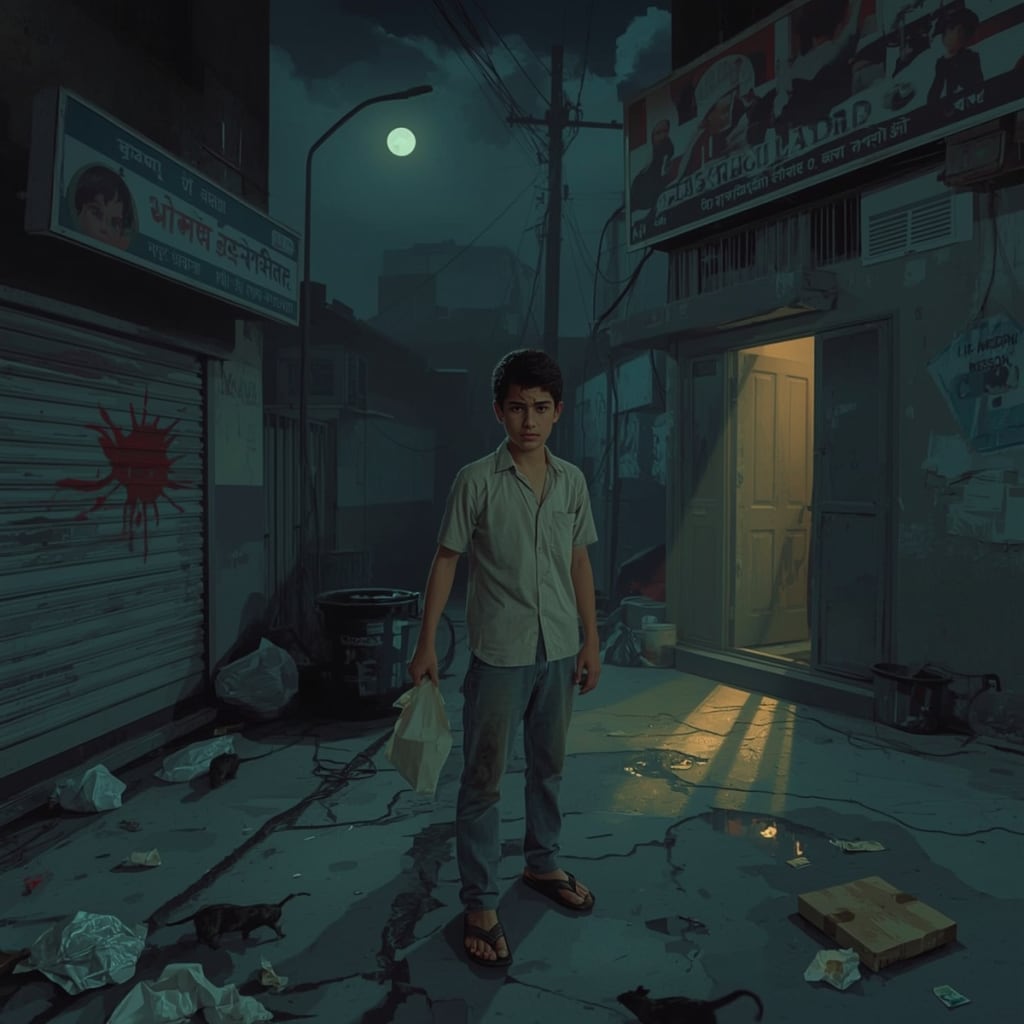
In the narrow alleys of Karachi's old town, poverty wasn’t just a condition — it was a shadow that lived on every wall, in every corner, following everyone like a curse too familiar to fear.
Fifteen-year-old Bilal had learned two things growing up: first, that the world was unfair, and second, that fairness didn’t fill your stomach. He lived with his mother and two younger sisters in a one-room shack made of tin and tarpaulin, their roof leaking every monsoon, and the floor barely holding up during the dry spells.
His father had died when Bilal was ten — a laborer crushed at a construction site. Since then, his mother stitched clothes day and night, her fingers raw, her eyes hollow, barely earning enough for stale naan and lentils. School had become a dream Bilal left behind in sixth grade. Hunger, after all, didn’t respect textbooks.
It was in that hunger that crime first whispered to him.
It started with stealing fruit from a vendor's cart. Then it was snatching a wallet from a distracted rickshaw passenger. Small things. Quick. Almost guiltless. Every rupee he brought home made his mother cry —ot out of shame, but because it meant her children wouldn't sleep with empty stomachs that night.
But the streets were watching. So was Rehman Bhai.
Rehman ran a small-time gang that dealt in stolen phones, black market fuel, and sometimes, weapons. He liked Bilal’s speed and silence. Soon, Bilal wasn’t just stealing — he was delivering things he didn’t dare ask about, receiving crisp notes in return. More money than he had ever seen.
With every delivery, Bilal climbed a little higher in the gang. He started wearing clean clothes. His sisters went back to school. They had meat once a week. He even bought his mother a fan for the scorching summer nights.
No one questioned the change. In their neighborhood, where nearly every young boy either begged or joined a gang, Bilal was just doing what many considered “necessary.”
But then came the night that changed everything.
Rehman called him in with a job that “required trust.” It was supposed to be a simple watch-and-wait. Instead, it turned into a confrontation — an armed robbery gone wrong. A shopkeeper resisted. One of the gang members fired. Blood. Screams. Sirens.
Bilal ran. Heart racing. Clothes soaked in sweat and fear. He didn’t sleep that night. Not because of guilt — that would come later — but because he realized something deeper:
He had crossed a line he didn’t know existed until he stepped over it.
The next morning, his mother asked him where he had been. He didn’t answer. She didn’t push. But something in her eyes shifted. A silent knowing. A quiet heartbreak.
Two days later, Rehman was arrested. Bilal wasn’t named — yet. But the fear of a knock on the door, the humiliation of a trial, the thought of prison, loomed large.
He sat on the rooftop that night, the city buzzing below, and asked himself a question that would haunt him:
Was it his fault? Or the world’s?
If he hadn’t been poor… if he had been in school… if his father had lived… would he have ended up this way?
He thought about the other boys in his neighborhood — boys who had stolen not because they were evil, but because they were desperate. Girls who sold their dignity because the government never gave them anything else. Men who became criminals not out of greed, but out of survival.
The system didn’t just ignore them — it made criminals, and then punished them for it.
The next morning, Bilal walked into a nearby charity-run school. He asked to study, to clean, to work, to do anything — just to stay away from the life he had known.
It wasn’t a miracle ending. He still carried the weight of what he’d done. He still feared the police. But it was a start.
Because he had realized something most politicians never did:
Poverty doesn’t breed evil — it breeds desperation. And desperate people make desperate choices.
---
Final Lines:
Every time we judge a criminal from a distance, we forget the circumstances that built them. Not every thief is wicked. Sometimes, he’s just hungry. And in a world where bread is more expensive than morality, crime isn’t always a choice — sometimes, it's the only option left.
About the Creator
Atiqbuddy
"Storyteller at heart, exploring life through words. From real moments to fictional worlds — every piece has a voice. Let’s journey together, one story at a time."
https://todaysurvey.today/authors/atiqbuddy%3C/p%3E%3Cp class="css-1923z11-Text">


Comments
There are no comments for this story
Be the first to respond and start the conversation.