
Ragged School
How things used to be and mostly still are.

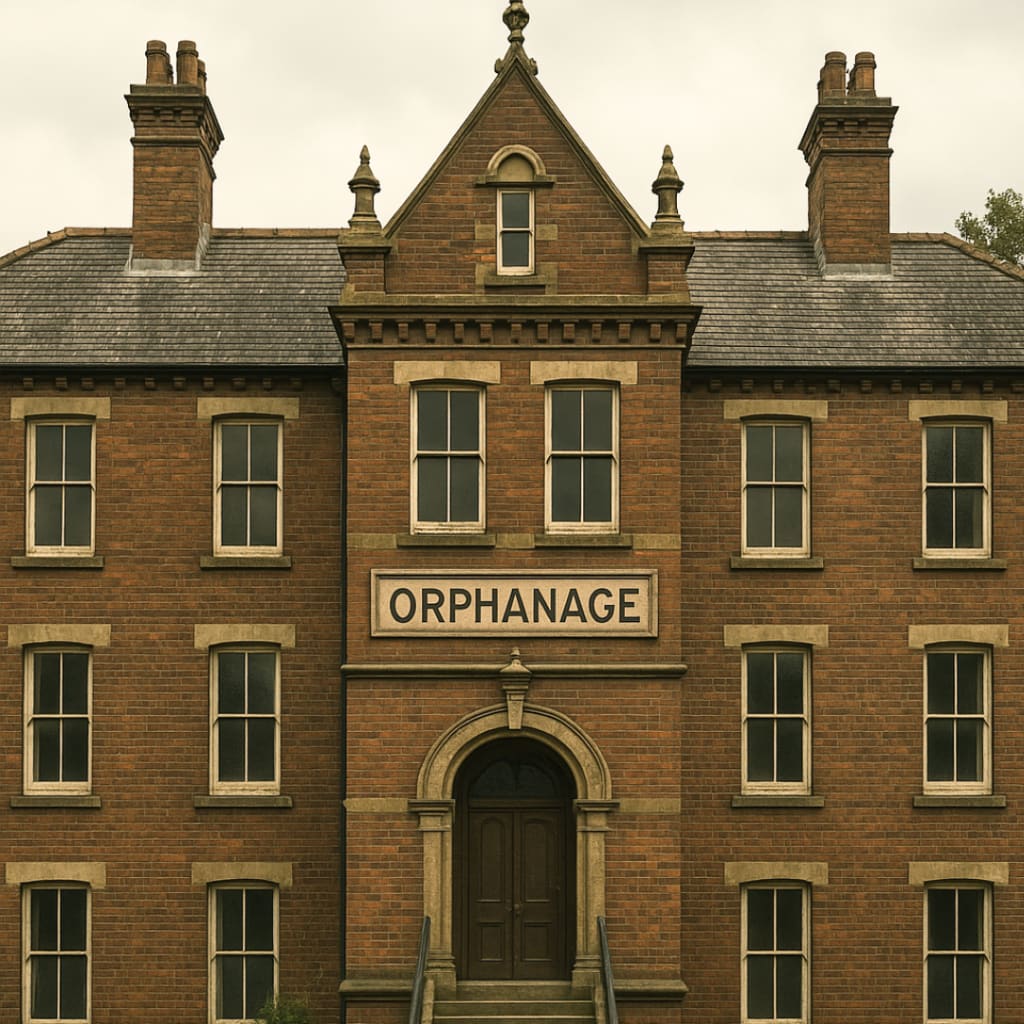
The sign shows it’s proper name, Orphanage, but in Victorian England everyone calls them Ragged Schools. They’re called that because we, the poor, unkempt children, the industrial revolutions detritus are sent here to live and learn skills that will be used in the factories. The only presents we receive come on Boxing Day when the rich bring us their leftovers and a piece of coal to burn for warmth.
Today is Easter Sunday and a miracle has happened. Not only do we have the day off, but someone has left us chocolate eggs. We are truly blessed.
About the Creator
Mark Gagnon
My life has been spent traveling here and abroad. Now it's time to write.
I have three published books: Mitigating Circumstances, Short Stories for Open Minds, and Short Stories from an Untethered Mind. Unmitigated Greed is do out soon.
Keep reading
More stories from Mark Gagnon and writers in Fiction and other communities.
Duty Above All Else
As dawn broke in the eastern sky, the Army of the Soulless crested the hills surrounding the village of Tranquility. When they appeared, even the area’s most dominant predator, dire wolves, moved deeper into the surrounding forest. The Army of the Soulless had only one goal—defeat and destroy every living creature in their path. The Jikininki soldiers were driven ever forward by their rulers known as Beast Masters.
By Mark Gagnon10 months ago in Fiction
Choose Your Own Adventure: St Helena Station
*****Preface***** I have been obsessed with Choose Your Own Adventure stories since I was a kid. I credit them with my love of reading and writing. I've been struggling to get my own kids to embrace words the same way I have but they love video games and our occasional Dungeon's and Dragon's game... which gave me an idea. I'll write an interactive story. So far its working; my middle son loves it and can't wait for the next section to come out.
By Sandor Szabo6 days ago in Fiction
The City That Remembered Your Name
On a cold November evening, Elena boarded a train that did not appear on any timetable. She had spent the whole day wandering through the old central station of Valmere, a quiet European city tucked between mountains and sea. The station itself looked like a relic of another century—arched ceilings of stained glass, brass clocks ticking too loudly, and walls layered with the ghosts of old travel posters advertising destinations that no longer existed. Elena was not searching for adventure. She was running from it. Three weeks earlier, her brother Luca had vanished without explanation. No goodbye. No message. Just an abandoned apartment and a phone that rang into silence. The police had closed the case with careful words and tired eyes: People leave sometimes. But Elena knew Luca. He never left without telling her where he was going. That evening, while sitting on a wooden bench near Platform 9, she noticed a flicker of movement at the far end of the station. A train had arrived without sound. Its carriages were painted a deep, midnight blue, and its windows glowed faintly from within. Above it, a single sign blinked: Destination: NOMEVIA Elena had never heard of such a place. Neither had her phone. Before she could think, she stood up and walked toward the train. Something in her chest tightened, as if the air itself were calling her name. The doors slid open. Inside, the train was nearly empty. A single conductor stood near the entrance, dressed in an old-fashioned uniform with silver buttons and a hat tilted low over his eyes. “Ticket?” he asked. “I don’t have one,” Elena said. The conductor studied her face for a long moment, then reached into his pocket and handed her a thin paper slip. “You already paid,” he replied. “You just don’t remember when.” The doors closed. The train began to move. Subtitle 2: The City Without Maps Nomevia did not appear on any map. When the train stopped, Elena stepped into a city made of pale stone and soft light. Streets curved in impossible directions, and buildings seemed to lean inward, as if listening. The air smelled of rain and old books. People walked calmly through the streets, but something was strange about them. When Elena passed, they looked at her with recognition. “Welcome back,” a woman whispered. A child pointed at her. “That’s her.” Elena’s heart pounded. “Back from where?” She followed a narrow street into a wide square dominated by a clock tower. Its hands did not show time but names—thousands of names, engraved in gold, circling endlessly. At the base of the tower, someone stood waiting. “Luca,” Elena breathed. Her brother looked thinner, his hair longer, but his eyes were the same. Alive. Real. “You found it,” he said softly. “I hoped you would.” “Where are we?” she demanded. “Why did you disappear?” Luca glanced at the tower. “This is Nomevia. The city that remembers people the world forgets.” Elena stared at him. “That makes no sense.” “It does,” Luca said. “Think about it. Refugees with no papers. Artists whose work was burned. People erased by war, history, or fear. When no one speaks your name anymore, Nomevia does.” Elena felt cold. “And you?” “I wasn’t forgotten,” Luca said. “Not yet. But I was close.” Subtitle 3: The Price of Being Remembered They walked through streets lined with libraries instead of shops. Inside each building were shelves filled not with books, but with lives—photographs, letters, recordings of voices speaking in dozens of languages. “This is where names go when no one says them anymore,” Luca explained. Elena touched a dusty photograph of a young soldier. Beneath it was written: Marek Nowak, 1916–1939. Remembered by no one. Her chest tightened. “Why did you come here?” she asked. Luca hesitated. “I started hearing it in my dreams. The city. It called me. I thought… maybe I could help.” “Help how?” “By leaving the real world and staying here,” he said. “If I stay, someone else can return. Nomevia trades memory for presence.” Elena stopped walking. “You’re saying… you replace someone?” Luca nodded. “Someone who no longer has anyone left to remember them.” Elena’s voice trembled. “And if I take you back?” “Then someone else disappears into silence.” The tower chimed. A new name appeared on its face. ELENA MORO Her breath caught. “Why is my name there?” Luca’s face paled. “Because you found the city. It has noticed you.” Subtitle 4: The Choice The conductor appeared beside them, silent as a shadow. “Time is limited,” he said. “One of you must stay.” Elena felt her knees weaken. “That’s not a choice. That’s cruelty.” “Memory is never fair,” the conductor replied. “But it is necessary.” Elena looked at Luca. Her brother. The only family she had left. “You were going to give up your life for strangers,” she said. Luca smiled sadly. “Aren’t strangers just people waiting to be known?” Elena thought of the tower. The names. The forgotten faces. She made her decision. “I will stay,” she said. Luca grabbed her arm. “No.” “You brought me here,” she whispered. “So you could leave. I see it now. You wanted someone to remember you enough to replace you.” Luca’s eyes filled with tears. “I didn’t mean for it to be you.” “But it is,” Elena said. She turned to the conductor. “Take him home.” The conductor nodded. The city trembled. Light rose from the tower and wrapped around Luca. His voice echoed once: “I’ll remember you.” Then he was gone. Subtitle 5: The City That Knows Her Name Years passed in Nomevia. Elena became a keeper of names. She recorded stories, preserved memories, and whispered them into the tower at night so they would never vanish. Sometimes, trains arrived with new travelers. Some returned. Some stayed. And in the real world, Luca told people about a strange city that saved his life. He wrote about it. He spoke Elena’s name to anyone who would listen. Because of him, Elena’s name never disappeared from the tower. And because of her, thousands of forgotten lives were spoken again. In a city that remembered everyone, she learned the most powerful truth: As long as someone says your name, you are never truly lost.
By Iazaz hussain4 days ago in Fiction


Comments (8)
This is great. I am so glad they got some chocolate!
That tugged on my heartstrings. Loved your story!
Everyone should have chocolate eggs on Easter
Very interesting written and very creative
Those poor kids. I don’t imagine those orphanages were particularly kind places to grow up in. Great storytelling Mark - especially in so few words.
I’m afraid to ask if they have tried the eggs to make sure they really are chocolate. 🤔🫣🤢🤮
A simple act of kindness goes a long way. Plus I learned something today.
I never heard that term before. It is apt though from the pics we have seen. But we do still have them around today, unfortunately. Haves and have nots. Never changes. Is this one of those 100 word;;; I forget the name poem. I like them. Short and to the point.